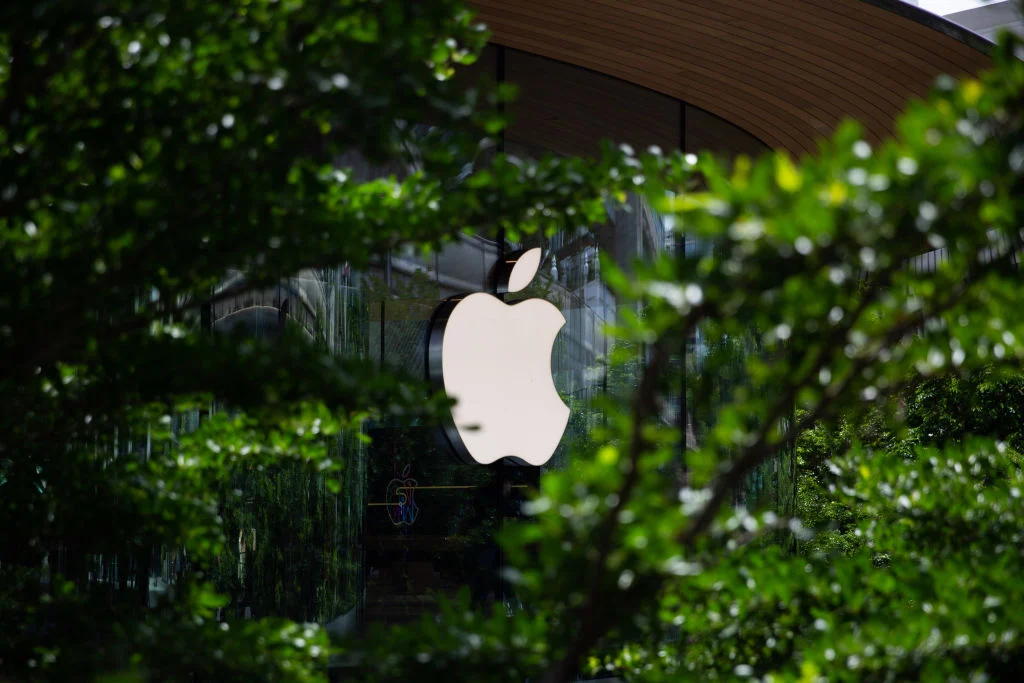
While Silicon Valley’s titans pour billions into the development of "agentic commerce"—a future where autonomous AI agents act as personal shoppers, autonomously navigating discovery, comparison, and checkout—the architect behind one of the most successful retail transformations in history remains a vocal skeptic.
Ron Johnson, the 66-year-old executive who spearheaded Apple’s retail revolution, argues that the tech industry is fundamentally overestimating the consumer’s desire to delegate the shopping experience to machines. In an era where Google, OpenAI, and other tech giants are rapidly folding generative AI into the fabric of e-commerce, Johnson maintains that physical retail is not only alive but essential. To him, the tactile, human-centric experience of a brick-and-mortar store is a dimension of commerce that no algorithm can replicate.
The Rise of Agentic Commerce: A Silicon Valley Bet
The current push toward "agentic commerce" represents a paradigm shift in how we conceive of digital transactions. Companies like Google are laying the infrastructure for this future with initiatives like the Universal Commerce Protocol, a standardized framework designed to allow AI agents to navigate the web on a consumer’s behalf. Similarly, OpenAI has been aggressively integrating shopping features into ChatGPT, transforming the chatbot into a research hub where users can compare products and, increasingly, complete purchases without ever visiting a traditional website.
The premise is seductive: friction is the enemy of profit. By removing the need for a human to manually scroll, click, and compare, tech companies hope to capture the entirety of the consumer journey. However, Johnson views this as a fundamental misunderstanding of human psychology.
"AI is a new technology that will improve the online shopping experience," Johnson said in a recent interview. "But I don’t know that it’s going to change which way we shop."
When posed with the scenario of a consumer letting an agent purchase a $2,000 laptop without ever physically interacting with the device or visiting a store, Johnson was unequivocal: "Honestly, nobody’s going to do that." For high-stakes, high-value purchases, Johnson argues that the human desire for sensory confirmation—feeling the weight of a machine, testing the display, and experiencing the ergonomics—remains an insurmountable barrier for AI.
A Chronology of Retail Innovation
To understand Johnson’s skepticism, one must look at his pedigree. Joining Apple in 2000, Johnson was tasked by Steve Jobs with a seemingly impossible goal: convincing consumers to buy computers in a physical store at a time when online shopping was in its infancy and the "big-box" retail model was failing to provide a premium experience.
The Apple Era (2000–2011)
Johnson helped craft the Apple Store not merely as a point of sale, but as a community hub. The strategy was centered on education, support, and tactile engagement. By introducing the Genius Bar and removing commission-based incentives for employees, Apple prioritized the customer’s needs over the transaction. This was the "secret sauce" that many competitors tried to emulate—copying the glass facades and open floor plans—but ultimately failed to replicate because they ignored the human element.
The J.C. Penney Turnaround (2011–2013)
Following his success at Apple, Johnson moved to lead J.C. Penney. His tenure there serves as a cautionary tale of over-ambition. Attempting to apply the "startup mentality" of Apple to a legacy department store, Johnson pushed for radical changes that alienated the existing customer base. He was ousted in less than two years as sales plummeted, a failure he now attributes to a lack of institutional alignment and a failure to "bring the employees and customers along."
The Startup Journey: Enjoy Technology (2015–2022)
Johnson later founded Enjoy Technology, an e-commerce startup that sought to bring the "Apple Store experience" directly to the customer’s home via tech-savvy delivery experts. Despite its innovative approach, the company struggled with the scaling challenges of the physical world and ultimately filed for bankruptcy in 2022. This experience, perhaps more than his time at Apple, grounded his understanding of the physical and logistical limitations of modern retail.
Why Human Intuition Trumps Algorithms
Johnson’s argument against the full automation of shopping rests on the distinction between information and experience. AI, he concedes, is a powerful tool for the former. It will make consumers better informed before they ever step foot in a store, filtering through technical specifications and reviews with unprecedented speed.
However, he draws a hard line at the point of decision. "AI will never be able to have you physically experience a product," he notes. This aligns with his broader philosophy that technology should serve human intuition rather than override it. He believes that Steve Jobs, were he alive today, would have embraced the utility of AI, but would have been deeply wary of any technology that sought to replace the judgment and emotional connection inherent in the human experience.
"There’s no substitute for human intuition," Johnson says. He recalls the collaborative culture at Apple, where problems were debated by brilliant minds to arrive at new perspectives—a process he believes is fundamentally different from the pattern-matching capabilities of large language models.
Implications for the Future of Retail
If Johnson’s hypothesis holds—that AI will function as a concierge rather than a replacement for the physical experience—the retail landscape will not disappear, but it will evolve.
The Evolution of the Physical Store
If consumers are already "pre-sold" or highly informed by their AI agents, the role of the physical store will shift. Stores will no longer be warehouses for inventory; they will become showrooms for experiences. The "Genius Bar" model, which focuses on support and relationship-building, will likely become the standard for retailers looking to survive.
The "Human-in-the-Loop" Economy
For retailers, the implication is clear: the value of the employee is increasing. As automation handles the mundane tasks of logistics and data, the human employee becomes the final arbiter of trust and quality. Companies that invest in human expertise, rather than viewing employees solely as costs to be minimized, will be better positioned to provide the "experience" that AI cannot synthesize.
Balancing Technology and Strategy
Johnson’s career, marked by the pinnacle of Apple and the collapse of his J.C. Penney tenure, provides a masterclass in the necessity of timing and cultural alignment. The lesson for today’s retailers is not to ignore AI, but to avoid the trap of "startup thinking" in an environment that requires deep cultural integration.
Conclusion
Ron Johnson remains, by his own admission, an "AI optimist." He believes the technology will be transformative for information retrieval, logistics, and productivity. Yet, he serves as a necessary check on the hype cycle. As Silicon Valley rushes toward a future where AI agents manage our lives, Johnson reminds us that the most significant human transactions—those involving trust, personal preference, and sensory validation—remain deeply rooted in the physical world.
The future of shopping will likely not be a choice between AI and the physical store, but a hybrid model. In this model, AI handles the data, but humans retain the decision-making power—and the pleasure of discovery—that only a physical interaction can provide. For retailers, the challenge will be to ensure that when the customer finally walks through the door, they find not just a product, but an experience that justifies the journey.