For decades, the manual transmission has been the bedrock of the automotive enthusiast experience. The physical connection between driver, engine, and road—mediated by the delicate dance of a clutch pedal and a gear-gate—has long been the gold standard for engagement. However, as the automotive industry pivots toward electrification and hyper-efficient dual-clutch transmission (DCT) technology, the "row-your-own" gearbox is facing an existential crisis. Porsche, a brand defined by its heritage of driver-focused engineering, may have just found the solution to this technological impasse.
A recently surfaced patent filed by the Stuttgart-based automaker suggests a revolutionary approach: a shift-by-wire system capable of perfectly mimicking the mechanical sensation of a manual transmission, complete with a third pedal, all while utilizing the blistering speed and efficiency of a modern dual-clutch automatic.
The Core Concept: A Three-Tiered Transmission Philosophy
The patent, identified as DE102025109563A1 and unearthed via the European Patent Office, outlines a sophisticated transmission control system designed to offer three distinct operating modes. This is not merely a software gimmick; it is an integrated hardware and software solution that allows a single vehicle to exist as a Jekyll-and-Hyde machine, transitioning from a docile daily driver to a raw, analog-feeling sports car at the flick of a switch.
1. The Automatic Mode
In its most basic iteration, the system functions as a traditional dual-clutch automatic. The driver selects Drive, Reverse, or Neutral, and the car’s electronic control unit (ECU) manages all gear changes based on speed, throttle input, and engine load. This mode is designed for convenience, optimized for the daily commute or long-distance touring where the burden of manual shifting is unnecessary.
2. The Sequential Mode
Moving into the second configuration, the system unlocks sequential shifting. This mode caters to the modern track-day enthusiast who prefers the rapid-fire gear changes offered by paddle shifters or a console-mounted sequential lever. This is the standard operational mode for almost all contemporary high-performance DCTs, offering precise control over the powerband without the risk of engine damage from over-revving.
3. The Simulated Manual Mode
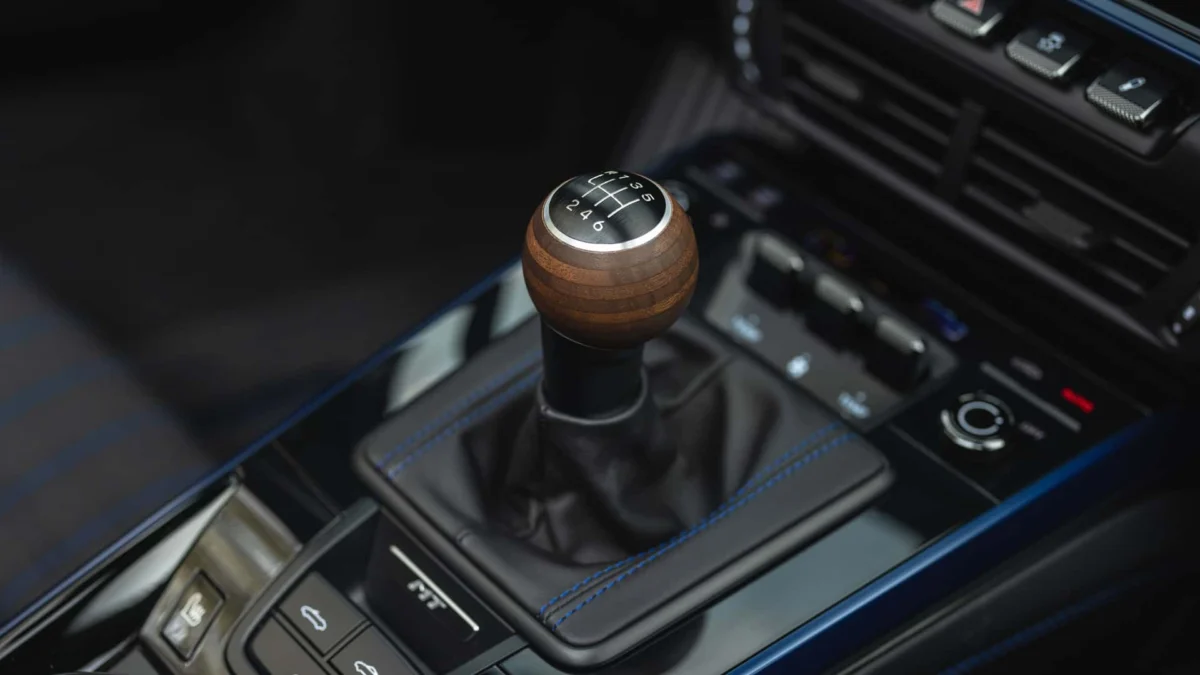
The most radical aspect of the patent is the third configuration. When engaged, the system transforms the monostable gear selector into a multi-stable manual shifter. Crucially, it re-engages the third pedal—the clutch—which functions via a "shift-by-wire" setup. This means the pedal does not physically operate a mechanical clutch assembly; instead, it sends an electrical signal to the transmission controller to decouple the clutch packs. To complete the immersion, the system is designed to recreate the physical feedback and the specific gear-gate patterns that define the classic manual experience.
Chronology of Development: From Concept to Patent
The path to this innovation did not happen overnight. Porsche has been incrementally working toward the democratization of the "manual feel" in an automated world for several years.
- Initial Shift-by-Wire Exploration: A few months prior to this latest filing, Porsche unveiled a patent for a shift-by-wire gear selector. At the time, it was interpreted as a way to clear up center console space while maintaining a traditional-looking lever.
- Expansion of Capability: Engineers quickly realized that a software-controlled lever could be programmed to behave in multiple ways. This led to the development of the "multi-stable" architecture, where the lever can physically "lock" into gates, providing tactile feedback that mimics a mechanical linkage.
- The Patent Filing: The formal submission of DE102025109563A1 marks the transition from conceptual brainstorming to protected intellectual property. The filing specifically notes that this technology is agnostic to the powertrain, meaning it could be deployed in both internal combustion engine (ICE) vehicles and hybrid platforms.
The Competitive Landscape: The "Fake" Manual Arms Race
Porsche is not alone in its quest to solve the "manual extinction" problem. Several elite manufacturers are currently experimenting with software-assisted gear shifting to keep the enthusiast spirit alive in an era of seamless, lag-free gearboxes.
The Koenigsegg Approach
Koenigsegg has arguably led this charge with its Light Speed Transmission (LST) and the "Engage" shift system. Their gearbox is a masterclass in complexity, housing a multi-clutch system that can essentially switch between automatic functionality and a manual-style engagement, providing the driver with the sensation of a traditional gated shifter while leveraging the weight and performance advantages of a DCT.

The Ferrari Experience
Ferrari has also taken a hard line on this issue. The new 12Cilindri Manuale is not just a digital interface; it is a pedagogical tool. Ferrari’s engineers have programmed the system to be unforgiving. If the driver mistimes the clutch or fails to execute a shift correctly, the car will shudder, buck, or even stall. This serves a specific purpose: it preserves the "human element" of driving, where skill, practice, and the possibility of failure are part of the joy of ownership.
Hyundai’s Mass-Market Ambitions
Perhaps most surprisingly, Hyundai has been filing patents for a simulated manual transmission designed for its future electric vehicle (EV) lineup. While Porsche and Ferrari are looking to save the manual in high-end sports cars, Hyundai is looking to bring the sensation to the masses. Their system uses synthetic sounds and haptic feedback to convince the driver that they are working through a traditional combustion engine’s gears, potentially changing how we perceive EVs entirely.
Implications for the Future of Enthusiast Driving
The implications of Porsche’s patent are profound, particularly for the future of the automotive hobby. As the industry faces the inevitable transition to electric powertrains, the loss of mechanical complexity—specifically the transmission—is a major point of contention for enthusiasts.
Saving the "Save the Manuals" Movement
For decades, the "Save the Manuals" movement has been a reactionary stance against the rise of the automatic. However, if manufacturers can successfully implement simulated manuals that feel indistinguishable from the real thing, the movement may find a new lease on life. By decoupling the mechanical necessity of a clutch from the experience of a clutch, Porsche allows for the reliability and speed of a computer while retaining the cognitive engagement of a driver.
The Cost and Complexity Trade-off
Critics often argue that these systems add unnecessary weight and complexity. A traditional manual transmission is elegantly simple; a simulated manual requires sensors, actuators, controllers, and software. However, in the context of a modern Porsche—a brand that already utilizes highly complex PDK (Porsche Doppelkupplung) transmissions—the addition of a few lines of code and a haptic-feedback pedal assembly is a negligible increase in complexity compared to the benefit of user satisfaction.
Hybridization and the Future
The patent’s explicit mention of hybrid powertrains is a key indicator of Porsche’s long-term strategy. Hybrids are notoriously difficult to pair with traditional manuals due to the complex relationship between the electric motor’s torque delivery and the internal combustion engine’s rev matching. A shift-by-wire manual system solves this by allowing the software to manage the handover between power sources while the driver remains under the illusion that they are controlling the output.
Conclusion: A New Era of Tactile Engineering
Porsche’s latest patent represents a critical shift in how we think about automotive technology. Instead of viewing software as the enemy of the analog experience, Porsche is positioning it as the custodian of it. By leveraging advanced haptic and shift-by-wire technologies, the company is demonstrating that the future of the car does not have to be a sterile, automated experience.
Whether or not this technology will make it into a production vehicle remains to be seen. However, given Porsche’s history of prioritizing the "driver’s car" ethos, it is highly likely that they are looking for a way to maintain the thrill of the manual transmission even as the world moves toward an electrified, automated future.
For the driver who loves the complexity of a manual, the next decade may not be the end of the line. Instead, it may be the beginning of a new era where we can have the best of both worlds: the raw, tactile connection to the machine and the relentless, perfect efficiency of the modern age. Porsche, as always, is leading the way in ensuring that when we do eventually move toward an all-electric future, the "soul" of the car doesn’t get left behind in the rearview mirror.