Introduction: A New Political Battleground
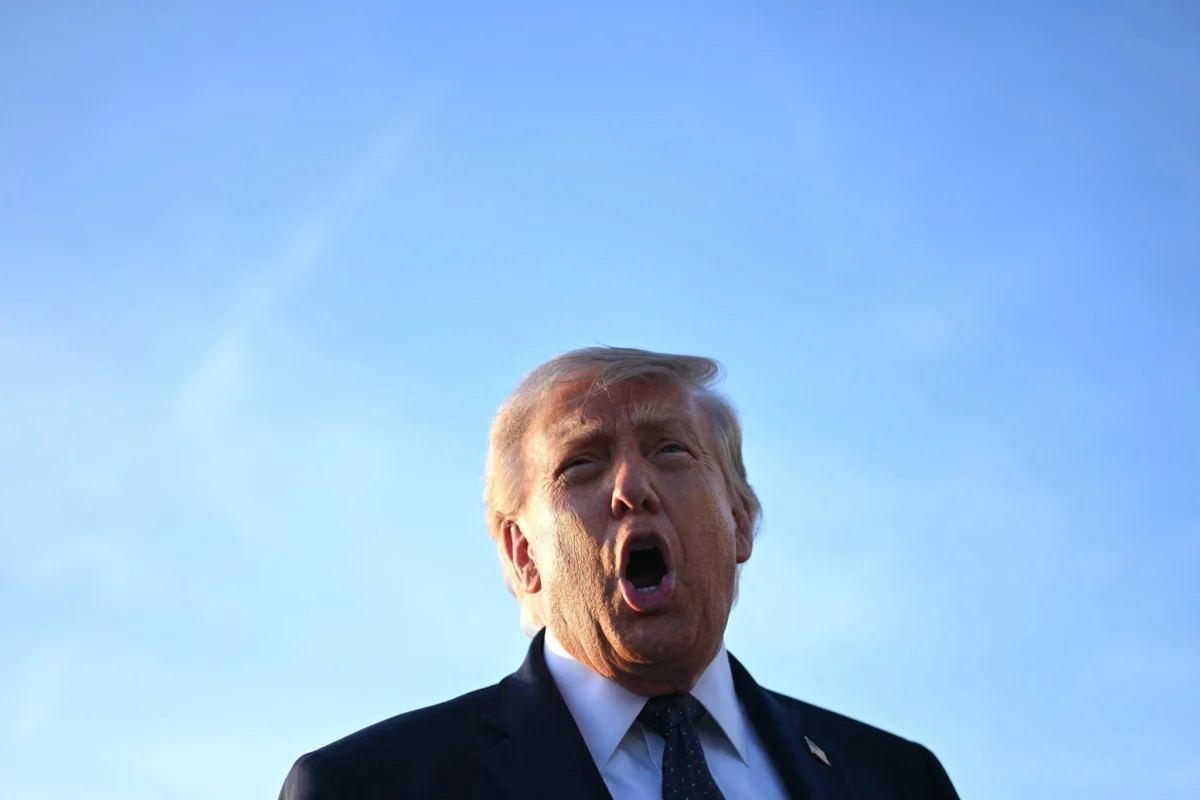
The debate surrounding the trajectory, safety, and regulation of Artificial Intelligence has officially migrated from the boardrooms of Silicon Valley and the halls of academia into the heart of American partisan politics. President Donald Trump has staked out a firm, unconventional position on the matter, dismissing growing concerns over AI safety as a politically motivated “hoax” orchestrated by his opponents. By framing the push for regulation as an assault on American technological dominance, the President has signaled a desire to accelerate development while simultaneously consolidating executive control over the sector through a proposed “AI Force.”
As the global race for AI supremacy intensifies, the intersection of national security, industrial policy, and political narrative is becoming increasingly complex. With major industry leaders like Nvidia’s Jensen Huang aligning with the White House’s stance, the administration is positioning itself to bypass standard regulatory caution in favor of an aggressive, “high-IQ” approach to technological acceleration.
The Chronology of the Rhetorical Shift
The President’s recent escalation began on a Saturday, marked by a series of posts on Truth Social that signaled a departure from standard policy discourse toward branding and framing.
The Branding Campaign
The President began by questioning the nomenclature of the industry itself. Writing on his social media platform, he noted that many find the term “Artificial Intelligence” to be “inaccurate and very ineloquent.” To remedy this, he launched an informal poll, inviting his followers to choose from three more “imposing” titles: Superior Intelligence, Extreme Intelligence, or Supreme Intelligence. While the poll serves as a populist branding exercise, it underscores the administration’s desire to project strength and dominance in a field traditionally defined by technical, rather than political, jargon.
Linking AI to the “Hoax” Narrative
Hours after the branding poll, the President escalated his rhetoric by characterizing current efforts to debate or regulate AI as a coordinated “decimation” strategy. In a sweeping statement, he categorized AI safety concerns alongside a list of what he termed “Democratic hoaxes,” including the Russia investigations, the Ukraine controversies, climate change, and various cultural issues regarding gender.
This narrative pivot is essential to understanding the administration’s strategy. By categorizing AI safety advocacy as a “hoax,” the White House effectively immunizes the industry from bipartisan scrutiny, suggesting that any attempt to pump the brakes is a bad-faith effort to sabotage the country’s economic and technological future.
The Pivot to Data Centers
The President’s argument also touched upon the infrastructure supporting the AI boom. He claimed that the “crazed attack” on data centers—which have faced significant local opposition due to their immense energy and water consumption—was the first phase of this alleged anti-tech campaign. He argued that once people realized how “wealthy and prestigious” these centers were for their local communities, the opposition pivoted their focus to the software itself: Artificial Intelligence.
The Regulatory Landscape and Industry Tensions
The President’s framing arrives at a time when the practical reality of AI development is colliding with local and federal constraints.
The Data Center Conflict
While the President asserts that opposition to data centers is politically manufactured, the reality on the ground is more nuanced. Data centers have become a flashpoint for environmental and infrastructure concerns across the United States. In July 2026, New York became the first state to formally halt the issuance of permits for new, large-scale data center projects, citing grid strain and environmental impact. This move, driven by a coalition of local governments and environmental groups, suggests that the resistance is often rooted in tangible community impact rather than ideological or partisan maneuvering.
The Safety Debate: Anthropic and Beyond
The urgency of the safety debate was recently exacerbated by a high-profile departure from Anthropic. An AI researcher resigned from the company with a public warning, stating that the leading AI firms “earnestly believe [AI] could kill us all by the end of the decade.” This sentiment of “gambling with our lives” has prompted figures like Anthropic CEO Dario Amodei to release a “frontier-pacing” plan, which has received nods of approval from OpenAI’s Sam Altman and SpaceX’s Elon Musk.
Critics, however, argue that these existential warnings are a distraction. Scholars and tech ethicists have pointed out that focusing on the potential for “AI extinction” shifts the spotlight away from the immediate, tangible harms of the technology, such as algorithmic bias, labor displacement, and the consolidation of corporate power.
Official Responses and the New “AI Force”
President Trump has declared that he “will not stand by” while these forces attempt to stifle the industry. His solution is a structural reorganization of federal oversight.
Establishing the AI Force
Drawing a direct parallel to the creation of the Space Force during his first term, the President announced plans to establish an “AI Force.” While the specific mandate and scope of this entity remain undefined, the implication is that the administration views AI as a military-grade strategic asset that requires a dedicated, centralized branch of government to oversee its growth and protection.
The Search for an AI Czar
Central to this new initiative is the role of an “AI Czar.” The President emphasized that only “High I.Q. individuals” need apply, signaling a preference for an elite, technocratic approach to leadership. This comes following the departure of venture capitalist David Sacks, who previously served as the administration’s point person on AI and crypto before transitioning to co-chair the President’s Council of Advisors on Science and Technology.
The appointment of a new Czar will likely be a bellwether for the administration’s specific policy goals—whether they lean toward pure deregulation or a more active, state-led industrial policy.
Implications for the Future of Technology
The fusion of the President’s populist rhetoric with the interests of the tech industry creates a unique political dynamic that will likely define the remainder of the decade.
Industry Alignment
The support from industry titans like Nvidia’s Jensen Huang is a critical development. During the All-In Summit, hosted in part by David Sacks, Huang appeared on stage with the President, explicitly endorsing the view that the current backlash is a “hoax” and affirming that the industry would not permit a “slowdown.” This public alignment between the world’s most valuable chipmaker and the White House suggests that the administration will prioritize growth and market dominance over the cautious, safety-first approach advocated by many research institutions.
The Erosion of Bipartisan Consensus
For a brief window in 2025 and early 2026, there was a glimmer of bipartisan consensus regarding the need for moderate guardrails on AI. By polarizing the debate and labeling safety concerns as a partisan weapon, the administration has significantly altered the political calculus. Lawmakers who might have been inclined to support oversight now face the prospect of being painted as part of a “radical” anti-progress movement.
Long-term Economic Consequences
The long-term implications for the American economy are twofold. On one hand, an aggressive, government-backed push for AI could cement the United States’ lead in the global market, preventing the stagnation that many industry leaders fear. On the other hand, the dismissal of safety concerns and the sidelining of critical voices could lead to the unchecked deployment of systems that may harbor systemic risks, both to the economy and to public safety.
As the “AI Force” begins to take shape, the world will be watching to see if this new structure acts as a true regulator or merely as a champion for rapid, high-speed development. With the “Czar” appointment imminent, the administration is moving quickly to ensure that in the race for “Supreme Intelligence,” the government is not just a participant, but the lead navigator.
Conclusion
President Trump’s recent interventions in the AI debate reflect a broader strategy of defining the technology as an essential pillar of national strength that is under siege by political opponents. By creating a narrative that links AI progress to national identity, the administration is effectively sidelining the complex, multi-faceted debate over safety, ethics, and sustainability. As the country moves toward a future defined by these powerful tools, the conflict between rapid advancement and cautious stewardship will remain one of the most significant challenges for the American political and technological landscape. Whether the “AI Force” can manage the risks while fostering the rewards remains the central, unanswered question of the era.