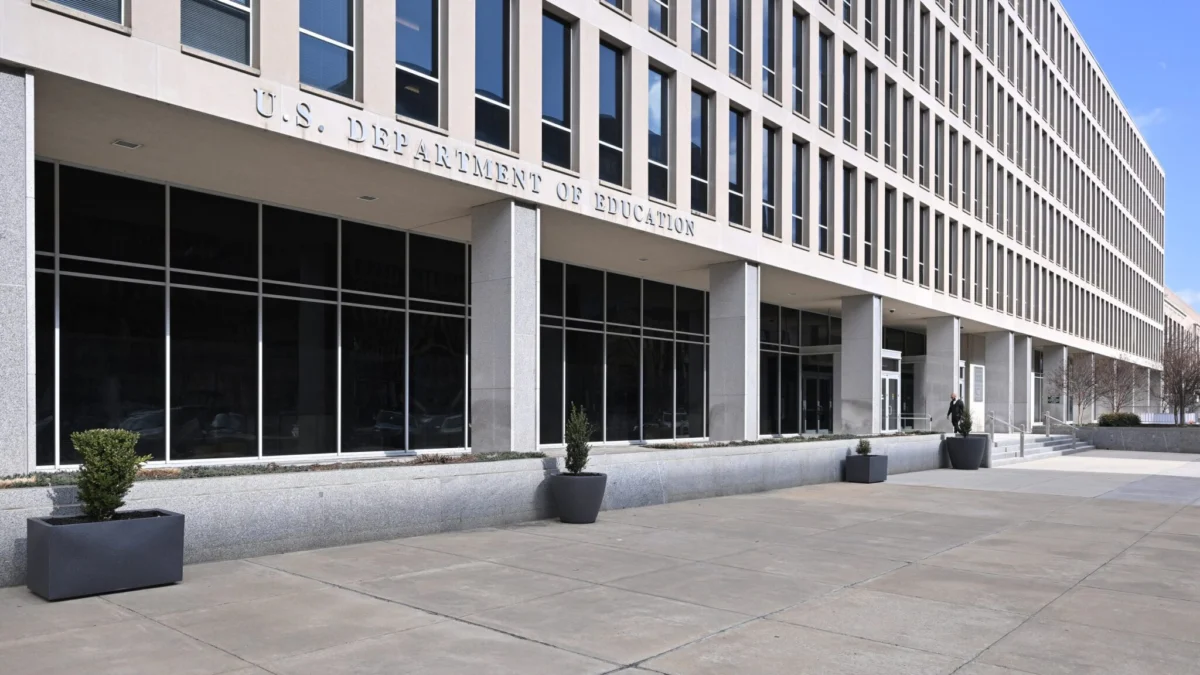
In a significant judicial rebuke to the Trump administration’s efforts to dismantle diversity-focused educational initiatives, a U.S. federal judge has vacated a Department of Education (DOE) policy directive that led to the cancellation of $600 million in federal grants. The ruling, handed down on Thursday by U.S. District Court Judge Angel Kelley of the District of Massachusetts, marks a pivotal moment in the ongoing national legal battle over the role of Diversity, Equity, and Inclusion (DEI) programming within public education.
The directive, officially titled "Eliminating Discrimination and Fraud in Department Grant Awards," had served as the primary mechanism for the DOE to terminate 104 out of 109 grants under the Teacher Quality Partnership (TQP) and Supporting Effective Educator Development (SEED) programs. Judge Kelley’s decision to grant a permanent injunction against the policy forces the federal government to reverse course, declaring the administration’s actions "arbitrary and capricious" and in violation of the Administrative Procedure Act (APA).
The Legal Foundation of the Ruling
Judge Kelley’s opinion centers on the lack of clarity and administrative justification provided by the DOE when it abruptly rescinded the multi-million-dollar grants. Central to her critique was the Department’s inability to define the scope of the "discriminatory" activities it sought to eliminate.
In her written opinion, Judge Kelley highlighted the conceptual contradictions within the DOE’s policy. "It is difficult to see how topics can be ‘anti-racist’ yet simultaneously fall within the Directive’s category of ‘discriminatory’ activities," she noted. She further pointed out that the directive was drafted with such broad, sweeping language that it captured essential educational components—such as "Family and Community in the Classroom" and "social-emotional learning"—which, on their face, lack any clear nexus to illegal discrimination.
By failing to provide a reasoned explanation for how these specific programs violated federal law, the administration failed to meet the standards of the APA, which requires federal agencies to operate based on transparent, evidence-based reasoning rather than political mandates.
A Chronology of the Conflict
The legal struggle began in early 2025, following a series of executive actions aimed at fundamentally altering the federal government’s approach to diversity initiatives.
- January 21, 2025: President Trump issued Executive Order No. 14173, "Ending Illegal Discrimination and Restoring Merit-Based Opportunity." This order mandated that the Office of Management and Budget excise references to DEI and DEIA (Diversity, Equity, Inclusion, and Accessibility) principles across federal departments.
- January 29, 2025: The administration followed up with Executive Order No. 14190, "Ending Radical Indoctrination in K-12 Schooling." This order gave the Secretary of Education 90 days to develop a plan to eliminate funding for what it termed "illegal and discriminatory treatment and indoctrination."
- Early 2025: Then-acting DOE Secretary Denise Carter issued the directive to cancel the TQP and SEED grants, triggering immediate outcry from academic institutions and state governments.
- March 6, 2025: A coalition of eight states, spearheaded by New York Attorney General Letitia James, filed a lawsuit seeking a Temporary Restraining Order (TRO) to halt the implementation of the DOE’s directive.
- March 10, 2025: U.S. District Judge Myong J. Joun granted the TRO, preventing the DOE from terminating existing grants in the plaintiff states until at least March 2026.
- March 13–21, 2025: The administration attempted to stay the TRO, but both the district court and the U.S. Court of Appeals for the First Circuit denied the requests, keeping the funding streams open while the litigation proceeded.
- September 2026: Judge Kelley issued the final ruling, permanently vacating the policy directive.
Supporting Data: The Impact on Teacher Pipelines
The grants in question were not merely administrative line items; they represented a vital lifeline for teacher preparation programs struggling to combat a deepening national crisis. Judge Kelley’s ruling leaned heavily on the evidence regarding the state of the teaching profession.
According to data cited by the court, the number of individuals completing traditional teacher preparation programs has plummeted by 35% over the last decade. Furthermore, the profession is experiencing a massive exodus, with nearly 300,000 teachers leaving their posts annually. The TQP and SEED grants were specifically designed to address these gaps by funding programs that train teachers for high-need urban and rural environments.
Case Studies of Disruption
The human cost of the DOE’s directive was documented in specific university programs that faced immediate funding uncertainty:
- Frostburg State University (Maryland): This institution relied on a five-year, $3.2 million TQP grant for its "Rural Educators for Appalachian Children" program. The initiative was designed to place trained professionals in one of the most economically underserved regions in the country.
- University of Massachusetts Amherst: In 2023, the university received approximately $2.3 million to create a specialized pipeline for paraeducators. The goal was to upskill these existing staff members into licensed early childhood educators, directly addressing a shortage in two high-need districts.
These programs, and dozens like them, were designed to provide stability and professional development in communities where teacher retention is consistently low. The threat of termination created a period of administrative chaos that forced many institutions to pause recruitment and enrollment.
Official Responses and Political Polarization
The ruling has sparked a sharp divide in political discourse. New York Attorney General Letitia James, who led the coalition of states, framed the issue as a fundamental question of access to quality education. In a statement posted to X (formerly Twitter), James wrote: "Kids in rural and underserved communities deserve access to qualified teachers and a quality education."
The administration’s defense, articulated through the DOE’s original directive, centered on the argument that DEI programs constitute a form of "illegal discrimination" by prioritizing identity over merit. The administration’s legal team argued that the DOE possessed the inherent authority to reallocate funds based on these policy priorities.
However, the courts have consistently found that the administration’s methodology—specifically the blanket cancellation of existing, legally vetted grants—was not supported by the statutes governing the Department of Education.
Implications for the Future of Federal Grants
The permanent injunction against the DOE carries significant implications for both the future of federal education policy and administrative law.
1. Administrative Oversight
The ruling serves as a warning to executive agencies that administrative actions must be grounded in specific, objective definitions. By ruling the directive "arbitrary and capricious," Judge Kelley has reaffirmed that the APA remains a robust tool for state governments and institutions to challenge federal overreach.
2. The Future of DEI Programs
While this specific policy directive has been vacated, the broader political and legal climate surrounding DEI remains volatile. The ruling effectively preserves current funding for TQP and SEED programs, but it does not prevent the administration from attempting to draft more targeted, legally defensible policies in the future. Proponents of DEI programs argue that the ruling is a vital victory for academic freedom, while opponents view it as a missed opportunity to reform what they characterize as ideologically driven educational practices.
3. Stability for Higher Education
For universities, the immediate implication is one of stability. The restoration of these grants allows institutions to continue their efforts to recruit and retain teachers in a market defined by chronic shortages. However, the litigation has highlighted the vulnerability of educational funding to shifting political tides. Institutions that rely on federal grants may now face increased pressure to diversify their funding portfolios to avoid future exposure to sudden, politically motivated budget cuts.
Conclusion
Judge Kelley’s ruling acts as a major roadblock to the current administration’s efforts to excise DEI principles from the federal grant landscape. By invalidating the directive on both administrative and procedural grounds, the court has prioritized the continuity of teacher training programs over the administration’s stated ideological goals. As the country continues to grapple with a teacher shortage and heated debates over the curriculum, this decision ensures that, for the time being, the federal government cannot unilaterally dismantle programs that support the recruitment and development of the next generation of American educators.