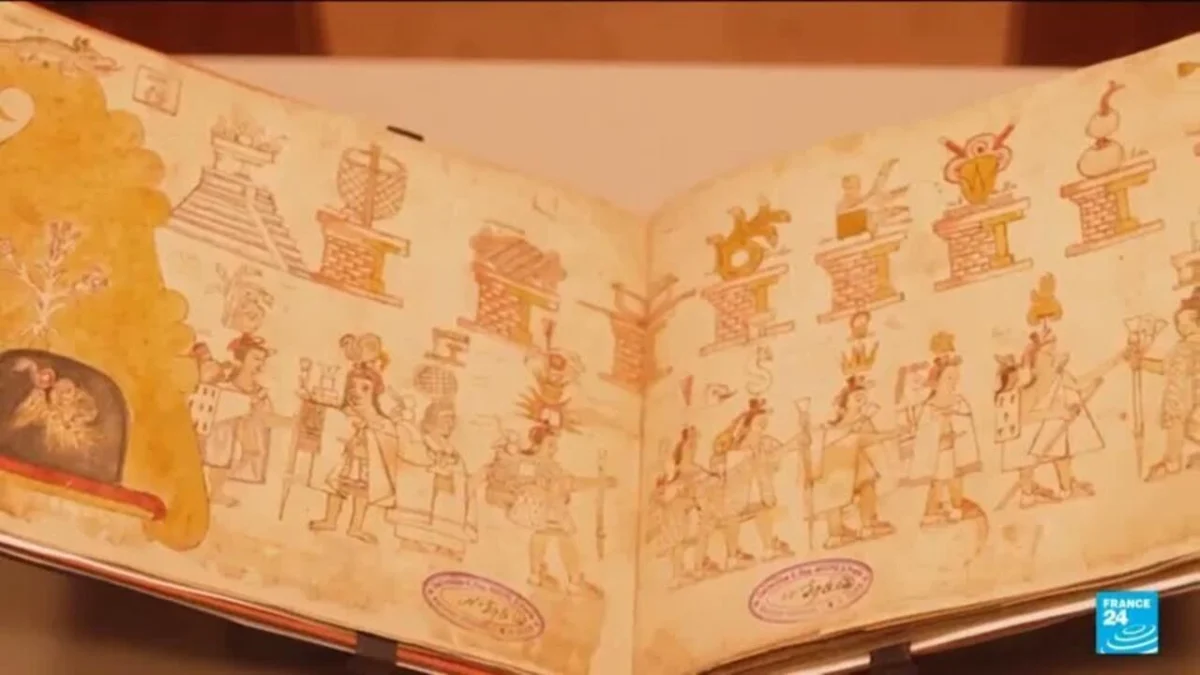
In an event described by cultural historians as a "monumental repatriation of memory," one of the world’s most significant Aztec codices has returned to Mexico. The artifact, which has spent centuries in foreign collections, arrived in Mexico City this week as part of a high-stakes, long-term loan agreement. This homecoming marks a pivotal moment in the ongoing international discourse regarding the restitution of cultural heritage and the decolonization of museum collections.
The codex, a masterpiece of indigenous cartography and historical record-keeping, offers an unparalleled window into the socio-political structures of the Aztec Empire prior to the Spanish Conquest. Its return to Mexican soil is not merely a diplomatic triumph but a deeply symbolic act, allowing the Mexican public to reconnect with a foundational element of their national identity that has long been sequestered behind the glass of European institutions.
The Main Facts: A Treasure Reclaimed
The codex is a rare, pre-colonial manuscript crafted from amatl (bark paper). Its intricate pictorial narrative serves as a primary source for understanding the taxation, migration patterns, and genealogical records of the Mexica people. Unlike many colonial-era documents, this manuscript preserves the authentic perspective of Aztec scribes, free from the immediate editorial influence of Spanish chroniclers.
The loan, which was negotiated over the course of several years, involved rigorous security protocols, environmental monitoring, and international legal cooperation. The manuscript is currently housed in the National Museum of Anthropology (Museo Nacional de Antropología) in Mexico City, where it is being kept under strictly controlled climate conditions to preserve its delicate pigments and organic fibers.
For the Mexican government, the return of the document is a cornerstone of the current administration’s "cultural diplomacy" strategy, which seeks to reclaim artifacts that were taken—often under duress or through colonial-era looting—during the 16th and 17th centuries.
Chronology: A Trajectory of Displacement and Return
To understand the magnitude of this event, one must look at the long, turbulent journey of the document:
- 1520–1530s: The codex is created by Aztec scribes, likely in the region of the Valley of Mexico.
- 1550s: The document disappears from local records, likely sent to Europe as a curiosity or diplomatic gift during the initial stages of the Spanish colonial administration.
- 1800s: The manuscript surfaces in private European collections, passing through the hands of various aristocratic families and antiquarians.
- 1920: The codex is acquired by a major European institution, where it is cataloged and preserved but largely inaccessible to the Mexican public.
- 2023: Mexico initiates a formal diplomatic dialogue regarding the potential return of several key artifacts, including the codex.
- 2025: Negotiations reach a critical phase as international standards for cultural heritage loans are updated, facilitating a framework for temporary return.
- September 2026: The codex arrives in Mexico City, met with an official state reception, marking the start of its multi-year exhibition.
Supporting Data: The Significance of the Codex
The manuscript is more than a work of art; it is a repository of historical data. Paleographers and anthropologists have spent decades studying its digitized images, but the physical presence of the artifact allows for new scientific techniques to be applied.
Recent non-invasive spectral analysis suggests that the dyes used in the manuscript—specifically the vibrant reds and blues—originate from minerals and insects native to the Mexican highlands, confirming the codex’s strictly indigenous manufacturing. Furthermore, the document contains over 40 distinct glyphs that have been cross-referenced with archaeological findings at the Templo Mayor site.
The economic value of such an item is difficult to quantify, given its status as "priceless" under international heritage laws. However, the insurance valuation for the transport of the document alone reached into the millions of dollars, highlighting the risks involved in moving such a fragile piece of world history.
Official Responses: Diplomacy and Debate
The return of the codex has prompted a wide range of responses from global stakeholders.

The Director of the National Museum of Anthropology in Mexico City expressed profound gratitude, stating, "This codex is the heartbeat of our history. Its return is an acknowledgement that the narrative of our past belongs to the people who descended from these creators."
Conversely, the institution that provided the loan released a statement emphasizing the "spirit of global partnership." The museum’s board noted, "We recognize the unique importance of this manuscript to the Mexican nation. This loan serves as a model for how museums can work together to ensure that cultural heritage is both preserved and shared with its communities of origin."
However, not all reactions have been celebratory. Some critics within the international museum community have expressed concerns about "precedent." They argue that if institutions begin returning significant portions of their collections, it could lead to the wholesale emptying of major global galleries. Proponents of restitution, however, counter that this "slippery slope" argument is a defense mechanism for colonial-era accumulation and that the moral imperative to return looted property far outweighs the preservationist fears of the Global North.
Implications: The New Era of Cultural Restitution
The arrival of the Aztec codex in Mexico sets a significant precedent for international law. It moves the conversation beyond "permanent return" (which remains a legal quagmire) toward "long-term, institutionalized loans."
1. Re-evaluating Provenance
The success of this return has reignited calls for a comprehensive audit of colonial-era artifacts. Many institutions are now facing pressure from source countries to provide full transparency regarding how their collections were acquired. The "provenance movement" is no longer a niche academic interest; it is a mainstream political issue that can dictate international relations.
2. Technological Advancements in Preservation
The loan has spurred investment in "digital twinning." Before the codex left its host institution, a high-fidelity 3D digital model was created. This ensures that even if the physical artifact must return to its host country at the end of the loan period, the intellectual and visual record remains in Mexico, and global researchers can continue to study the manuscript without risking the physical object.
3. Strengthening National Identity
For the Mexican public, the presence of the codex is a transformative educational tool. Schools across the country are planning visits, and curricula are being updated to incorporate the specific historical findings found within the document. It serves as a bridge, connecting modern Mexican citizens with their pre-Hispanic ancestors in a tangible, visceral way.
4. Future Negotiations
This agreement will likely serve as the blueprint for future repatriations. By focusing on the "shared human history" rather than the "nationalistic ownership," negotiators have created a framework where both the host institution and the source country feel they have achieved their goals: the host maintains its reputation as a global steward, and the source country reclaims its historical agency.
Conclusion: A Legacy Restored
As the Aztec codex remains on display in Mexico City, the world watches with interest. The debates surrounding the ethics of museum collections are far from resolved, but the return of this manuscript provides a glimpse into a future where history is not held captive by borders.
By acknowledging the trauma of the past and the necessity of cultural belonging, the international community is slowly but surely moving toward a more equitable model of stewardship. For now, the codex rests in its rightful home, telling its story—the story of a civilization that survived, adapted, and continues to speak to us through the ink and bark of its ancestors. The return of this document is not just a homecoming for an object; it is a restoration of a narrative that has been fragmented for far too long.