In the mid-20th century, the United States livestock industry faced an adversary so destructive it cost producers between $50 million and $100 million annually in the Southwest alone. The culprit was Cochliomyia hominivorax, better known as the New World screwworm. Following a decades-long, multi-national effort, the pest was successfully eradicated from the United States and pushed south to the Isthmus of Panama. However, in an alarming development that has public health officials and agricultural experts on high alert, the flesh-eating parasite is on the move once again. Recent detections in Texas and New Mexico have signaled a northward expansion, prompting a sophisticated, technology-driven response from the University of California San Diego and the San Diego County Health and Human Services Agency (HHSA).
The Biological Menace: Why the Screwworm Is Unique
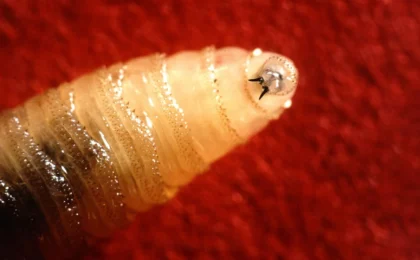
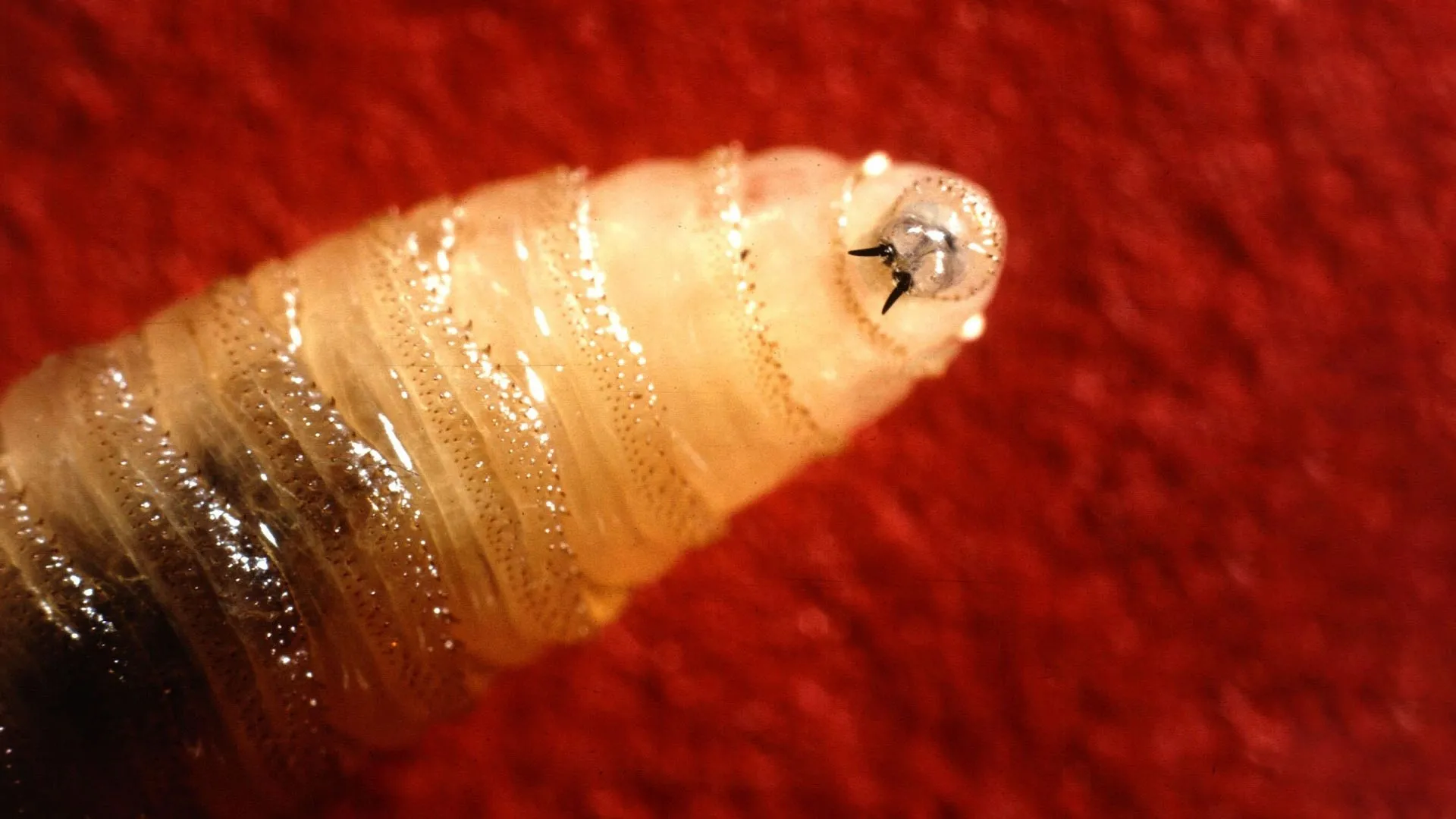
To understand the urgency of the current situation, one must look at the biology of the screwworm. Unlike common houseflies or blowflies that deposit eggs on decaying matter, the New World screwworm is an obligate parasite of living tissue.
Female flies are attracted to open wounds—even those as small as a tick bite or a vaccination site—and natural body openings. Once the eggs hatch, the larvae, which are equipped with hook-like mouthparts, burrow deep into the healthy, living flesh of the host. As the larvae feed, they enlarge the wound, often creating a deep, crater-like pocket that attracts further egg-laying by other flies. This creates a cycle of infestation that can cause severe injury, secondary bacterial infections, and, if left untreated, death for livestock, wildlife, and domestic pets.
While human infections are rare, they are not impossible. Unlike contagious viral diseases such as COVID-19, screwworm does not spread through human-to-human contact. Instead, it poses a direct parasitic threat if the larvae gain access to human mucous membranes or open sores. The primary risk remains the loss of livestock and the potential for a quiet, debilitating public health crisis.
Chronology of a Resurgent Threat
The history of the New World screwworm in the United States is a narrative of triumph followed by a modern-day resurgence.
- The 1950s Eradication Effort: The U.S. government pioneered the "sterile insect technique," a landmark in biological control. By irradiating millions of male flies to render them sterile and releasing them into the wild, officials effectively broke the reproductive cycle of the population, leading to its collapse.
- The 2023 Shift: By early 2023, field reports began to indicate that the parasite was moving northward faster than anticipated.
- The Current Status: The pest has firmly re-established a presence in Texas and New Mexico. Experts, including Dr. Mark Beatty, assistant medical director for the San Diego County Epidemiology and Immunization Services Branch, noted that the speed of this expansion was unexpected. "It’s in a place where it used to live," Dr. Beatty remarked. "It’s not surprising it’s taking a hold again, but the rapid rate of detection is a serious concern."
The Technological Counteroffensive: The New Dashboard
In response to the shifting landscape, researchers at UC San Diego, operating under the "Resilient Shield" initiative, have developed a specialized digital dashboard to track the parasite. This tool is designed to provide actionable intelligence to public health officials, allowing them to anticipate where the fly might strike next.
Innovative Data Integration
The dashboard is unique in its data aggregation. Rather than relying solely on traditional laboratory confirmations—which can be notoriously slow, sometimes taking weeks—the tool incorporates a broader spectrum of indicators:
- Environmental Conditions: The dashboard tracks weather and climate data that favor the breeding and survival of the fly.
- Confirmed Detections: Real-time data from animal health agencies.
- Media Sentiment and Reports: Perhaps the most innovative feature is the inclusion of news media and social monitoring. By scanning news reports, the system can identify "early signals" of infestations, allowing for a proactive rather than reactive stance.
"Traditional reporting mechanisms for public health are often delayed," says Dr. Seema Shah, medical director of the Epidemiology and Immunization Services Branch. "By incorporating media reports, we can identify potential threats sooner and stay one step ahead."
Official Responses and Strategic Collaboration
The effort to contain the screwworm is a multi-layered, multi-agency operation. The U.S. Department of Agriculture (USDA) is currently leading a campaign that mirrors the successful strategies of the past: utilizing sterile insect releases, rigorous pesticide application, and strict quarantine measures to limit the movement of animals that could be carrying larvae.
At the local level, the focus is on "One Health"—the recognition that the health of people is connected to the health of animals and the environment. Dr. Emily Trumbull, lead for the San Diego County Epidemiology Unit’s One Health Program, emphasizes the importance of community engagement. "The flies can affect any warm-blooded animal," she notes. "Working together with veterinarians serving livestock, pets, and wildlife is critical for identifying suspect cases and preventing cases in people."
Furthermore, researchers are looking toward the future. There is currently an effort to seek U.S. Environmental Protection Agency (EPA) approval for a genetically modified all-male strain of the fly, which would be even more effective than the radiation-sterilized males of the past. Meanwhile, scientists at UC San Diego are developing next-generation genetic technologies to ensure that if the fly attempts to gain a permanent foothold, it will be met with a scientifically impenetrable wall of resistance.
Implications for Public Health and the Economy
The return of the screwworm carries significant implications. Economically, the threat is not just the cost of treating infected animals, but the devastating loss of livestock and the disruption of agricultural trade. If the parasite moves into more temperate regions, the cost of surveillance and eradication could balloon into the hundreds of millions of dollars.
Public health-wise, the dashboard represents a paradigm shift in how we handle emerging threats. It is a product of "Resilient Shield," a CDC-funded center that emphasizes a "pull" model of innovation. Instead of academics guessing what the public needs, health departments submit their most urgent, real-world problems to the researchers.
"In public health, we always know our most urgent priorities, but too often we don’t have the immediate resources or in-house technical solutions to achieve them," Dr. Shah explains. The screwworm project serves as a template for future collaboration between academia, technology providers like Google and MITRE, and public health departments across the country.
Conclusion: A Model for the Future
The emergence of the New World screwworm is a sobering reminder that many of the battles humanity has won against nature are not necessarily "won" forever. Ecological conditions change, and biological threats can adapt. However, the response to this resurgence is markedly different from that of the 1950s. By leveraging AI-driven dashboards, real-time media monitoring, and modular, scalable engineering, public health officials are no longer flying blind.
While the dashboard is currently restricted to official partners, the eventual goal is to provide a public-facing version that can help ranchers, pet owners, and the general public identify risks and take preventative measures. The success of this model—where technical expertise is harnessed to meet the immediate, practical needs of those on the front lines—offers a blueprint for how modern society can navigate the complex and unpredictable landscape of 21st-century disease threats.
As the surveillance continues, the message from researchers and health officials is clear: the threat is real, the pace is rapid, but the collaborative, data-informed defense is stronger than ever.