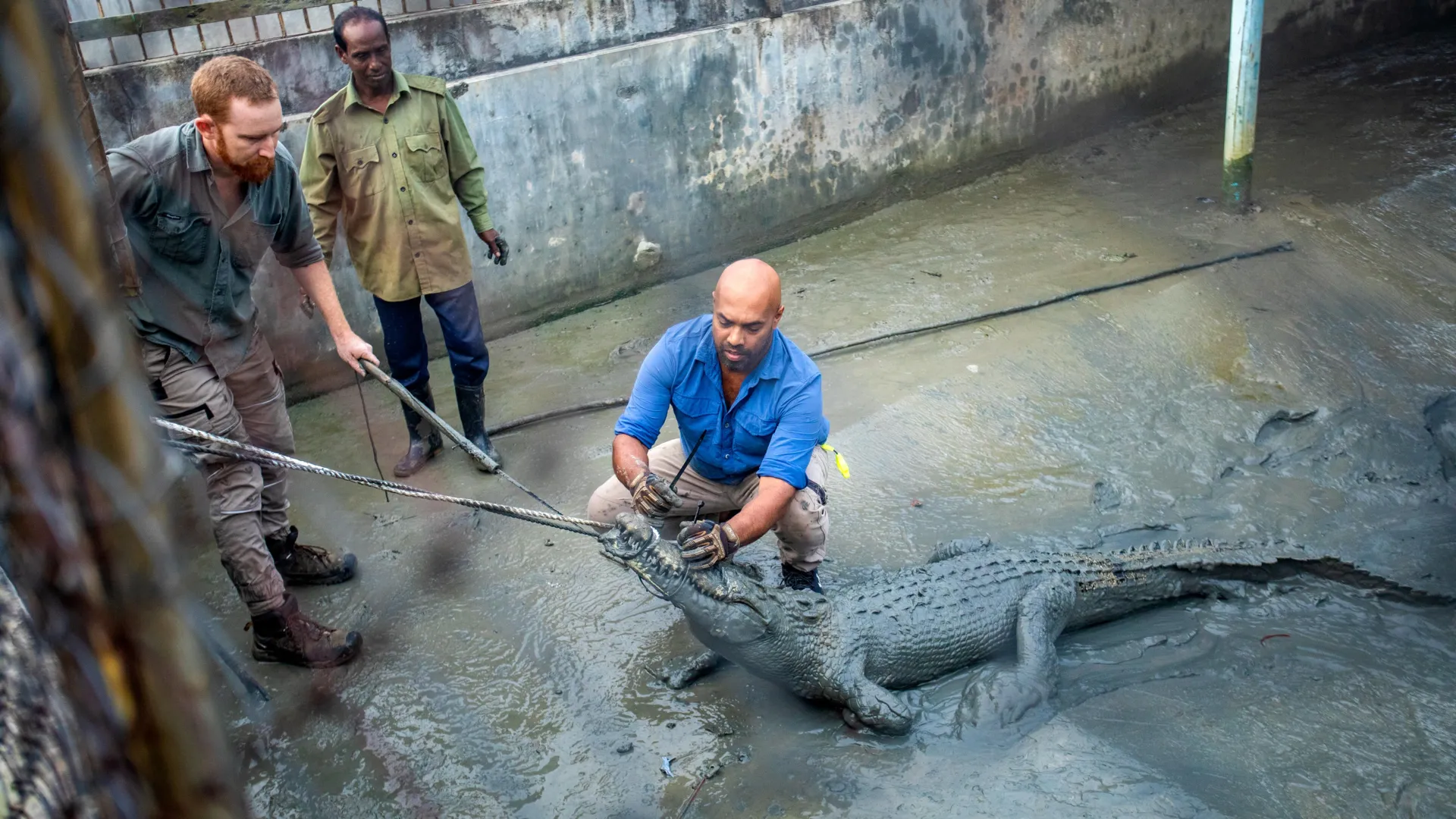
In the labyrinthine channels of the Sundarbans mangrove forest, one of the world’s most formidable predators is fighting a quiet battle for survival. Saltwater crocodiles (Crocodylus porosus), the largest of all living reptiles, have long been a symbol of the untamed wilderness. Yet, in Bangladesh, they exist on the razor’s edge of extinction. A groundbreaking study recently published in the journal Wildlife Research has unveiled a potential turning point for these apex predators: evidence suggests that captive-raised crocodiles may be successfully integrated into the wild without the compulsive drive to return to their former enclosures—a behavior that has long plagued conservation efforts.
The Homing Instinct: A Double-Edged Sword
For many species, the "homing instinct"—the innate ability to navigate back to a familiar territory—is a biological imperative. From sea turtles returning to their natal beaches to salmon navigating thousands of miles of river, the ability to find "home" is often the difference between life and death.
However, in the world of crocodilian conservation, this instinct is a significant hurdle. Behavioral ecologists have long observed that when wild crocodiles are translocated to protect human-inhabited areas or to manage conflict, they frequently exhibit a persistent, often fatal, determination to return to their original capture sites. This "homing" behavior often results in the animals traversing hazardous landscapes or crossing industrial zones, frequently leading to their demise.
"Crocodilians are a unique case when it comes to homing behavior," explains Dr. Ru Somaweera, a behavioral ecologist and Adjunct Associate Professor at Murdoch University. "They are remarkably good at finding their way home, often limiting the success of relocation programs. What we still don’t fully understand, though, is how this behavior plays out in individuals that have been bred or kept in captivity for long periods before being released back into the wild."
Chronology of a Conservation Crisis
The history of the saltwater crocodile in Bangladesh is one of rapid decline and stagnant recovery. During the early 20th century, the species was decimated by the global trade in exotic skins. By the 1970s, the population had been hunted to the brink of collapse.
- 1973: Following the catastrophic losses of the preceding decades, the Bangladesh government officially granted legal protection to the saltwater crocodile.
- The Decades of Stagnation: Despite five decades of legal safeguards, the population has shown no measurable recovery. Today, the Sundarbans—a UNESCO World Heritage site—serves as the last major stronghold for the species in the region.
- Recent Surveys: Current estimates indicate a critically small population of just 140 mature individuals, leaving the species highly vulnerable to environmental shifts, disease, and genetic bottlenecks.
For conservationists, the primary strategy has been the release of hatchlings. However, this approach has proved inefficient. Hatchlings suffer from extremely high mortality rates in the wild, and the time required for these individuals to reach sexual maturity is significant, delaying the potential for population growth by over a decade.
Supporting Data: Tracking the Giants
To address the limitations of current conservation strategies, researchers embarked on a study to see if older, captive-bred crocodiles could serve as a more viable "seed" population for reintroduction. The study was a collaborative effort led by the IUCN Bangladesh and the Bangladesh Forest Department, funded by the Deutsche Gesellschaft für Internationale Zusammenarbeit (GIZ).
The research design was meticulous, utilizing satellite telemetry to monitor five mature saltwater crocodiles post-release:
- The Captive-Reared Group: Three females, each having spent between 8 and 22 years in captivity, were released into the Sundarbans.
- The Control Group (Local): One wild crocodile was captured and released at its original site to establish a baseline for "normal" behavior.
- The Translocated Group: One wild crocodile, nicknamed "Jongra," was captured and released 132 kilometers away from its original territory to test the strength of its homing instinct.
The animals were tracked via satellite for several months, providing researchers with granular data on daily movement patterns, habitat selection, and directional orientation.
The Findings: A Shift in Behavior
The results of the study provided a striking contrast between the captive-reared individuals and the translocated wild specimen.
The three captive-reared crocodiles showed no inclination to return to their breeding facilities. Instead, they adapted to their new environment with surprising ease. They settled into small, well-defined areas of the mangrove forest, mirroring the movement patterns of the local wild control subject. This suggests that their time in captivity may have "reset" their spatial memory or, at the very least, failed to imprint a strong enough attachment to their enclosure to trigger a homing response.
Conversely, the data for Jongra, the translocated wild crocodile, painted a picture of a creature in pursuit of a destination. Despite being moved over 100 kilometers away, Jongra’s movements were not random. He displayed intense, goal-oriented travel, covering vast distances—sometimes exceeding 30 kilometers in a single day. These patterns are classic signatures of homing behavior, demonstrating the persistent, almost desperate drive of a wild-born animal to return to its home range.
Official Responses and Ecological Implications
Dr. Somaweera believes these findings could fundamentally alter how conservationists approach the reintroduction of apex predators. "These findings suggest that releasing subadult and adult captive-reared crocodiles can be a viable strategy to strengthen wild populations," he noted.
The implications are two-fold:
- Increased Survival: By releasing subadults or adults, conservationists bypass the high mortality rates associated with the hatchling stage, providing a better statistical chance for individual survival and eventual reproduction.
- Strategic Planning: The study emphasizes that for translocated wild crocodiles, "homing" is a factor that must be actively managed. If a wild crocodile must be moved, managers should anticipate the animal’s attempt to return home and plan accordingly—either by selecting release sites that minimize the likelihood of successful navigation back or by providing long-term monitoring to ensure the animal does not enter high-risk human-wildlife conflict zones.
Moving Toward a Stable Future
The study, titled What is home? Post-release movements of captive-reared and translocated mature saltwater crocodiles in Bangladesh, serves as a vital blueprint for future conservation efforts. By identifying that captive-raised crocodiles do not share the intense "homing" compulsion of their wild-caught counterparts, the research provides a practical, evidence-based pathway to boost the population of the Sundarbans’ most iconic predator.
While the study is a triumph of methodology, the work is far from finished. The researchers acknowledge that long-term monitoring will be necessary to ensure these captive-reared individuals eventually contribute to the genetic diversity of the wild population through successful breeding.
For a species that has spent fifty years in a demographic stalemate, the possibility of using older, captive-reared individuals to jumpstart the population is more than just a scientific curiosity—it is a lifeline. As Bangladesh looks to preserve its natural heritage, these findings offer a rare spark of optimism, suggesting that the path back from the brink may be found not by looking for the way home, but by learning to embrace a new one.