For centuries, the story of the plague has been inextricably linked to the imagery of the Middle Ages: the cramped, unsanitary alleyways of medieval Europe, the swarming of rat populations, and the devastating, sweeping pandemics that reshaped human civilization. Historians have long posited that Yersinia pestis—the bacterium responsible for the Black Death—required the dense, urbanized environments of the post-Neolithic world to flourish.
However, a groundbreaking study published in the journal Nature has shattered this long-held paradigm. An international team of researchers, utilizing advanced paleogenetic sequencing, has discovered that the plague was a formidable, lethal threat as early as 5,500 years ago. This discovery shifts the origin story of the world’s most notorious pathogen from the bustling cities of the medieval era to the sparse, nomadic hunter-gatherer camps of prehistoric East Siberia.
The Genetic Detective Story: Sequencing the Past
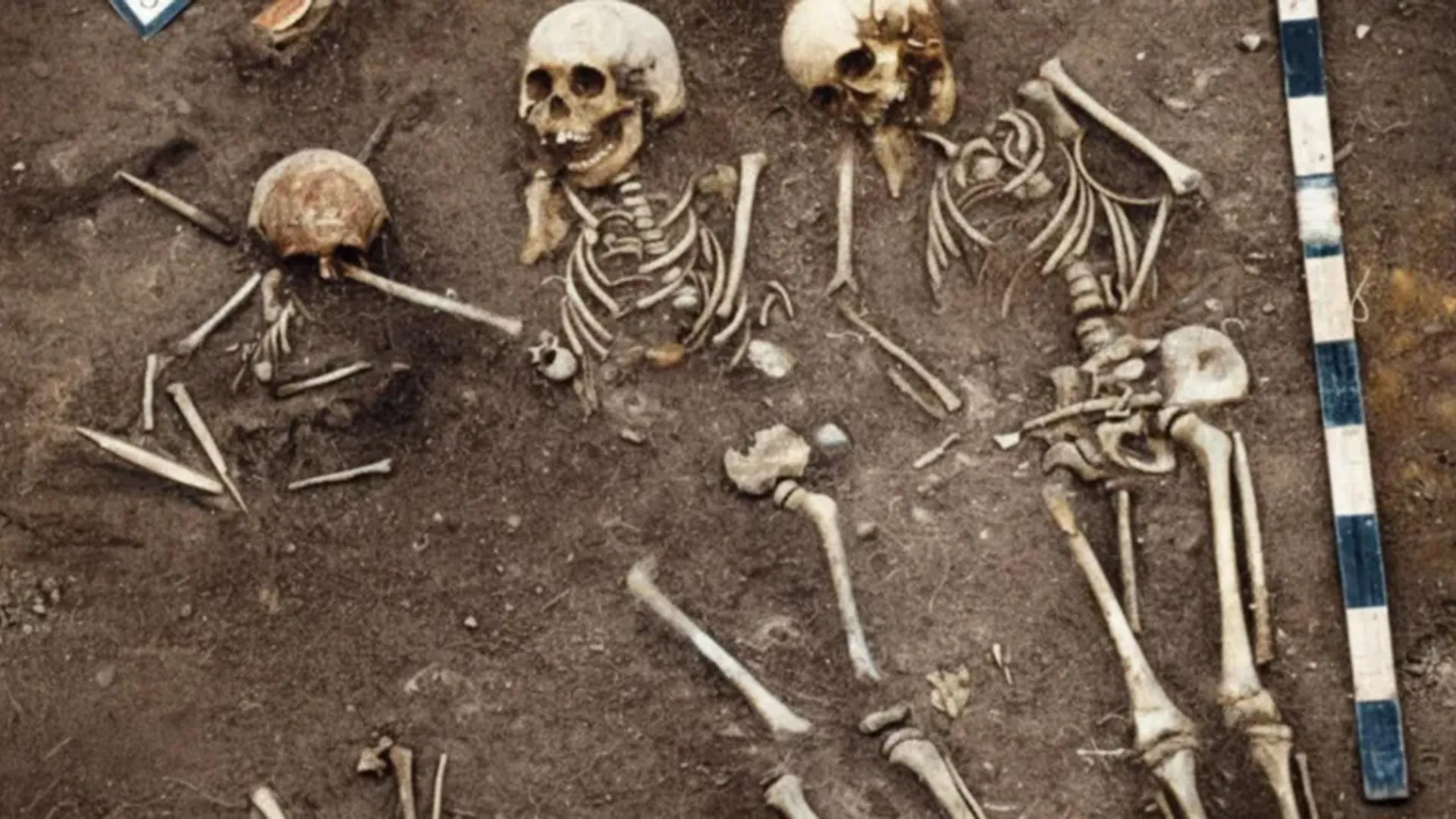
The research centers on the Lake Baikal region of East Siberia, a rugged landscape where archaeologists have long puzzled over the contents of ancient burial sites. By extracting and sequencing DNA preserved in the teeth of human remains recovered from four distinct hunter-gatherer cemeteries, the team was able to reconstruct ancient bacterial genomes.
What they found was startling: 18 of the 46 individuals tested—nearly 40 percent—carried traces of Yersinia pestis. This prevalence rate is significantly higher than that observed in many confirmed medieval plague pits. This data suggests that long before the rise of the wheel, the plow, or the city-state, humanity was already grappling with a pathogen that would eventually become the architect of some of history’s greatest demographic collapses.
Chronology of a Prehistoric Epidemic
The study of the Lake Baikal remains allows for a rare, high-resolution look at the timeline of prehistoric disease. By synthesizing genetic data with radiocarbon dating and archaeological context, the researchers constructed a narrative of life and death in the Neolithic Siberian wilderness.
The Mystery of the Young
For decades, archaeologists associated with the Baikal Archaeology Project had been perplexed by the demographic profile of the two largest burial sites. These cemeteries contained a disproportionately high number of children and young teenagers, all interred over a relatively brief historical window. In the absence of evidence for warfare or environmental catastrophe, this "child-heavy" mortality pattern remained an enigma.
"The unusually high number of children and the short timespan was a real puzzle that we’ve been trying to solve since the 1990s," says archaeologist Andrzej Weber of the University of Alberta, a Principal Investigator of the project. "Finding out that plague was the cause is extraordinary, but it makes so much sense."
Simultaneous Loss
The radiocarbon evidence provides a grim timeline. In multiple instances, the data suggests that families—parents and children—and siblings were buried in close succession, pointing to localized, rapid-onset outbreaks. This level of mortality in small, mobile populations implies that the disease did not require the "crowding" traditionally assumed necessary for transmission. Instead, these prehistoric outbreaks moved through family units and small camps with ruthless efficiency, leaving entire groups decimated in a matter of weeks or months.
Challenging the Evolutionary Dogma
The traditional scientific narrative regarding the plague has focused on the evolution of transmission. It was previously understood that early strains of Yersinia pestis lacked the genetic machinery necessary to colonize the flea midgut, which is the primary driver of the bubonic plague’s transmission in later centuries. Because of this, many biologists concluded that early, ancestral strains were likely mild, "pre-adapted" versions that were not yet capable of triggering widespread mortality.
The Siberian findings directly challenge this view. The genomic analysis revealed that these ancient strains possessed a distinct "superantigen"—a potent genetic factor not found in modern, historic plague strains.
The Role of the Superantigen
A superantigen is a class of antigens that result in excessive activation of the immune system. Instead of triggering a standard, localized immune response, these toxins cause the immune system to go into overdrive, resulting in massive systemic inflammation. This "cytokine storm" would have rendered the infection significantly more dangerous to the host, potentially explaining why the mortality rate among the Siberian hunter-gatherers was so high.
"This finding changes our understanding of the earliest plague outbreaks," says senior author Martin Sikora, Associate Professor at the University of Copenhagen. "Even before the bacterium evolved efficient flea-borne transmission, these ancient strains appear to have carried a potent combination of virulence factors that could make infection highly lethal."
Expert Perspectives and Official Findings
The international team, led by experts from the University of Copenhagen and the University of Cambridge, emphasizes that the discovery is a triumph of interdisciplinary science. By bridging the gap between paleogenetics and traditional archaeology, they have managed to provide a "complete picture" of prehistoric epidemiological events.
"Whether the earliest forms of plague were mild or virulent has been a matter of debate," says senior author Eske Willerslev. "Our findings demonstrate that these ancient strains were already highly lethal."
Lead author Ruairidh Macleod, who conducted the work while a PhD student at Cambridge and is now a Research Fellow at the University of Oxford, echoes this sentiment. "Based on the plague DNA, the genetic relationships between the victims, the archaeological analysis, and the radiocarbon dating, we’ve built a really clear, complete picture of what happened during these outbreaks."
The Marmot Connection: A New Transmission Theory
If the plague was killing hunter-gatherers before the advent of the flea-borne bubonic cycle, how was it spreading? The research points toward a zoonotic origin involving marmots.
Marmots are large, burrowing rodents native to the Central and North-East Asian steppe. They are known reservoirs for the plague even today, and historically, they have been a source of transmission to humans through direct contact or the handling of pelts. The archaeological record in the Lake Baikal region confirms that the hunter-gatherers of that era lived in close proximity to these animals.
This suggests that the "Original Plague" may have been a series of zoonotic spillover events. In this scenario, humans were not dying because of rats in cities, but because they were interacting with a natural reservoir of the bacteria in the wild. This confirms that Yersinia pestis has been a constant, albeit silent, passenger in the rodent populations of Asia for millennia, waiting for the right moment to jump the species barrier.
Implications: Rewriting Human History
The implications of this study are profound, touching upon fields ranging from evolutionary biology to human migration history.
1. Re-evaluating Population Dynamics
Historians have often credited the Neolithic Revolution—the transition to agriculture—as the turning point for human disease. The theory was that as humans began living in fixed, high-density settlements, the "disease burden" skyrocketed. This research suggests that this burden existed long before the Neolithic, indicating that infectious disease may have been a major factor in shaping the population size and migration patterns of prehistoric humans.
2. The Evolution of Pathogenicity
The presence of the superantigen suggests that Yersinia pestis did not necessarily become "more lethal" as it evolved; rather, it shifted its tactics. It moved from a highly toxic, direct-transmission model to a more nuanced, flea-borne strategy that allowed it to survive in wider, more varied environments.
3. A Warning for the Future
The ability of ancient bacteria to thrive in low-density populations serves as a sobering reminder of the resilience of pathogens. Understanding how these diseases functioned in the absence of modern infrastructure provides scientists with a clearer map of the "evolutionary potential" of the plague.
In conclusion, the Lake Baikal study forces us to abandon the notion that the plague is a uniquely urban or medieval horror. Instead, it reveals the plague as an ancient, persistent companion to human history—a silent, lethal force that was already active in the remote Siberian tundra thousands of years before the first city was ever built. By unearthing these secrets from the teeth of the long-dead, scientists are not just rewriting history; they are gaining a better understanding of the fundamental nature of the threats that have defined the human experience.