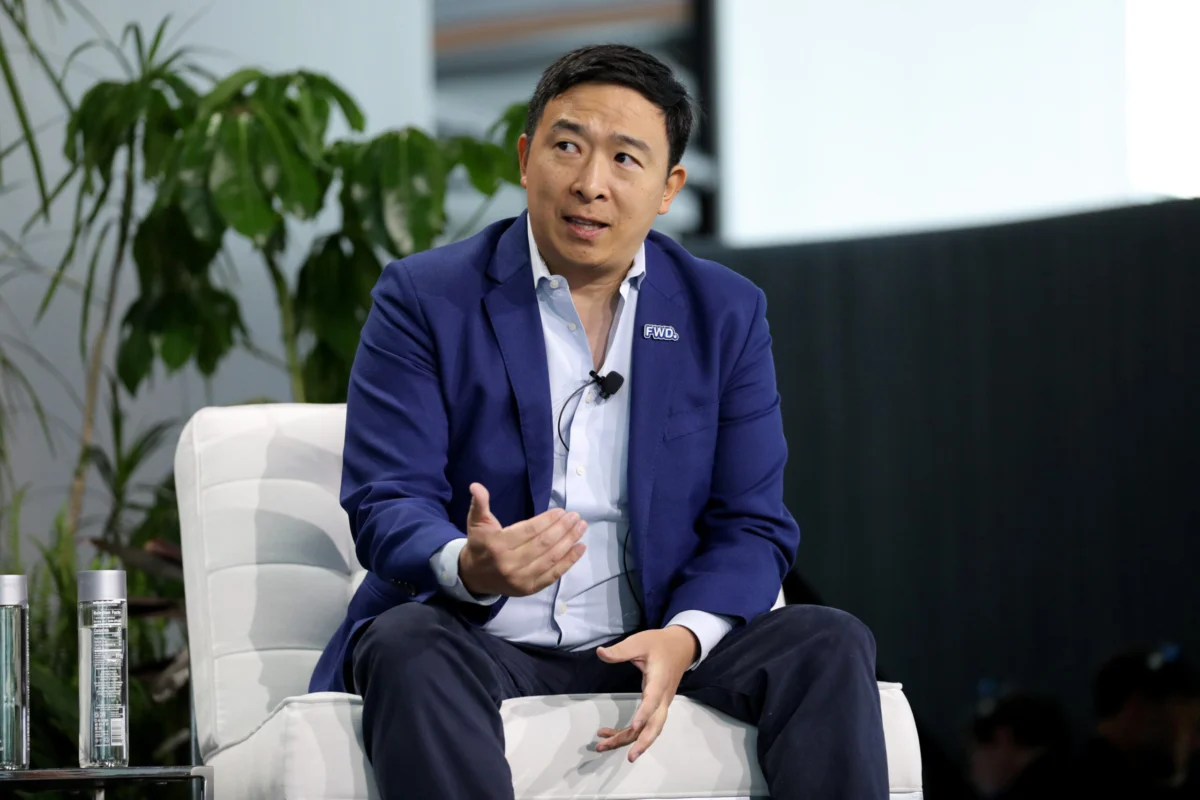
In the high-stakes theater of Silicon Valley, the prevailing business model is often defined by "extraction"—a race to capture value, monetize user attention, and scale through aggressive profit-taking. But Andrew Yang, the former presidential candidate turned entrepreneur, is proposing a radical pivot. He is testing a theory that the most significant startup opportunity of the next decade won’t be found in building another AI wrapper, but in doing the opposite: creating businesses that prioritize returning margin to the customer.
Yang’s thesis is rooted in a sobering observation: as artificial intelligence accelerates, the risk of mass workforce displacement and wage compression is no longer a theoretical exercise—it is an economic reality. In this climate, Yang argues, the startups that will win are those that help the average American lower their cost of living. By focusing on essential expenses—housing, education, food, fuel, transportation, and wireless connectivity—Yang believes entrepreneurs can build sustainable, profitable enterprises that essentially pay their users to participate.
The Genesis of an Idea: From Policy to Profit
The seeds of this philosophy were sown during Yang’s 2020 presidential run, where his central platform was the implementation of a Universal Basic Income (UBI). He argued then that the concentration of wealth created by technological automation necessitated a direct redistribution of capital to the citizenry. While his campaign did not reach the White House, the urgency of the problem he highlighted has only intensified.
However, Yang’s perspective on how that redistribution happens has evolved. He has become increasingly skeptical that government policy alone can bridge the widening gap between productivity and wages. Instead, he is looking to the private sector to act as a mechanism for economic relief.
The inspiration for this "reverse extraction" model came from an unlikely source: Mark Cuban. Rather than admiring the billionaire’s celebrity or traditional wealth-building, Yang found himself drawn to Cost Plus Drugs, Cuban’s pharmaceutical startup. By selling essential medications at a transparent, cost-plus-markup price, Cuban disrupted a predatory industry. Yang realized that if you could apply that same logic to other basic life necessities, you could create a new, resilient class of businesses.
Chronology of a Disruption: The Birth of Noble Mobile
Last September, Yang took his theory from the whiteboard to the marketplace with the launch of Noble Mobile. A mobile virtual network operator (MVNO), Noble Mobile was designed to do what traditional carriers refuse to: lower the cost of a utility that has become as essential as electricity.
The Timeline of Execution:
- 2020: Yang’s presidential campaign centers on UBI, framing AI-driven displacement as the defining challenge of the era.
- 2023-2024: Yang begins researching sectors with the highest "extraction" rates—industries where consumers are consistently overcharged for basic services.
- September 2025: Official launch of Noble Mobile. The company enters a crowded market with a unique value proposition: provide premium cell service at a fraction of the cost, while offering cash back to users who consume less data.
- May 2026: Noble Mobile forms a strategic partnership with Light Phone, the "minimalist" phone manufacturer, aiming to combat the "doomscrolling" culture that feeds the advertising-based revenue models of Big Tech.
- Present Day: Noble Mobile reports "thousands and thousands" of subscribers and millions in revenue, proving that the model is not just idealistic—it is fiscally viable.
Supporting Data: Why "Lowering Costs" is the New Growth Engine
The economic logic behind Noble Mobile is deceptively simple. Yang points out that the average American is trapped in a cycle of constant micro-payments to monopolistic entities. If a startup can save a family $50 per month on a utility, that is $600 a year back in the consumer’s pocket.
"The average monthly savings of $50, invested and compounded over 40 years, could amount to $24,000," Yang noted in a recent discussion on the Equity podcast. In an era where retirement savings are dwindling and personal debt is at an all-time high, this isn’t just "savings"—it’s a foundation for financial stability.
The company is unit profitable per customer. By sharing those profits back with the subscribers, Noble Mobile creates a "sticky" ecosystem. The logic is that happy customers stay longer, require less acquisition spend, and act as organic marketing channels. It is a virtuous cycle that replaces the "customer acquisition cost" (CAC) treadmill with a "customer retention" model based on mutual benefit.
The Resistance: Silicon Valley and the AI Groupthink
Despite the initial success of Noble Mobile, Yang’s journey has not been without friction. The current venture capital ecosystem is heavily tilted toward AI-centric startups that promise exponential growth through automation and labor reduction. When Yang approached investors for Noble Mobile, he was met with a consistent refrain: “Love you, Andrew, want to work with you—if you could just make this an AI company, we’ll invest.”
This highlights a fundamental rift in Silicon Valley’s priorities. Investors are currently obsessed with businesses that maximize extraction. A company designed to lower the cost of living for the working class lacks the explosive, high-margin trajectory that traditional VCs crave.
Yet, Yang remains undeterred. He argues that even the most successful, high-tech firms rely on a functioning economy where consumers have the buying power to purchase their products. If AI continues to "suck up" all the value and displace workers, those tech giants will eventually find themselves with no one left to sell to.
"The value being concentrated in the hands of a handful of folks and firms is just bad for everybody," Yang says, adding a darker, more pragmatic observation: "There are some folks I know in Silicon Valley who are open to [redistribution] for a variety of reasons—including that they just don’t want to have to hire private security."
Implications for the Future of Enterprise
The emergence of "reverse extraction" startups like Noble Mobile, Misfits Markets, and Light Phone suggests a potential paradigm shift in the startup landscape. We are entering a period where the "Social Mission" of a company is no longer just a marketing tag—it is the core of the business model.
Key Implications:
- Consumer Trust as an Asset: In a world of deepfakes and algorithmic manipulation, brands that provide transparent, "pro-human" services will command greater loyalty.
- The "Essential Services" Pivot: Entrepreneurs are beginning to realize that the most "disruptive" thing they can do is not to build a new feature, but to slash the cost of an existing, bloated service.
- Redistribution via Markets: Yang’s experiment proves that if the government is too gridlocked to redistribute wealth, the market can—and perhaps must—do it to ensure long-term stability.
A Call to Action for Founders
Yang’s message to the next generation of founders is clear: stop chasing the trends set by groupthink. The obsession with AI-as-an-end-in-itself is a distraction from the fundamental needs of the American public.
"Think bigger and more broadly about trying to tackle problems," Yang says. He encourages founders to look at the bills on their kitchen tables—the recurring, frustrating expenses that define modern life—and ask: How can I make this cheaper?
As the economy continues to navigate the turbulence caused by automation, the companies that succeed will be those that align their success with the financial health of their users. Whether this movement will gain enough momentum to shift the tide of venture capital remains to be seen. But as Yang has demonstrated, when the system fails to address the basic needs of its people, the market will eventually attempt to fill the void. And in that void, there lies a very rich vein of opportunity.