By International Affairs Desk
ROVANIEMI, Finland — As the ice caps recede at an unprecedented rate, the Arctic has shifted from a remote, frozen frontier to the center of a high-stakes geopolitical tug-of-war. On Monday, in the Finnish town of Rovaniemi, leaders from twelve European nations convened for a landmark Arctic Summit, issuing a clarion call for the European Union to transition from a bystander to a proactive, strategic power in the region.
The summit, hosted by Finnish Prime Minister Petteri Orpo, underscored a growing consensus among European capitals: the Arctic is no longer a peripheral concern of climate scientists, but a critical theater for European security, economic sovereignty, and environmental stability.
The Main Facts: A Unified Call for Presence
The joint statement released by the coalition—which included France, Germany, Denmark, Sweden, and Greece—was unequivocal. The signatories urged the European Commission to elevate the Arctic to a top-tier policy priority. With Russia’s intensifying military posture and the unpredictable nature of U.S. engagement under President Donald Trump, the EU is moving to fortify its presence.
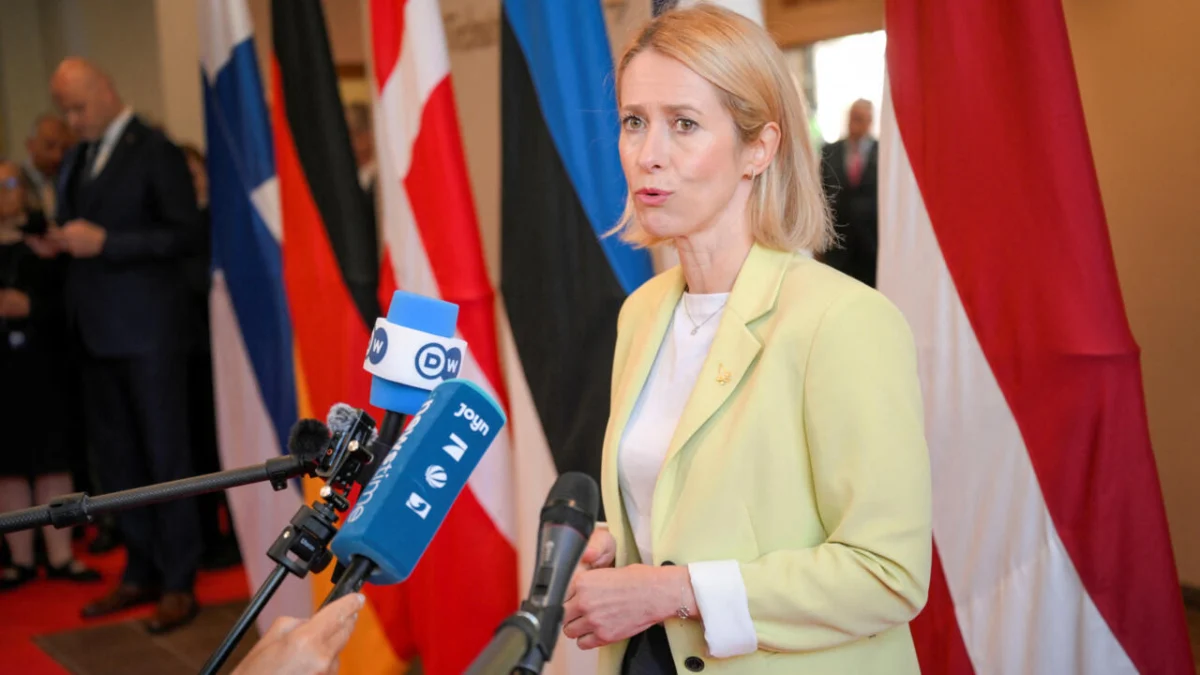
The central pillar of the discussion was the need for tangible "hard power" in the region. EU Foreign Policy Chief Kaja Kallas highlighted the bloc’s critical deficiency: a lack of specialized maritime infrastructure. "Given the situation we are in, and considering climate change and the opening of maritime routes, we need icebreakers or ships that are able to navigate in these very difficult conditions," Kallas told reporters.
While the specific mechanism—whether the EU will fund a shared fleet or coordinate national procurement—remains under negotiation, the intent is clear: the European Union seeks to project power in the North to secure its borders and interests.
Chronology: The Road to Rovaniemi
The urgency of the Rovaniemi summit is the culmination of years of shifting regional dynamics:

- 2021: The European Union adopts its most comprehensive Arctic policy to date, emphasizing sustainable development and climate mitigation. However, the document is soon rendered insufficient by the rapidly deteriorating security landscape.
- Early 2026: President Donald Trump revives rhetoric regarding the potential U.S. acquisition of Greenland, triggering a diplomatic crisis and forcing the EU to re-evaluate the vulnerability of its northern maritime borders.
- January 2026: Commission President Ursula von der Leyen signals a paradigm shift, suggesting that the EU’s surge in defense spending should explicitly include "European icebreaker capabilities."
- August 2026: China and South Korea successfully test the viability of the Northern Sea Route, signaling that the Arctic is fast becoming a global transit artery, effectively ending the region’s historical isolation.
- September 7, 2026: Von der Leyen visits Greenland, pledging a 200-million-euro ($232-million) investment package, marking the EU’s firm commitment to counter foreign influence in the region.
- September 14, 2026: The Rovaniemi Summit convenes, formalizing the demand for a new, security-focused Arctic strategy.
Supporting Data: A Region in Flux
The geopolitical race is fueled by a physical transformation of the landscape. According to climate experts, the Arctic is warming nearly four times faster than the global average. This "Arctic amplification" is not merely an environmental tragedy; it is an economic and military catalyst.
As sea ice diminishes, transit times between East Asia and Europe via the Northern Sea Route are cut by roughly 40% compared to traditional routes through the Suez Canal. For China and South Korea, this represents a massive logistical windfall. For Russia, it provides a captive waterway to exert influence and extract untapped natural resources.
The economic significance is mirrored by military necessity. The expansion of Russian military bases—many of which were shuttered during the Cold War—has forced NATO to scramble. The deployment of new, sophisticated radar systems and the increased presence of Russian nuclear-powered icebreakers have left European coastal states, particularly those with Arctic territories like Denmark, in a precarious position.
Official Responses and Strategic Pivot
The Rovaniemi gathering served as a stage for high-level diplomatic maneuvering. Germany’s Chancellor, Friedrich Merz, emphasized that the Arctic represents the "northern flank of European stability."
"What happens here is not a regional story," remarked EU Council President Antonio Costa. "It is a European one."
The push for a new Arctic strategy, expected to be unveiled by the European Commission in the coming weeks, represents a departure from the "civilian-only" focus of the past. Officials argue that "hybrid activities"—ranging from cyber-espionage on telecommunications infrastructure to the manipulation of maritime data—require a robust military-civilian synergy.
Tuomas Tikkanen, senior adviser to the Finnish Prime Minister, noted that the summit was intentionally timed. "The idea is essentially to strengthen the EU’s common strategic approach to the Arctic in this situation, where the geopolitical and economic significance of the region is growing considerably," he stated.

Implications: The High Stakes of the North
The implications of this shift are profound, impacting international law, environmental policy, and global power balances.
1. The End of the "Arctic Exception"
Historically, the Arctic was governed by the principle of "Arctic exceptionalism," the idea that the region should be insulated from global geopolitical conflicts. The Rovaniemi summit marks the effective death of this concept. With Russia treating the North as a theater of competition and the U.S. debating territorial influence in Greenland, the EU is forced to treat the Arctic as a strategic asset rather than a sanctuary.
2. The Greenland Factor
Greenland remains the "linchpin" of the current tension. As an autonomous Danish territory, it is a key point of interest for the United States, China, and the EU. By pledging 200 million euros, the EU is attempting to secure Greenland’s loyalty through infrastructure development, renewable energy projects, and economic integration, essentially creating a "European shield" against external predatory investment.
3. The Maritime Arms Race
The call for icebreakers is not just about logistics; it is about sovereignty. Whoever controls the ships that can navigate the frozen sea controls the flow of trade. If the EU succeeds in building a credible, joint icebreaker capability, it will gain a permanent seat at the table in Arctic governance, preventing the region from becoming a duopoly between Washington and Moscow.
4. Climate vs. Security
The most complex challenge for the EU remains the duality of its mission. It seeks to combat climate change, which is destroying the Arctic ecosystem, while simultaneously preparing to exploit the transit routes and resources that are being exposed by that very destruction. Balancing these conflicting mandates will be the defining challenge for the new Arctic strategy.
Conclusion: A New Horizon
As the Rovaniemi Summit concluded without formal, binding decisions, it nonetheless succeeded in setting the agenda for the remainder of the decade. The European Union has signaled that it will no longer be a silent observer as the North warms and the competition heats up.
Whether this newfound resolve will result in a unified, effective Arctic fleet or be bogged down by the usual bureaucratic friction of twenty-seven member states remains to be seen. However, one thing is certain: the era of the quiet, frozen North is over. In its place is a new, dangerous, and commercially vital arena where the European Union is now officially, and perhaps belatedly, vying for control.