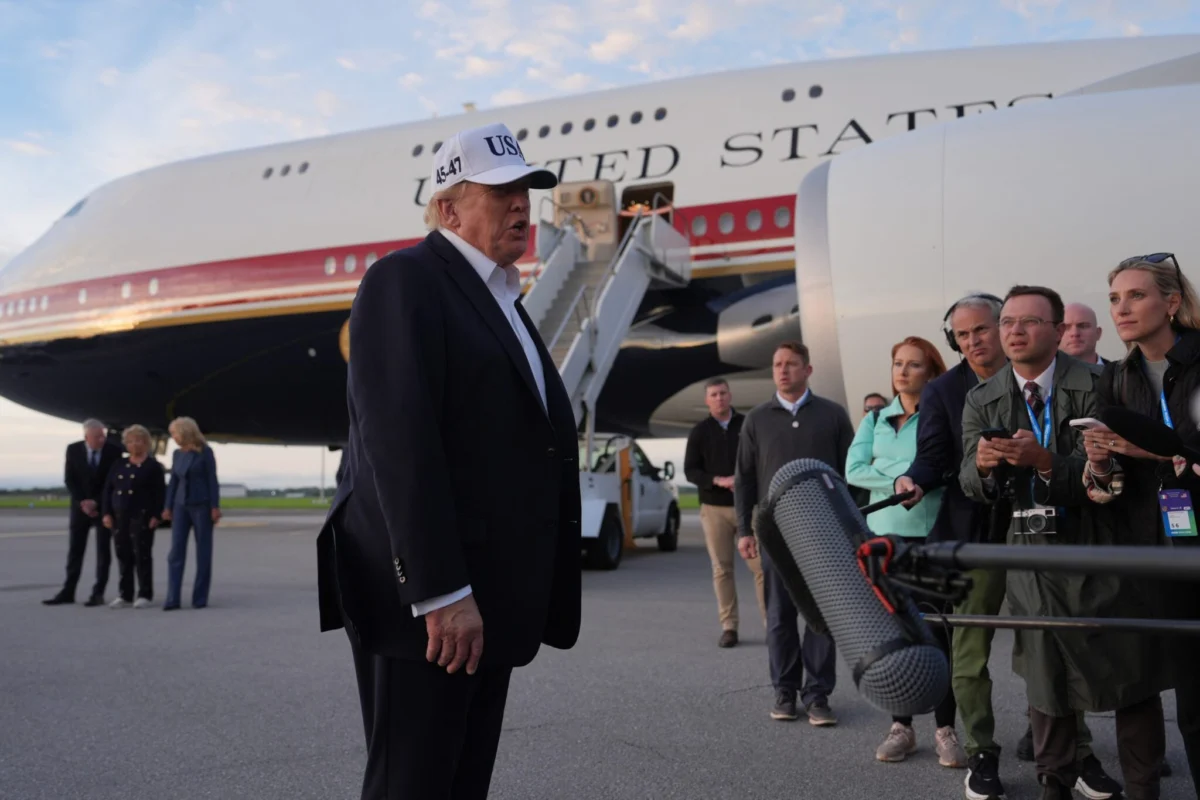
WASHINGTON D.C. — In a move that could potentially recalibrate one of the United States’ most complex geopolitical alliances, President Donald Trump announced on Sunday that his administration will formally review requests to declassify sensitive documents related to the September 11, 2001, terrorist attacks. The announcement comes in direct response to a sustained and emotional campaign by the families of victims who believe the records contain evidence of Saudi Arabian government involvement in the tragedy.
Speaking to reporters on the tarmac in Ireland before boarding Air Force One, the President indicated a willingness to revisit files that have remained under seal for nearly two decades. "I’m going to look at it when I get back," Trump stated, referring to his return to Washington. "I know they asked me Friday."
The President’s comments follow a poignant series of encounters during the recent remembrance ceremonies in New York City, where family members of the nearly 3,000 victims urged the Commander-in-Chief to prioritize judicial transparency over diplomatic expediency.
Main Facts: The Intersection of Justice and Diplomacy
The core of the controversy lies in the long-standing allegation that elements within the Saudi Arabian government provided logistical, financial, or ideological support to the 9/11 hijackers. Of the 19 individuals who carried out the attacks, 15 were Saudi nationals. While the 9/11 Commission Report famously stated in 2004 that it found "no evidence that the Saudi government as an institution or senior Saudi officials individually funded the organization," critics and family members have long argued that this phrasing left a wide window for lower-level officials or state-sponsored religious leaders to have played a role.
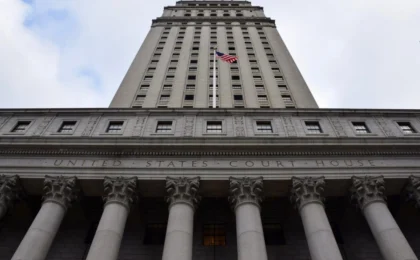
The families, led by advocacy groups such as "9/11 Families United," are currently engaged in a massive civil lawsuit against the Kingdom of Saudi Arabia in the Southern District of New York. Their request for declassification centers on several tranches of documents, including:
- FBI Investigative Files: Records from "Operation Encore," a secretive FBI probe into whether Saudi officials in the U.S. assisted the first two hijackers who arrived in California.
- Unredacted Summaries: Deeper details regarding the activities of Omar al-Bayoumi and Fahad al-Thumairy, two individuals with links to the Saudi government who were suspected of assisting the terrorists in San Diego and Los Angeles.
- Intelligence Assessments: CIA and NSA evaluations of the "charity" networks used by extremist religious leaders to funnel funds to Al-Qaeda.
Terry Strada, a leading voice for the families whose husband, Tom Strada, died in the North Tower, has been vocal in her criticism of successive administrations. "It has been one betrayal after another," Strada said during the New York remembrance. "President Trump can still change that."
Chronology: A Two-Decade Quest for Transparency
The fight for these records has spanned four presidential administrations, each marked by a tension between the public’s right to know and the executive branch’s desire to maintain a stable relationship with Riyadh.
- 2002: The Joint Inquiry into Intelligence Community Activities after the September 11 Terrorist Attacks produces a report with 28 pages entirely redacted. These pages reportedly detailed specific leads regarding Saudi links to the hijackers.
- 2004: The 9/11 Commission releases its final report. While it clears the Saudi "institution," it notes that Saudi Arabia was a "problematic ally" in the fight against Islamic extremism.
- 2016: After years of public pressure, the Obama administration declassifies the "28 pages." While the pages contain many leads, the administration maintains they do not provide a "smoking gun" of official Saudi complicity.
- 2016 (September): Congress passes the Justice Against Sponsors of Terrorism Act (JASTA), allowing 9/11 families to sue foreign states in U.S. courts. President Obama vetoes the bill, citing national security concerns, but Congress overrides the veto—the only override of his presidency.
- 2017–Present: The civil lawsuit gains momentum. The Trump administration initially signals support for the families but later invokes "State Secrets Privilege" through the Department of Justice to block the release of certain FBI documents, citing risks to national security.
- September 2024 (Current Window): As the 25th anniversary of the attacks approaches, the pressure on the White House reaches a fever pitch, culminating in President Trump’s promise to review the requests personally.
Supporting Data: The "Operation Encore" Evidence
The families’ legal team argues that the push for declassification is not a "fishing expedition" but is based on specific, identified gaps in the public record. Central to their case is the FBI’s "Operation Encore," which ran from roughly 2006 to 2016.
According to leaked portions of the investigation, the FBI looked closely at the relationship between hijackers Nawaf al-Hazmi and Khalid al-Mihdhar and a network of Saudi nationals in the United States. Data points often cited by proponents of declassification include:
- The San Diego Connection: Omar al-Bayoumi, a Saudi national who received a stipend from a Saudi defense contractor, met the hijackers in a restaurant and assisted them in finding housing and opening bank accounts. The families want to see the full FBI assessment of whether Bayoumi was acting as a "ghost employee" for Saudi intelligence.
- The Thumairy Link: Fahad al-Thumairy, a diplomat at the Saudi consulate in Los Angeles and an imam at a local mosque, was suspected of leading a support cell. He was eventually stripped of his visa and deported, but the full extent of his communications with the hijackers remains classified.
- The 2012 FBI Summary: A 2012 FBI document, partially released, stated there was a "reasonable indication" that Thumairy and Bayoumi had been tasked by someone within the Saudi government to assist the hijackers. The identity of that "someone" remains one of the most guarded secrets in the 9/11 files.
Official Responses: Denials and State Secrets
The official response from the Kingdom of Saudi Arabia has remained consistent for over twenty years: a total denial of any involvement. Saudi officials have frequently pointed to the findings of the 9/11 Commission and subsequent U.S. investigations as proof of their innocence. They argue that the Kingdom itself has been a primary target of Al-Qaeda and that they have been the United States’ most vital partner in counter-terrorism intelligence sharing in the Middle East.
Domestically, the U.S. Department of Justice (DOJ) and the Office of the Director of National Intelligence (ODNI) have historically resisted full disclosure. Under both the Obama and Trump administrations, the DOJ has argued that revealing the methods and sources used in the 9/11 investigations could:
- Compromise ongoing intelligence-gathering techniques.
- Damage "essential" diplomatic relations with a key regional ally.
- Risk the reciprocal exposure of U.S. intelligence officials abroad.
However, the President’s recent comments suggest a potential rift between the political leadership and the career intelligence community. By stating he will "look at" the records, Trump is signaling that the executive branch may be willing to override the "State Secrets Privilege" if the political cost of silence becomes too high.
Implications: Balancing National Security and Accountability
The implications of President Trump’s potential decision to declassify these records are profound and multifaceted.
1. Geopolitical Realignment
Saudi Arabia is a cornerstone of U.S. strategy in the Middle East, serving as a counterweight to Iran and a major purchaser of American military hardware. If declassified documents provide evidence—even circumstantial—of Saudi complicity, the pressure on the U.S. government to impose sanctions or distance itself from Riyadh would be immense. This could destabilize oil markets and complicate counter-terrorism operations across the region.
2. Legal Precedent
The release of these documents would provide the 9/11 families with the "ammunition" needed to advance their civil lawsuit. A judgment against Saudi Arabia could lead to the freezing of billions of dollars in Saudi assets held in the United States, a move that would have unprecedented legal and economic ramifications for international sovereign immunity.
3. Public Trust
For the families and a significant portion of the American public, the 9/11 records represent the ultimate test of government transparency. Proponents of declassification argue that "national security" has become a convenient shield for "diplomatic embarrassment." Releasing the records could help close a painful chapter in American history, providing the "truth" that Terry Strada and thousands of others have sought for nearly a quarter-century.
4. The 25-Year Milestone
As the nation moves toward the 25th anniversary of the attacks, the historical legacy of the 9/11 era is being solidified. President Trump’s decision will likely determine whether that legacy is one of unresolved suspicion or one of final accountability.
Conclusion
President Trump’s promise on the Irish tarmac has reignited a dormant fire in the heart of the 9/11 justice movement. While the President has a history of making bold claims that are sometimes tempered by his advisors upon return to the Oval Office, the specific and public nature of this commitment to the 9/11 families has set a high bar for his administration. As he returns to Washington, the eyes of the survivors, the legal community, and the Saudi government will be fixed on the White House, waiting to see if the "State Secrets" of the past will finally be brought into the light of the present.