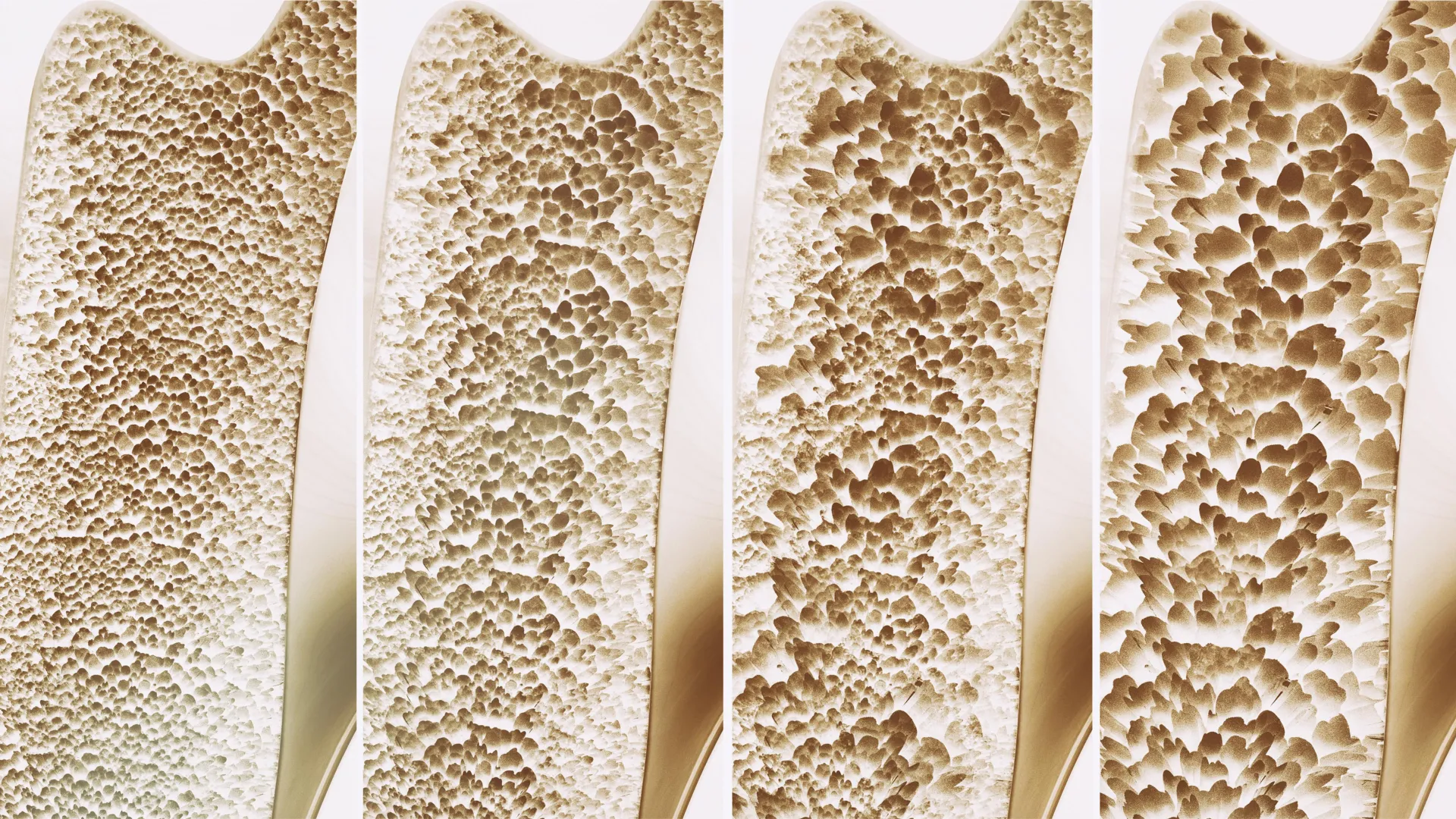
Osteoporosis—often called the "silent thief"—quietly strips the skeleton of its density, leaving millions vulnerable to debilitating fractures. In Germany alone, approximately six million people grapple with the condition, a figure that mirrors the growing global crisis of an aging population. For decades, clinicians have sought a "holy grail" of treatment: a therapy that is not only effective at rebuilding bone but safe enough for long-term administration.
New research from Leipzig University may have finally identified a key to this elusive goal. Scientists have pinpointed a specialized receptor, GPR133, as a critical regulator of bone health. By targeting this receptor, researchers have successfully demonstrated an ability to reverse bone loss in preclinical models, potentially offering a dual-benefit approach that could simultaneously strengthen the skeleton and protect muscle mass.
The Main Facts: A New Biological Target
At the center of this breakthrough is GPR133, a member of the adhesion G protein-coupled receptor (aGPCR) family. These receptors are essentially the "gatekeepers" of the cell surface, translating physical and chemical signals from the environment into internal cellular actions.
While the scientific community has long understood the mechanics of bone remodeling—the constant cycle of building and breaking down bone tissue—the precise "master switches" governing this process have remained elusive. The Leipzig team discovered that GPR133 acts as a vital orchestrator in this cycle. When the receptor is activated, it shifts the internal balance of bone cells, tipping the scales in favor of osteoblasts (bone-building cells) while suppressing the activity of osteoclasts (cells that break down bone).
This discovery is significant because it provides a precise biological target for pharmaceutical intervention, moving beyond the current, often limited, therapeutic landscape.
Chronology: A Decade of GPCR Excellence
The identification of GPR133 is not a stroke of overnight luck; it is the culmination of more than a decade of focused, interdisciplinary inquiry.
- 2014–2020: Leipzig University establishes itself as a global hub for the study of adhesion G protein-coupled receptors. Through the Collaborative Research Center (CRC) 1423, researchers begin mapping the structural dynamics of GPCR activation and signaling.
- 2023: Researchers initiate a computer-assisted screening program to identify molecules capable of interacting with the GPR133 receptor. This effort results in the discovery of AP503, a compound that acts as a synthetic stimulator (agonist) of the receptor.
- 2024: The team conducts rigorous testing on mouse models. The results reveal that genetic impairment of GPR133 leads to early-onset bone density loss, confirming the receptor’s essential role in skeletal integrity.
- Early 2025: Published data confirms that administering AP503 to both healthy mice and mice with osteoporosis-like symptoms significantly increases bone strength. This period also sees the integration of prior findings, where the team realizes AP503’s positive impact on skeletal muscle.
Supporting Data: The Mechanics of Regeneration
To understand why GPR133 is so promising, one must look at the "bone balance" inside the human body. Under normal conditions, our bones are in a state of constant flux. Osteoblasts synthesize new collagen and bone matrix, while osteoclasts reabsorb mineralized bone to repair micro-damage.
In osteoporosis, this equilibrium is disrupted, often due to hormonal shifts—such as the decline in estrogen during menopause—leading to a state where resorption outpaces formation.
The Role of AP503
The compound AP503 functions as a precision tool. By imitating the natural signals that normally activate GPR133, AP503 effectively "re-programs" the cell to favor growth. The data from the Leipzig study are compelling:
- Bone Mineral Density (BMD): Treated mice showed a statistically significant increase in BMD compared to the control group.
- Structural Integrity: Beyond density, the structural micro-architecture of the bone improved, meaning the bones were not just thicker, but more resistant to fracture.
- Muscle Synergy: Perhaps most surprisingly, the activation of GPR133 does not stop at the bone. Earlier studies confirmed that AP503 also improves skeletal muscle function, providing a potential "two-for-one" therapy for elderly patients who suffer from sarcopenia (muscle loss) and osteoporosis simultaneously.
Official Responses: Insights from the Lab
The research team at the Rudolf Schönheimer Institute of Biochemistry views these findings as a paradigm shift. Professor Ines Liebscher, the study’s lead investigator, emphasizes that the discovery addresses a massive gap in geriatric care.
"If this receptor is impaired by genetic changes, mice show signs of loss of bone density at an early age—similar to osteoporosis in humans," Professor Liebscher explained. "Using the substance AP503, we were able to significantly increase bone strength in both healthy and osteoporotic mice."
Dr. Juliane Lehmann, the study’s lead author, highlighted the importance of the multi-tissue benefit. "The newly demonstrated parallel strengthening of bone once again highlights the great potential this receptor holds for medical applications in an aging population," she noted. According to Dr. Lehmann, the goal is to create a therapeutic profile that addresses the frailty associated with aging by treating the musculoskeletal system as a single, integrated unit.
Implications: The Future of Geriatric Medicine
The transition from a promising molecule in a lab to a clinical treatment is a long road, but the implications of the GPR133 discovery are profound.
Addressing the Menopause Challenge
Post-menopausal osteoporosis remains a primary clinical hurdle. If AP503 or its derivatives can be successfully adapted for human use, it could provide a safer alternative to current hormone replacement therapies or bisphosphonates, which sometimes carry risks of long-term side effects such as atypical fractures or necrosis.
A Holistic Approach to Frailty
Frailty in older adults is rarely isolated to the bones. The concurrent decline in muscle mass often leads to falls, which in turn leads to fractures. By targeting a receptor that supports both bone and muscle, clinicians could potentially develop a therapy that stabilizes the body’s support structure, improving mobility and significantly reducing the risk of accidental injury.
Expanding the Scope
The Leipzig team is not stopping at bones and muscles. Because GPR133 is expressed in various tissues throughout the body, the research group is now launching follow-up projects to explore whether AP503 could be applied to other degenerative diseases. The team is also investigating the wider physiological functions of GPR133, hoping to understand if the receptor serves as a systemic regulator for physical resilience.
The Institutional Legacy
Leipzig University’s leadership in this field is solidified by its commitment to the CRC 1423 program. By focusing on the structural biology of GPCRs, the university is not just looking for a "quick fix" drug, but is mapping the fundamental biological mechanics that define human health. This academic rigor ensures that any potential future treatment will be built on a deep, evidence-based understanding of how the body responds to molecular signaling.
Conclusion
As the global population continues to age, the demand for effective, safe, and holistic treatments for bone and muscle loss will only grow. The discovery of GPR133 as a therapeutic target represents a significant leap forward in our understanding of skeletal health. While the journey from the laboratory bench to the pharmacy shelf is lengthy, the preliminary success of AP503 offers a beacon of hope for millions. By potentially treating the skeleton and the muscle together, researchers in Leipzig are moving closer to a future where aging does not have to mean an inevitable decline in physical independence.