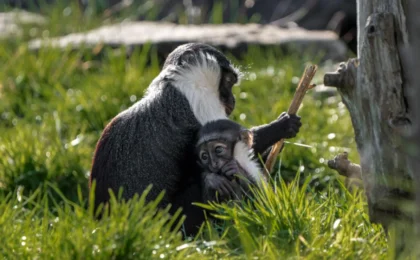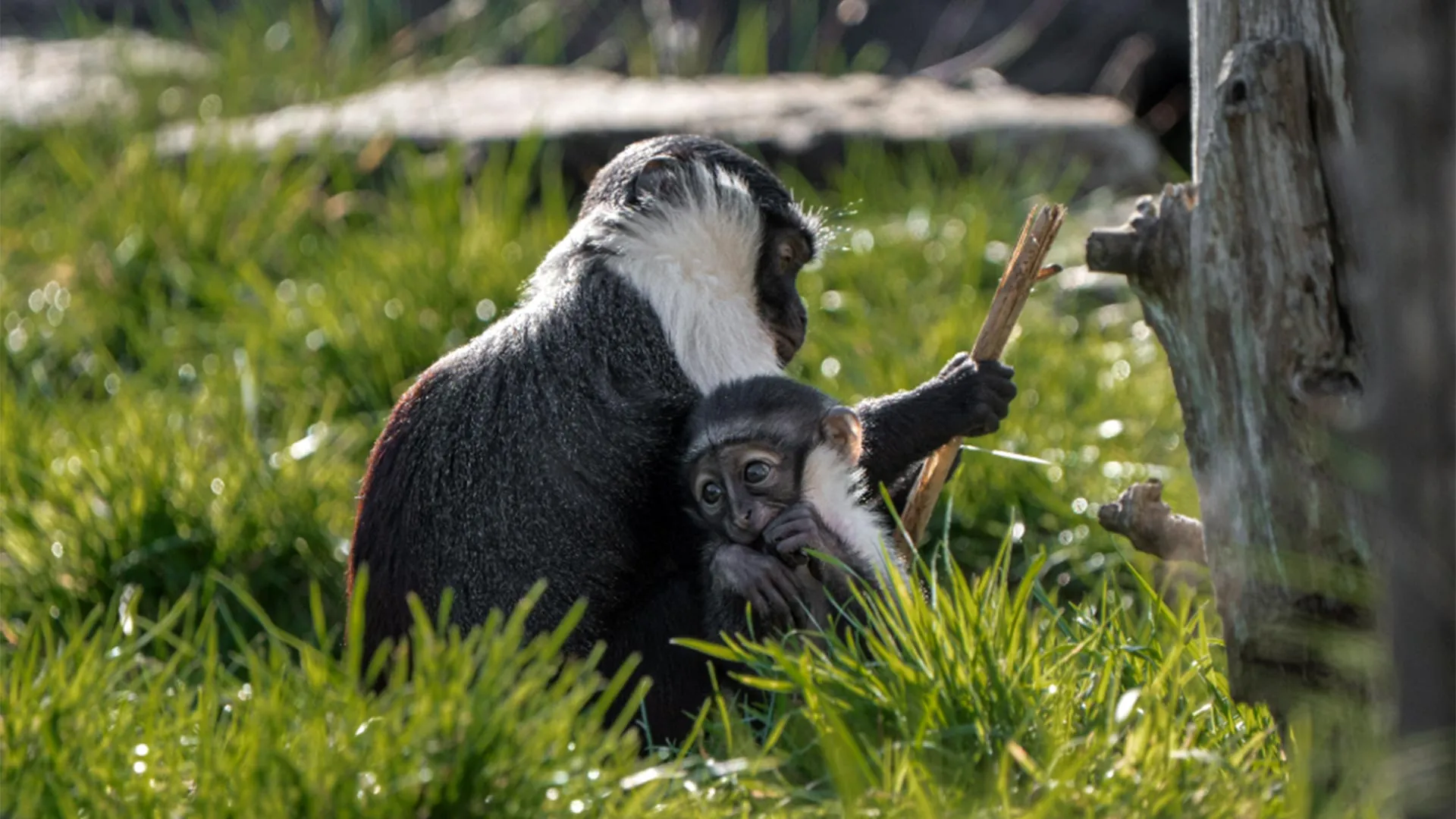
In a remarkable convergence of high-stakes veterinary medicine and conservation success, a critically endangered roloway monkey named Masaya has defied the odds. Just months after undergoing a pioneering surgical procedure that spared her foot from amputation, the 15-year-old primate has welcomed a healthy daughter, Lagertha, into the world at Chester Zoo.
This birth is not merely a heartwarming development for the zoo; it is a significant victory for a species teetering on the precipice of extinction. The success of Masaya’s medical journey, which involved a collaborative effort between zoo staff and university specialists, has ensured that she remains a vital, active, and capable mother, preserving her crucial role in the European Endangered Species Programme (EEP).
The Medical Crisis: A Race Against Time
The journey to this moment was fraught with uncertainty. Masaya, who arrived at Chester Zoo in 2023, had long been troubled by persistent, mysterious health issues regarding her foot. Despite exhaustive diagnostic efforts—including X-rays, ultrasounds, and biopsies—the precise nature of the ailment remained elusive. Veterinary teams initially suspected a chronic abscess, potentially stemming from a long-standing injury caused by a thorn, which had caused a golf-ball-sized mass to develop on her limb.
By early 2025, the situation reached a critical juncture. The swelling had worsened significantly, and it became clear that standard treatments were insufficient. The welfare of the animal was at stake; without intervention, the infection risked spreading, potentially necessitating a full amputation of the foot.
The Pioneering Procedure
Recognizing that they had reached a point of last resort, the veterinary team at Chester Zoo made the bold decision to seek advanced imaging capabilities. In a rare logistical feat, Masaya was transported to the University of Liverpool’s Small Animal Teaching Hospital for a comprehensive CT scan.
The scan provided the clarity needed to proceed with surgery. A team of zoo veterinarians and specialist surgeons from the university undertook a complex operation to excise the mass while preserving the structural integrity of the foot. Because no record of such a procedure existed for the roloway species, the team had to rely on their expertise in general primate anatomy and reconstructive surgery. The operation was a resounding success; while one toe was lost, the limb was saved, and Masaya was left with full functionality.
Chronology of a Recovery
The road from the operating theater to motherhood was characterized by careful monitoring and a remarkably swift recovery.
- Early 2023: Masaya arrives at Chester Zoo, where keepers begin noting persistent discomfort and swelling in her foot.
- Ongoing 2023–2024: Extensive diagnostic tests are performed, including biopsies and ultrasounds. The underlying cause remains frustratingly obscured.
- Early 2025: The condition of the foot deteriorates, prompting an emergency intervention.
- Mid-2025 (The Operation): Masaya is transported to the University of Liverpool. Surgeons perform a pioneering, limb-saving operation.
- Post-Operative Recovery: Masaya displays remarkable resilience, quickly regaining mobility and comfort.
- Late 2025: Masaya gives birth to a healthy daughter, Lagertha.
The speed of her recovery is a testament to the skill of the medical team and the strength of the patient. Veterinarian and lecturer at the University of Liverpool, Rachel Burrow, who played a central role in both the scan and the surgery, noted the unique challenges of the case. "Working with primates is completely different from my usual patients, who are typically cats and dogs, and it was a real privilege to care for such a rare animal," Burrow explained. "It’s great to see the surgery was a success—she’s comfortable, active, and using the limb well."
Implications for the Roloway Species
The birth of Lagertha is of profound importance to the global conservation community. The roloway monkey (Cercopithecus roloway) is classified by the International Union for Conservation of Nature (IUCN) as Critically Endangered, with fewer than 2,000 individuals believed to be left in the wild. Native to the forests of Ghana and the Ivory Coast, these primates are being decimated by the dual threats of habitat loss and illegal poaching.
The Value of a Single Life
In species where the population count is so perilously low, every individual matters. Masaya’s reproductive success is not just a personal achievement for her as a mother; it is a critical contribution to the European Endangered Species Programme (EEP). This coordinated effort serves as a genetic "safety net," ensuring that if the species continues to decline in the wild, a healthy, genetically diverse population remains in human care to prevent total extinction.
Zoe Edwards, a primate keeper at Chester Zoo, emphasizes the broader context: "Chester Zoo is one of only two places in the UK that roloway monkeys can be found. Masaya is very important—not just to her family, but to her whole species. There are only a few breeding females in zoos in Europe."
Had the amputation been necessary, the long-term prognosis for Masaya’s participation in the breeding program would have been bleak. The ability to climb, forage, and carry offspring is fundamental to a primate’s life. "If she’d had an amputation, we’d have been left with real questions about whether she could hold her offspring or continue with her normal behaviors," Edwards added.
Parenting and Personality: The Arrival of Lagertha
Lagertha, named in honor of the legendary Viking queen, is already proving to be a lively addition to the troop. According to keepers, the young monkey is a "dinky" but curious infant who is already demonstrating a level of inquisitiveness that mirrors her mother’s character.
Masaya has returned to her role as an experienced mother with ease. Observers note that she is parenting "magnificently," showing no signs of the physical limitations that could have plagued her had the surgery failed. Her ability to navigate the habitat with her daughter clinging to her is the ultimate proof of the procedure’s success.
A Collective Effort
The success story of Masaya and Lagertha is also a tribute to the logistical and emotional dedication of the staff at Chester Zoo. Charlotte Bentley, Veterinary Officer at the zoo’s Animal Health Center, highlighted the immense effort required to facilitate such specialized care. "It’s not every day you take a monkey to vet school," she remarked. "We had to bring everything she might need, from anesthesia equipment to medications and blankets. She’s been an absolute trooper all the way through."
This collaborative spirit—bridging the gap between a zoo’s specialized husbandry and a university’s advanced surgical facilities—represents the future of wildlife conservation. It demonstrates that when science, logistical planning, and dedication are applied to individual animals, the impact can ripple outward, helping to hold back the tide of extinction for an entire species.
Conclusion: A Future of Hope
As visitors look upon Masaya and her new daughter in the roloway monkey habitat at Chester Zoo, they are witnessing more than just a mother-daughter bond. They are seeing the tangible results of medical innovation and the power of conservation.
Lagertha’s birth is a symbol of resilience. While the threats facing roloway monkeys in the wild—poaching and deforestation—remain daunting, the work being done at facilities like Chester Zoo provides a vital glimmer of hope. By safeguarding the health and vitality of individuals like Masaya, conservationists are ensuring that the story of the roloway monkey is not one of a tragic, silent disappearance, but one of continued existence and, perhaps, eventual recovery.
For now, Masaya, Lagertha, and the rest of their troop continue their daily lives, unaware of the complex web of science and international effort that kept their family together. They are simply monkeys, living, growing, and thriving—a small, precious victory against the odds.