TEHRAN/WASHINGTON — In the wake of the most significant geopolitical shift in the Middle East in decades, the Islamic Republic of Iran finds itself caught in a tightening vice. While the clerical regime maintains its traditional "iron grip" on internal security, it is increasingly unable to shield itself from the devastating effects of a sophisticated U.S.-led economic blockade and a leadership crisis that has left the nation’s highest office shrouded in mystery.
The current atmosphere in Tehran is one of quiet desperation and high-stakes maneuvering. Following the U.S.-Israeli strike on February 28 that killed the previous Supreme Leader, the transition to his son, Ayatollah Mojtaba Khamenei, has been marked by a conspicuous absence. As the rial plunges to historic lows and the U.S. Treasury launches what it calls an "Economic D-Day," the Iranian state is facing a fundamental question of survival.
Main Facts: A Nation Under Blockade
The primary catalyst for the current crisis is a two-pronged assault on the Iranian state: a total naval blockade and a comprehensive dismantling of its shadow financial networks. Unlike previous rounds of sanctions, the 2026 "Economic D-Day" initiative, spearheaded by U.S. Treasury Secretary Scott Bessent, aims to close every remaining loophole that has historically allowed Iran to bypass international restrictions.
Key developments include:
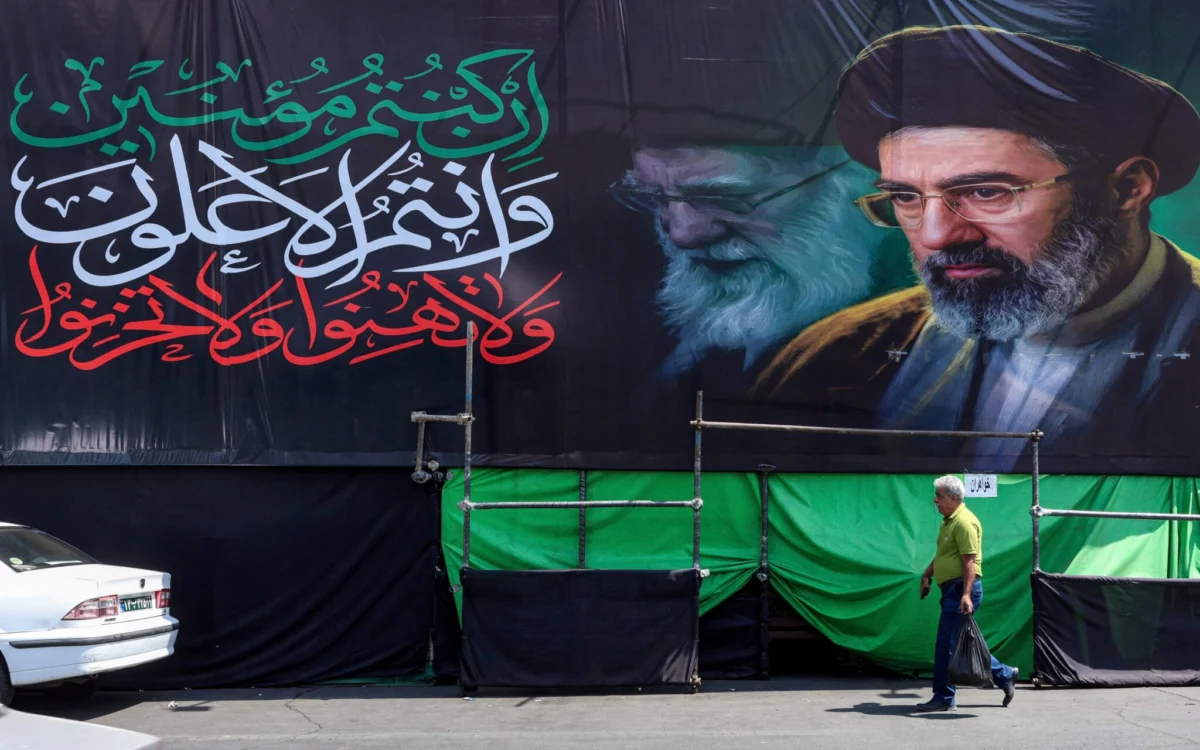
- Leadership Vacuum: Supreme Leader Ayatollah Mojtaba Khamenei has not made a public appearance since the February 28 strike. His governance is currently conducted via written decrees, leading to widespread speculation regarding his location and the stability of the succession.
- Maritime Strangulation: A U.S. naval blockade in the Persian Gulf has effectively choked off the export of crude oil and the import of refined petroleum products, leaving the country with a critical gasoline shortage.
- Currency Collapse: The Iranian rial has depreciated by over 50% in a single year, trading at 2.2 million rials per U.S. dollar, up from 1 million just twelve months ago.
- Trade Contraction: President Masoud Pezeshkian has admitted that overall trade has plummeted by 25% to 35%, with imports—specifically vital food and medical supplies—falling even more sharply.
Chronology: From the February Strike to the September Crisis
The current state of emergency is the culmination of six months of escalating conflict and economic warfare.
February 28, 2026: A joint U.S.-Israeli precision strike targets a high-level meeting in Tehran, resulting in the death of the long-serving Supreme Leader. The event sends shockwaves through the global oil markets and triggers an immediate military mobilization across the Middle East.
March 2026: Mojtaba Khamenei is swiftly named as successor. However, instead of the traditional televised oaths of office, the transition is announced via state media with no live footage of the new leader. This sets a precedent for his "shadow" leadership style.
April – June 2026: The U.S. Navy expands its presence in the Strait of Hormuz, transitioning from a protective mission for commercial shipping to an active blockade of Iranian-flagged tankers and vessels suspected of carrying "ghost" oil.
July 2026: A massive currency crash occurs as the rial breaks the 2-million-to-1-dollar barrier. In response, widespread protests erupt across major cities, echoing the unrest seen earlier in January. The regime responds with a brutal crackdown, with human rights organizations estimating the death toll in the thousands.
August 28, 2026: Reuters reports a rare written statement from Mojtaba Khamenei. In it, he bans officials from any actions that "harm social cohesion" and orders a halt to "discouraging statements."
September 3, 2026: Senior Iranian sources confirm to international media that the country is down to its last two months of gasoline reserves. U.S. Energy Secretary Chris Wright signals that the blockade will remain in place indefinitely.
Supporting Data: The Anatomy of a Collapse
The statistics emerging from the Iranian Ministry of Finance and independent economic observers paint a portrait of a collapsing economy.
The Rial and Inflation
The rial’s descent into worthlessness has triggered hyperinflationary pressures. With the exchange rate hitting 2.2 million rials per dollar, the purchasing power of the average Iranian citizen has vanished. Inflation is officially pegged at 80%, but for essential food staples like bread, rice, and cooking oil, prices have surged by 100% or more. This has rendered the middle class virtually non-existent, pushing millions into absolute poverty.
Trade and Energy
President Pezeshkian’s admission of a 25% to 35% drop in trade understates the severity of the import crisis. Because Iran lacks sufficient domestic refining capacity to meet its internal needs, it relies heavily on importing refined gasoline. The naval blockade has turned this dependency into a strategic Achilles’ heel. Current estimates suggest that without a breakthrough in maritime transit, the nation’s transportation network will grind to a halt by November.
The Human Cost
While the regime maintains control through its security apparatus, the "long lines at gas stations" mentioned in recent reports are more than an inconvenience; they are flashpoints for civil unrest. The January protests were some of the largest in the Islamic Republic’s history, and while the current demonstrations are smaller in scale, they are more desperate in nature, driven by the basic inability to afford food and fuel.
Official Responses: Defiance and Admission
The rhetoric coming out of Tehran is a study in contradictions, reflecting the tension between the need to project strength and the reality of a starving population.
The Supreme Leader’s Decree
In his late-August statement, Mojtaba Khamenei focused on internal discipline. By banning "discouraging statements," the Supreme Leader is effectively criminalizing any realistic assessment of the crisis by government officials. He urged the government to "address the chain of economic and livelihood challenges," yet offered no specific policy shifts or diplomatic overtures to end the blockade.
The President’s Realism
President Masoud Pezeshkian has taken a more pragmatic—if frustrated—tone. In a recent interview with state media, he took aim at hardliners who claim that sanctions are ineffective. "Some people say that sanctions have no effect at all," Pezeshkian remarked. "I really don’t know what to tell these people… Saying that sanctions have no effect is not consistent with these facts." His admission that the country has "many problems" signals a rift between the executive branch, which must manage the day-to-day crisis, and the clerical leadership, which remains committed to ideological defiance.
The U.S. Stance
In Washington, the strategy is one of maximum pressure. Treasury Secretary Scott Bessent’s "Economic D-Day" is designed to be the final blow to Iran’s financial sovereignty. This is complemented by the Department of Energy’s stance. Secretary Chris Wright, speaking on Fox News Sunday, emphasized that the U.S. Navy is increasingly adept at neutralizing Iranian asymmetrical threats in the Gulf. "There’s simply no other country on earth that has nearly the military capacity of the United States," Wright said, acknowledging that while allies are helpful, the heavy lifting of the blockade remains a U.S. endeavor.
Implications: A War of Attrition
The current situation represents a high-stakes gamble for both Washington and Tehran. The implications of this "economic warfare" extend far beyond the borders of Iran.
Regime Resilience vs. Public Suffering
History suggests that the Iranian regime is willing to endure extreme levels of domestic suffering to maintain its grip on power. Analysts warn that the clerical leadership may be prepared to wait out the U.S. blockade, betting that the American public will eventually tire of high energy prices or that a change in U.S. administration might bring relief. However, the current level of economic degradation is unprecedented. If the gasoline supply runs out, the regime’s ability to move its security forces to suppress protests may be compromised.
The Risk of Military Overstretch
For the United States, maintaining a total naval blockade is an expensive and resource-intensive mission. Energy Secretary Wright’s hope for more international involvement from "outside the region" highlights a growing concern: the U.S. Navy cannot maintain this posture indefinitely without straining its global readiness. If Iran decides to escalate by attacking commercial shipping from other nations to drive up global insurance rates, the U.S. may be forced into a broader kinetic conflict.
The Succession Shadow
The most volatile variable remains Mojtaba Khamenei himself. His continued absence from the public eye creates a "legitimacy gap." In a system built on the charismatic and religious authority of the Supreme Leader, a leader who only exists on paper may struggle to command the absolute loyalty of the various factions within the Revolutionary Guard (IRGC).
As the rial continues its slide and the two-month clock on gasoline reserves ticks down, the "iron grip" of the regime is being tested by a force more relentless than any domestic protest: the cold, hard math of economic collapse. Whether the regime can pivot to a diplomatic solution or will choose to go down with the ship remains the central question of the 2026 Middle East crisis.