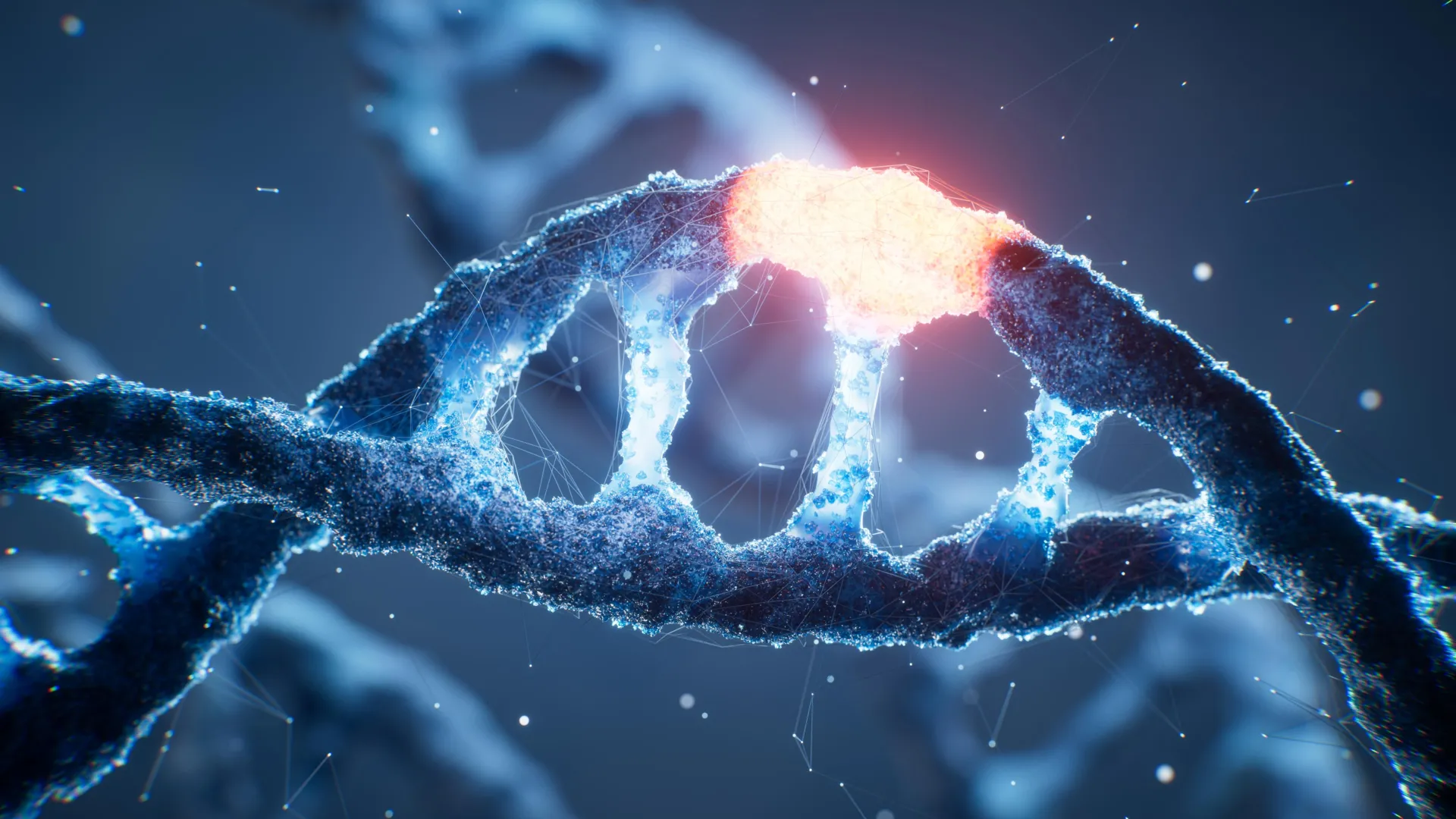
For billions of years, the story of life on Earth has been written in a four-letter language. From the simplest bacterium to the most complex blue whale, the genetic blueprints of every living organism—past and present—are encoded using the nitrogenous bases Adenine (A), Thymine (T), Guanine (G), and Cytosine (C). This quartet, organized into the iconic double-helix structure, serves as the universal operating system for biology.
However, researchers at the University of California San Diego have recently shattered this biological limitation. In a series of groundbreaking studies, a team led by Professor Dong Wang has demonstrated that the molecular machinery of life is far more adaptable than previously imagined. By successfully transcribing an eight-letter genetic alphabet, these scientists have effectively unlocked the door to a new era of synthetic biology, one where the "language" of life can be rewritten to perform tasks previously relegated to the realm of science fiction.
The Foundation: Unlocking the Four-Letter Limit
The central dogma of molecular biology dictates that DNA holds the information, which is then transcribed into RNA by an enzyme called RNA polymerase, eventually leading to the synthesis of proteins. For decades, it was assumed that this enzyme—the workhorse of gene expression—was evolutionarily hardwired to recognize only the four natural base pairs.
The UC San Diego team’s research, published in Nature Communications on September 2, 2026, challenges this fundamental assumption. By utilizing advanced cryo-electron microscopy, the team captured high-resolution, atom-scale images of RNA polymerase from Escherichia coli (E. coli) as it encountered and processed synthetic, non-natural base pairs.
What the images revealed was startling: the enzyme did not struggle or fail when confronted with the "alien" genetic material. Instead, it utilized the same structural and biochemical "handshakes" it uses for natural DNA to incorporate these synthetic letters. This suggests that the evolutionary design of RNA polymerase is inherently flexible, capable of recognizing a much broader array of chemical information than it currently does in nature.
Chronology of Discovery: A Dual-Track Investigation
The path to this discovery was not linear; it was the result of a two-pronged investigative approach conducted throughout the summer of 2026.
The PNAS Breakthrough (August 2026)
Before tackling the eight-letter alphabet, the team first sought to understand the limits of RNA polymerase’s chemical recognition. In a study published in the Proceedings of the National Academy of Sciences (PNAS) on August 12, 2026, the researchers investigated whether synthetic base pairs required the traditional hydrogen bonds—the chemical "glue" that stabilizes natural DNA—to be transcribed.
The findings were profound. The team discovered that RNA polymerase could successfully recognize and transcribe synthetic base pairs even in the absence of hydrogen bonds, relying instead on hydrophobic interactions. This proved that the enzyme’s "trigger loop"—a critical component for catalysis—could be activated by non-traditional signals, essentially bypassing the rigid requirements of natural evolution.
The Nature Communications Expansion (September 2026)
Building on the PNAS findings, the team escalated their efforts to the "Hachimoji" alphabet (a term derived from the Japanese word for "eight letters"). Published in Nature Communications on September 2, 2026, the study, titled "Structural Basis of Transcription of the Hachimoji Eight-Letter Alphabet by E. coli RNA Polymerase," provided the visual evidence that the machinery of a living cell could process an expanded genetic library. By combining biochemical assays with cryo-electron microscopy, the team proved that the enzyme could accurately copy these synthetic sequences, effectively doubling the information density of the genetic code.
Supporting Data: Peering into the Atomic Machinery
The significance of these studies lies in the visual data. Cryo-electron microscopy has revolutionized structural biology by allowing scientists to visualize molecules at resolutions finer than a single atom.
In the Nature Communications study, the researchers observed the E. coli RNA polymerase as it accommodated the synthetic base pairs within its active site. The data indicated that the enzyme’s structural pockets are sufficiently plastic to accommodate the modified geometries of synthetic letters.
"The enzyme doesn’t just ‘force’ these letters through," explained Professor Dong Wang. "It recognizes the biochemical signals of these synthetic bases as if they were familiar friends, despite their artificial origin." This suggests that the "recognition code" of RNA polymerase is not strictly tied to the specific atoms of A, T, G, and C, but rather to the spatial and electrical properties of the base pairs. When synthetic bases mimic these properties, the enzyme treats them as legitimate genetic building blocks.
Official Perspectives and Expert Analysis
The scientific community has reacted with cautious optimism. While the ability to transcribe synthetic DNA is a massive leap, researchers note that the next challenge is ensuring these synthetic sequences can be stably maintained and replicated within a living, replicating cell without being discarded as "junk" or "foreign" material.
Professor Dong Wang, the principal investigator at the UC San Diego Skaggs School of Pharmacy and Pharmaceutical Sciences, emphasizes that this research is not merely about expanding a list of letters. "We are effectively providing a new alphabet for life," Wang noted in a press briefing following the Nature Communications publication. "If we can transcribe it, we can express it. If we can express it, we can create proteins that have never existed in the history of the planet."
Independent experts in synthetic biology, not involved in the study, have highlighted the implications for cell safety. The ability to create an "orthogonal" genetic system—a system that runs parallel to, but does not interfere with, the host’s natural DNA—could provide a "kill switch" or a biocontainment mechanism for engineered organisms, ensuring they cannot survive outside of a laboratory environment.
Implications: A New Frontier in Biotechnology
The shift from a four-letter to an eight-letter code has profound implications for medicine, industry, and fundamental science.
1. Advanced Diagnostic Tools
Earlier iterations of expanded genetic alphabets have already been used to engineer "molecular sentinels." By creating DNA sequences that specifically bind to cancer-related biomarkers, scientists can develop diagnostic tests with unprecedented sensitivity. With an eight-letter alphabet, the specificity of these "molecular keys" can be increased exponentially, allowing for the detection of diseases in their earliest stages, long before traditional methods could identify them.
2. Next-Generation Therapeutics
Perhaps the most exciting prospect is the creation of synthetic proteins. Proteins are the "tools" of the cell, and their structure is determined by the sequence of amino acids, which in turn is dictated by DNA. By expanding the genetic alphabet, scientists can introduce new, non-natural amino acids into proteins. This could allow for the design of therapeutic drugs that are more stable, more effective at targeting pathogens, or capable of performing complex catalytic reactions that natural proteins simply cannot handle.
3. Industrial and Environmental Engineering
Beyond human health, this technology could revolutionize the production of biofuels and specialty chemicals. Microbes could be engineered to "read" synthetic genetic instructions to produce materials that are currently difficult or expensive to synthesize, such as specialized polymers, carbon-sequestering enzymes, or highly efficient nitrogen-fixation systems for agriculture.
The Road Ahead: Ethical and Regulatory Considerations
As with any breakthrough that borders on "playing God," this research invites intense ethical scrutiny. The prospect of engineering life at such a foundational level necessitates a robust regulatory framework. The scientific community, the UC San Diego team included, has been vocal about the need for "responsible innovation."
The ability to write new genetic code requires strict safeguards. The potential for the misuse of such technology, or the unintended release of synthetically modified organisms into the wild, remains a primary concern for policymakers. However, the researchers argue that the insights gained from this study actually provide the tools to monitor and control synthetic biology, as they reveal exactly how the cell’s machinery interacts with the code.
Conclusion
The work led by Professor Dong Wang and his team at UC San Diego is a landmark moment in the history of biology. By demonstrating that the fundamental machinery of life is flexible enough to accept an expanded alphabet, the team has turned a page in our understanding of nature’s constraints.
While we are still in the early stages of this transition, the evidence is clear: the four-letter limit was never a biological necessity—it was simply the path that nature chose. By choosing a different path, humanity is now poised to enter an era of unprecedented biological design, where the limitations of the past become the raw materials for the future. As we move forward, the focus will shift from whether we can write with this new alphabet to what we choose to say.