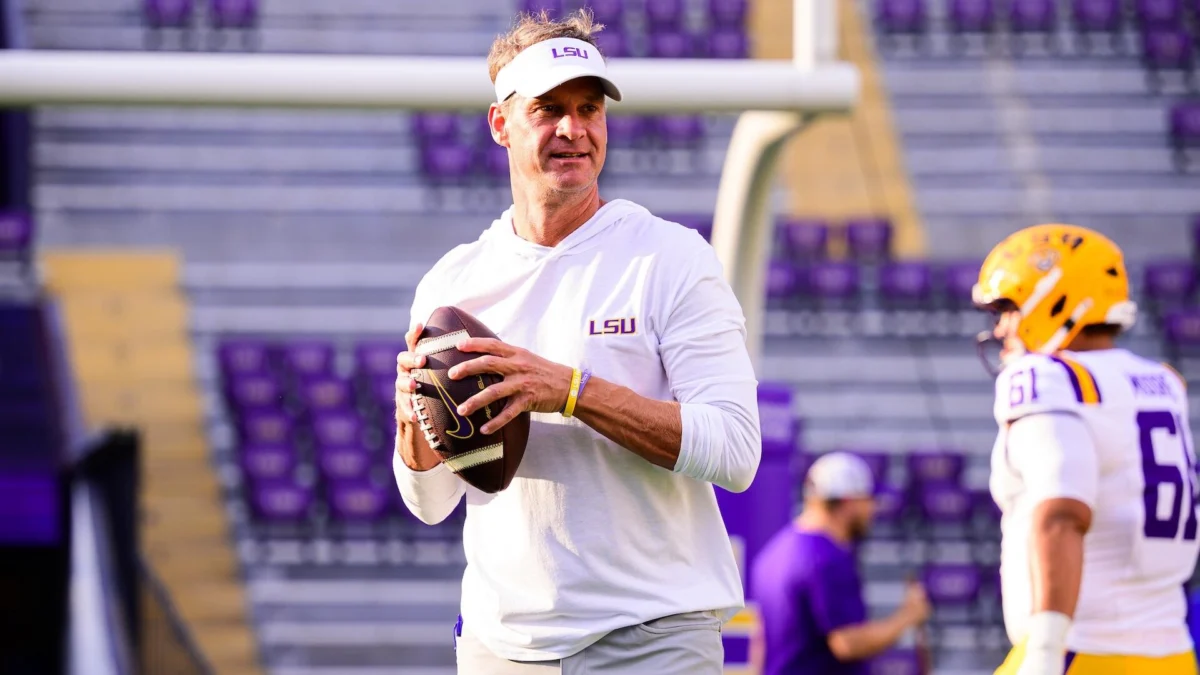
BATON ROUGE, La. — In a landmark decision that could fundamentally alter the competitive framework of collegiate athletics, a Louisiana judge has ruled in favor of Louisiana State University (LSU) in a high-stakes hearing concerning the eligibility of former professional athletes. The ruling, delivered Thursday, effectively grants the Tigers the green light to add two former NFL players—tight end Dae’Quan Wright and defensive lineman Zxavian Harris—to their active roster.
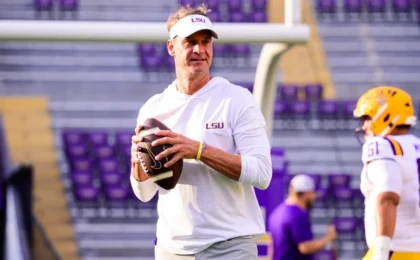
The decision arrives with surgical timing, occurring just over 48 hours before LSU’s high-profile season opener against Clemson. While the ruling provides a temporary reprieve for the Tigers, it has ignited a firestorm of legal and institutional controversy that threatens to pit the SEC against its own member institutions.
The Legal Genesis: From TROs to SEC Bans
The current eligibility crisis finds its roots in the broader, ongoing litigation involving the Class of 2022. For months, athletes across the country have pursued temporary restraining orders (TROs) against the NCAA, seeking an additional year of eligibility that many feel was unfairly impacted by the disruptions of the pandemic-affected 2020 and 2021 seasons.
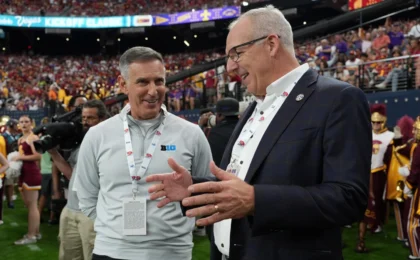
When the SEC, led by Commissioner Greg Sankey, voted unanimously to enforce a strict ban on former professional athletes, the legal landscape shifted dramatically. Attorneys representing affected athletes pivoted, naming the SEC and Sankey directly in ongoing lawsuits. Thursday’s hearing in Louisiana was the culmination of these efforts, with the court ruling that the SEC’s policy could not supersede the immediate legal protections afforded to the players.
This judicial intervention creates a direct conflict between the authority of the conference and the civil courts. While the SEC maintains it is a voluntary association with the right to set its own internal rules, the court has signaled that such rules may not hold weight when they infringe upon the eligibility status of athletes protected by active federal or state-level legal action.
Chronology of a Crisis
The path to this moment has been paved with rapid-fire developments:
- Early 2026: Athletes from the Class of 2022 began securing temporary restraining orders against the NCAA to regain eligibility.
- Summer 2026: The SEC formalizes its unanimous vote to ban former professional athletes, aiming to preserve the traditional amateur-to-pro pipeline.
- Late August 2026: Attorneys for Wright and Harris, along with other impacted players, include the SEC and Commissioner Greg Sankey in existing litigation, challenging the conference’s jurisdiction.
- September 2, 2026: Georgia Attorney General Chris Carr publicly urges SEC institutions to pursue "all measures available," including potential suspension or expulsion, against any school that defies the conference’s ban.
- September 3, 2026: Sources confirm to CBS Sports that other SEC programs are exploring federal legal challenges and potential forfeiture protocols for games against teams fielding former pros.
- September 4, 2026: A Louisiana judge rules in favor of LSU, granting the preliminary injunction that allows Wright and Harris to join the roster immediately.
Strategic Impact: What Wright and Harris Bring to Baton Rouge
The inclusion of Wright and Harris is not merely a legal victory; it is a tactical coup for the LSU coaching staff. As the Tigers prepare for the Clemson matchup, the addition of two players with professional experience provides a massive infusion of depth and talent.
The Offensive Threat: Dae’Quan Wright
Dae’Quan Wright, formerly of Ole Miss, represents a significant upgrade to the Tigers’ offensive complexity. Statistical analysis provided by 247Sports underscores his impact: Wright posted a 74% route-run percentage and averaged 9.9 yards per route—a figure that sits three yards above the SEC average.
In a system already featuring the athletic freak Trey’Dez Green, Wright’s presence allows LSU to deploy sophisticated two-tight-end sets that were previously considered too risky or personnel-heavy. For quarterback Sam Leavitt, this provides a reliable, professional-grade safety valve, forcing defensive coordinators to account for multiple high-level threats in the middle of the field.
The Defensive Anchor: Zxavian Harris
Perhaps the most critical addition is Zxavian Harris on the defensive interior. LSU entered the season with a glaring question mark at the defensive line, relying on true freshmen Deuce Geralds and Richard Anderson. While both possess immense potential, the lack of collegiate snaps was a clear liability.
Harris, standing 6-foot-8 and weighing 330 pounds, is the physical embodiment of a "plug" in the trenches. His professional resume from last season—which includes 66% of defensive snaps played, nine tackles for loss, and three sacks—provides the stability the Tigers desperately need to anchor their defensive front.
The Institutional Backlash
The reaction from the broader SEC landscape has been swift and hostile. The call to action from Georgia Attorney General Chris Carr represents an unprecedented escalation in internal conference politics. By suggesting that LSU face "suspension or expulsion," the institutional fabric of the SEC is being tested in a way not seen since the expansion era of the early 2010s.
Other member institutions have reportedly discussed the "nuclear option": the forfeiture of games against LSU. The argument centers on the principle of competitive equity, with rival schools claiming that playing against athletes who have already collected a professional paycheck violates the spirit of the conference’s bylaws.
The SEC’s Official Stance
The conference has not remained idle. In a formal statement provided to CBS Sports, the SEC clarified that while it will abide by the Louisiana judge’s ruling, it views the decision as a temporary hurdle rather than a permanent defeat.

"The order entered against the SEC and Commissioner Sankey is a temporary restraining order, not a final ruling on the merits," the statement read. "The SEC and Commissioner Sankey are prepared to contest the allegations in the plaintiffs’ petition and defend the SEC’s rights as a voluntary association to fulfill its mission to its member institutions."
This indicates that the SEC is preparing for a prolonged legal war. The conference is essentially signaling to its member schools that it intends to fight the injunction at higher levels of the judiciary, potentially leading to a clash between state-level rulings and federal oversight.
Future Implications: The "Cotton" Effect
The precedent set by this ruling is likely to trigger a domino effect across the conference. The case of former Utah cornerback Blake Cotton, who has already secured his own TRO and is rumored to be targeting a roster spot at a Louisiana-based program, suggests that the "Kiffin model"—aggressively utilizing legal loopholes to bolster the roster—could become the new standard.
If players like Cotton successfully join SEC rosters, the conference will face a logistical nightmare. Every game could become a site of litigation, with eligibility statuses fluctuating based on the venue, the presiding judge, and the timing of the appeals process.
The Road Ahead
As LSU prepares to take the field against Clemson, the focus will inevitably shift from the game plan to the sidelines. Will the fans embrace these players as Tigers, or will they be viewed as symbols of a broken system? More importantly, can the SEC maintain its unity in the face of such deep-seated disagreement regarding the definition of a "student-athlete"?
The legal battle is only beginning. While the immediate focus is on the impact of Wright and Harris on the field, the real game is being played in courtrooms. The SEC’s ability to govern its members is on the line, and for now, the advantage lies with the institutions willing to test the limits of the law. As the sun rises on the 2026 season, one thing is certain: the landscape of college football has been irrevocably changed.