In the rapidly evolving landscape of automotive engineering, plug-in hybrid electric vehicles (PHEVs) have long occupied a space defined by efficiency, urban commuting, and moderate performance. Rarely have they been associated with the grit, torque-heavy requirements, and sheer mechanical durability demanded by the world of serious off-roading. However, Horse Powertrain—a strategic joint venture between automotive titans Geely and Renault—is poised to disrupt this perception with the introduction of its groundbreaking 3DHT200 powertrain.
Designed to harmonize the benefits of electric propulsion with the raw capability of a combustion engine, the 3DHT200 is not merely an incremental update; it represents a fundamental rethinking of how hybrid architecture can be packaged to handle the most punishing terrain.
The Genesis of the 3DHT200: A New Paradigm for PHEVs
The automotive industry has spent the better part of a decade trying to find the "holy grail" of packaging—a system that maximizes interior space while maintaining high performance. Horse Powertrain’s response is the "13-in-1" integrated unit. While the moniker might sound like a marketing exercise, it reflects a significant engineering feat: the consolidation of 13 critical components into a single, compact housing.
By integrating the dual-motor setup, motor controllers, an onboard charger, a DC-DC converter, a power distribution unit, the transmission control unit, advanced thermal-management hardware, and the multi-speed gearbox architecture, the company has achieved a 10 percent reduction in overall volume compared to traditional distributed hybrid systems. This, in theory, allows manufacturers to utilize the saved space for larger battery packs or improved suspension geometry—two elements essential for off-road performance.
Chronology of Development: From Concept to Trail-Ready
The development of the 3DHT200 follows the trajectory of Horse Powertrain’s broader mission to bridge the gap between legacy internal combustion technology and the inevitable shift toward electrification.
- Phase 1: Foundation. The journey began with the development of the company’s 3DHT (three-speed dedicated hybrid transmission) family. Initial iterations were aimed at efficiency and passenger vehicle dynamics, prioritizing smooth transitions between power sources.
- Phase 2: Off-Road Specialization. Recognizing a gap in the market for high-performance hybrid off-roaders, the engineering team pivoted toward "high-torque" applications. The focus shifted from maximizing highway fuel economy to ensuring that power delivery could be sustained during steep, low-speed climbs.
- Phase 3: Integration. The final development cycle centered on the "13-in-1" modular approach, ensuring that the thermal management systems—often the Achilles’ heel of high-stress hybrid operation—were robust enough to handle sustained, high-load off-road maneuvers.
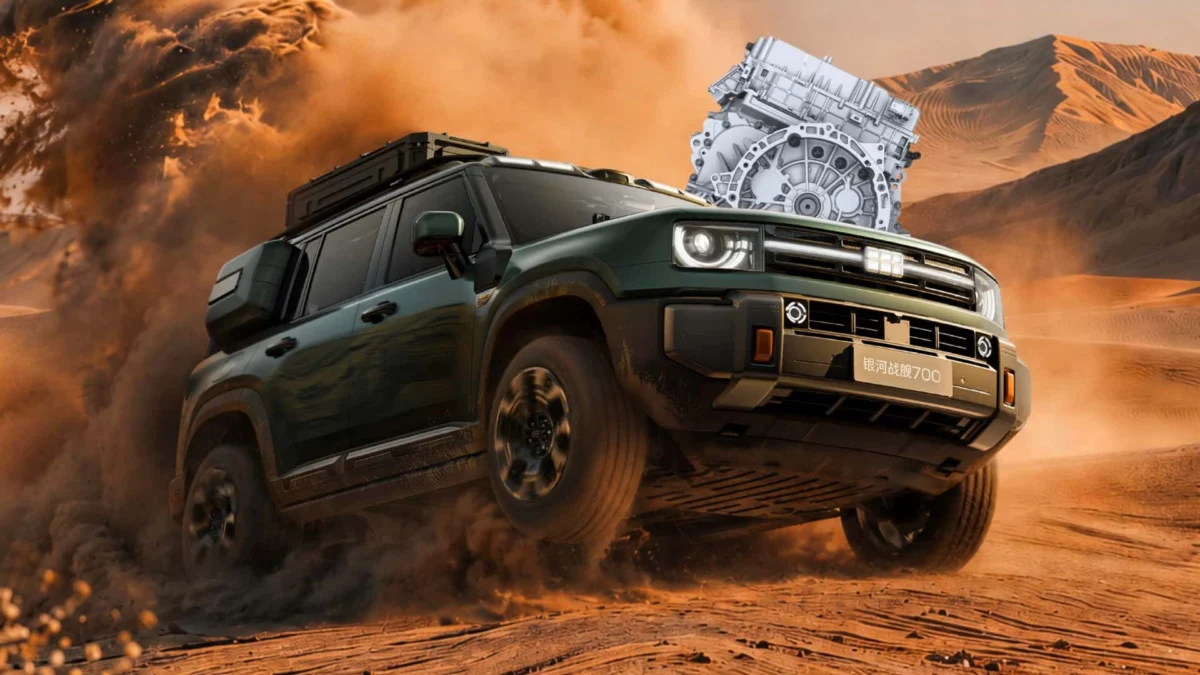
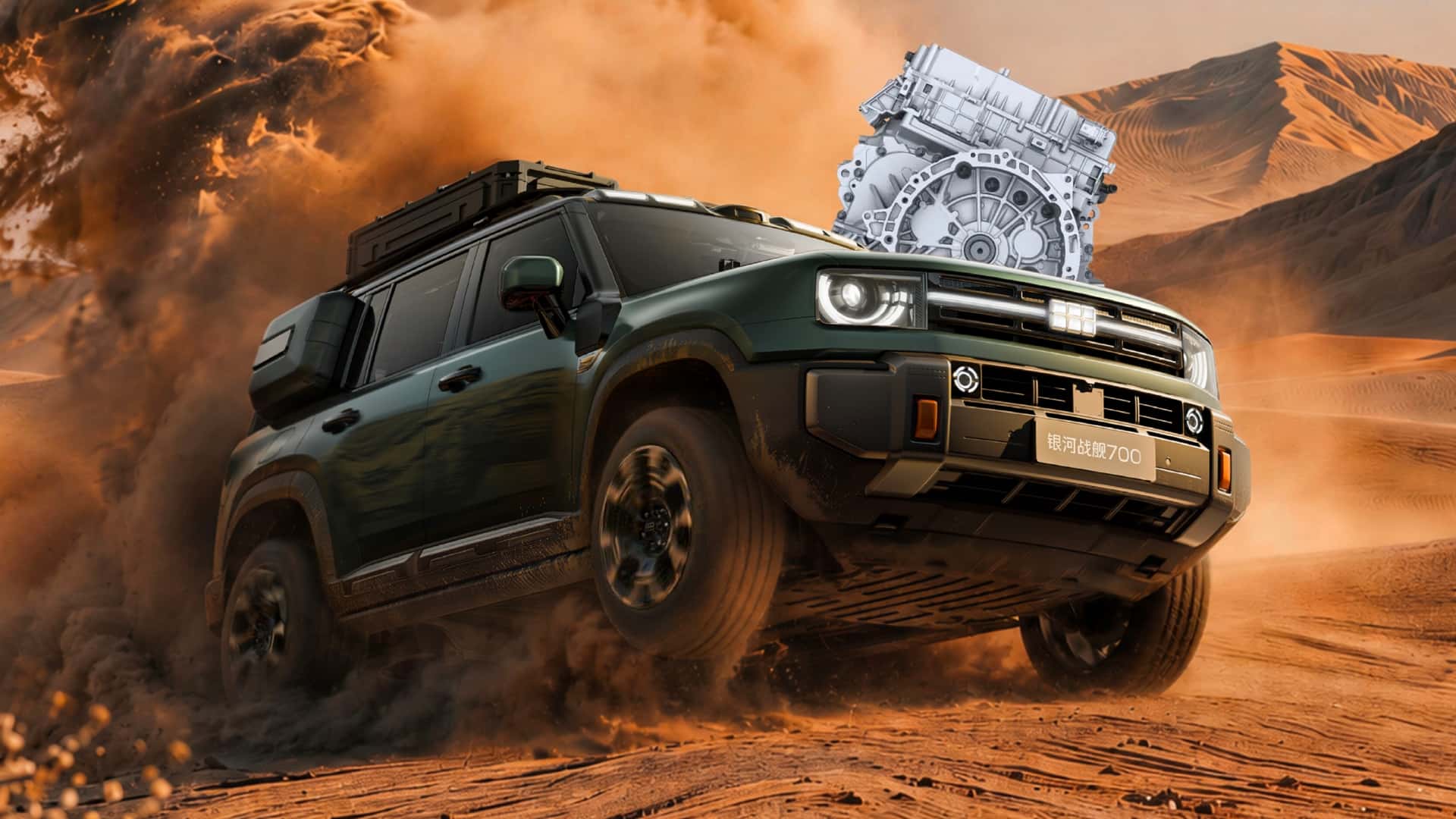
- Phase 4: Commercial Deployment. With the technology validated, the system is now slated for its first major commercial application: the Geely Galaxy Cruiser 700, a vehicle designed to challenge established off-road benchmarks in Asian and international markets.
Technical Deep Dive: The Anatomy of a Powerhouse
At the heart of the 3DHT200 lies a sophisticated interplay between two electric motors and a combustion engine, managed by a proprietary three-speed transmission.
The Motor Synergy
The system utilizes a dual-motor configuration that divides labor based on demand. The P1 motor, producing 148 horsepower (110 kW), acts primarily as a high-capacity generator and a starter for the internal combustion engine. This ensures that even when the battery is depleted, the system can function effectively as a series-hybrid, providing a constant flow of electricity to the drivetrain.
The P3 motor, the "muscle" of the operation, delivers 308 horsepower (230 kW) directly to the wheels. When combined with the combustion engine, the system produces a staggering 3,164 pound-feet (4,920 Newton-meters) of torque at the wheels. This figure is the catalyst for the system’s primary claim to fame: the ability to climb slopes as steep as 45 degrees, a metric that places the Galaxy Cruiser 700 in the company of the world’s most elite off-road machines.
Operational Modes
The system operates across three distinct modes, intelligently switching based on speed and terrain:
- Pure Electric: Ideal for silent, low-speed navigation through sensitive environments or short-range urban driving.
- Series-Hybrid: The combustion engine functions as an onboard power plant, charging the battery and powering the P3 motor. This is the preferred mode for slow, technical crawling where consistent, high-torque output is required.
- Parallel-Hybrid: At higher speeds, the three-speed transmission locks the engine directly to the drivetrain, optimizing efficiency for long-distance highway cruising or high-speed desert driving.
The Geely Galaxy Cruiser 700: The First Proving Ground
The selection of the Geely Galaxy Cruiser 700 as the launch platform for the 3DHT200 is intentional. As a boxy, utility-focused SUV, it serves as the perfect canvas for the technology. By pairing the front-mounted 3DHT200 system with an independent rear electric motor, the vehicle creates an intelligent electronic all-wheel-drive (e-4WD) system that can distribute torque instantly between the front and rear axles.
This digital torque distribution is far more responsive than traditional mechanical transfer cases. By utilizing high-speed sensors to detect wheel slip, the system can adjust power delivery in milliseconds, ensuring traction is maintained even on loose, uneven, or unstable surfaces. Furthermore, early projections suggest that this power-dense architecture will achieve a fuel consumption rate of approximately 5 liters per 100 kilometers—roughly 47 miles per gallon—a figure that would be unthinkable for a traditional, gas-powered off-roader of this size.
Implications for the Future of Automotive Off-Roading
The emergence of the 3DHT200 signals a broader shift in how we perceive the "off-road" vehicle. Traditionally, enthusiasts have been wary of hybrid and electric systems due to concerns about weight, complexity, and the potential for electrical failure in remote environments.
Bridging the Efficiency Gap
The most immediate implication is the democratization of high-performance off-roading. By decoupling torque from high fuel consumption, manufacturers can create vehicles that are environmentally conscious without sacrificing the "go-anywhere" capability that defines the segment.
Technological Scalability
The "13-in-1" design philosophy is inherently scalable. If Horse Powertrain can successfully integrate these components into a volume-production SUV, the technology could eventually trickle down to lighter adventure vehicles, pickup trucks, and even commercial work vehicles. This modularity reduces manufacturing complexity, potentially lowering the barrier to entry for smaller manufacturers looking to electrify their fleets.
The Regulatory and Market Shift
With global regulations tightening around emissions, the 3DHT200 offers a lifeline for the SUV segment. By maintaining a combustion engine while drastically reducing its duty cycle, manufacturers can comply with strict fleet-wide emissions standards while continuing to offer the high-output vehicles consumers desire.
Conclusion: A New Standard for Adventure
The 3DHT200 is a testament to the fact that the internal combustion engine, when properly augmented by modern electrification, still has a vital role to play in the future of automotive performance. By focusing on integration, thermal efficiency, and massive, instantaneous torque, Horse Powertrain has provided a roadmap for how to keep the spirit of adventure alive in an increasingly electrified world.
While the Geely Galaxy Cruiser 700 may not reach the US market, the implications of this technology are universal. As other manufacturers observe the performance and efficiency gains offered by the 3DHT200, we are likely to see a new generation of hybrid off-roaders that are cleaner, more capable, and far more efficient than anything that has come before them. For the automotive industry, the lesson is clear: the future of off-roading isn’t just about how much fuel you burn—it’s about how effectively you can harness every joule of energy to conquer the climb.