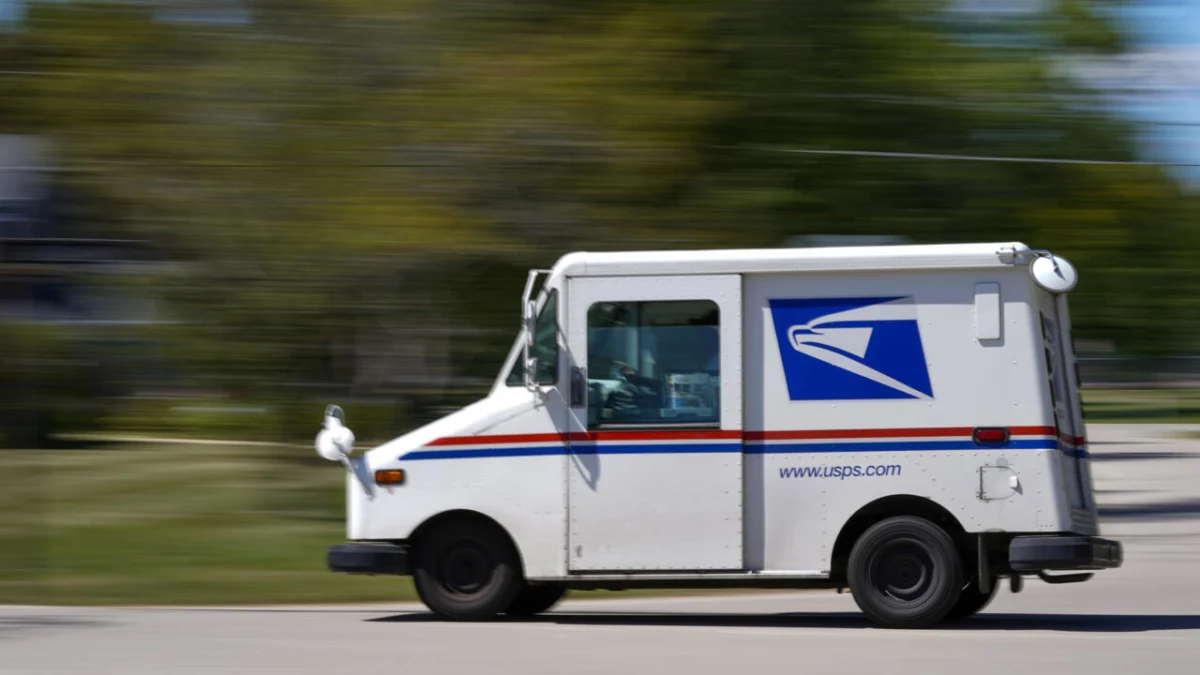
As the United States barrels toward a high-stakes midterm election cycle, the integrity of the nation’s mail-in voting infrastructure has become the subject of an intense and escalating controversy. A federal whistleblower from within the United States Postal Service (USPS) has leveled grave allegations against the agency, warning that a rushed, secretive, and technically flawed initiative to overhaul mail-in ballot processing could disenfranchise millions of American voters.
The disclosure, released by Democratic Senator Richard Blumenthal, paints a picture of a federal agency under immense political pressure to implement a system that critics argue is designed to fail. At the heart of the dispute is a new digital portal intended to track and verify mail-in ballots—a project the whistleblower claims was built in a climate of "chaos" and "catastrophic" technical inadequacy.
The Core Allegation: A "Zero-Percent Failure" Trap
The whistleblower’s report, facilitated by the nonprofit legal group Whistleblower Aid, centers on the implementation of a new federal online portal. Under this proposed system, state election authorities are required to upload voter rolls and unique identifying barcodes to a centralized USPS database. Postal workers are then tasked with checking batches of outgoing ballots against this digital registry before they are cleared for distribution.
The most alarming aspect of this protocol is the alleged adoption of a "zero-percent failure policy." According to the whistleblower, the system is designed to reject an entire batch of up to 10,000 ballots if a single barcode fails to scan or match the data in the federal portal.
"The apparently sloppy and rushed manner in which the federal ballot mail portal and supporting IT systems are being built poses significant risk," the official stated. The whistleblower warned that if one problematic ballot in a large mailing triggers a rejection, the entire batch could be held up, preventing the other 9,999 voters from receiving their ballots in a timely fashion—if at all.
With approximately one-third of the American electorate relying on mail-in voting, the potential for widespread delays in states where election results are often decided by razor-thin margins has ignited a firestorm of concern among civil rights advocates and election security experts.
Chronology of a Mounting Crisis
The seeds of this controversy were sown earlier this year, rooted in a broader political battle over the legitimacy of mail-in voting.
- March: President Donald Trump signs an executive order mandating tighter federal controls over the processing of mail-in ballots. The order is part of an ongoing rhetorical campaign by the President, who has repeatedly—though without substantiated evidence—claimed that mail-in voting is a vector for widespread fraud.
- Summer: The USPS, under pressure from the administration, accelerates development of the digital verification portal. The whistleblower alleges that throughout this period, technical requirements shifted constantly, and the project bypassed standard industry testing protocols.
- August (Late): A federal judge in Massachusetts issues an injunction blocking key segments of the Trump administration’s plan, noting that the USPS likely lacks the statutory authority to regulate the eligibility of mail-in voters.
- August 30: Despite the judicial setback, the whistleblower discloses that the USPS continued to move forward with the portal, aiming for a September 1 launch date.
- September 1: Senator Richard Blumenthal makes the whistleblower’s disclosures public, accusing the administration of attempting an end-run around the judiciary.
Technical Deficiencies and Operational Risks
The whistleblower’s account highlights a disconnect between the political mandates imposed on the USPS and the technical reality of the agency’s IT infrastructure. According to the document, the portal was constructed under a "secretive, rushed" timeline.
Major IT projects typically undergo months of rigorous stress testing, vulnerability assessment, and quality assurance. The whistleblower claims this system received only a fraction of the necessary evaluation, leaving it susceptible to "catastrophic failure." Because the system relies on high-speed scanning of barcodes, even minor environmental factors—such as printing quality or humidity-affected paper—could lead to mass scan failures.
"Potentially millions of American voters may not receive their mail-in ballot this election cycle in a timely manner, or at all," the whistleblower warned. The lack of a "fallback" or manual override process in the current design means that once the system marks a batch as "failed," it remains in a state of limbo until a human operator can manually intervene, a bottleneck that would be impossible to manage at the scale of a national election.
The Battle of Responses: USPS vs. The Senate
The response to the whistleblower’s report has been sharply polarized, reflecting the deep partisan divide that currently characterizes the debate over American election administration.
The USPS Position
In a statement provided to Agence France-Presse (AFP), the United States Postal Service maintained that it has acted in full compliance with the law. While acknowledging they are reviewing the whistleblower’s allegations, the agency vehemently denied that they are defying court orders.
"This work has at all times been conducted in a manner consistent with court orders," the statement read. The USPS further clarified that the portal is currently being offered only as a voluntary tool for state election officials, not as a mandatory federal requirement. They emphasized that no "mandatory verification procedures" are currently in effect, seemingly attempting to de-escalate concerns that the system will be used to actively suppress votes in the coming weeks.
"Regardless of political party or perspective, we share a common goal: ensuring that Americans can have confidence that their election mail will be handled securely and delivered reliably," the USPS added.
Senator Blumenthal’s Accusations
Senator Richard Blumenthal, a senior member of the Senate investigations panel, was unconvinced by the agency’s assurances. In a press briefing following the disclosure, Blumenthal characterized the USPS’s actions as an attempt to "disenfranchise millions."
"The whistleblower’s allegations make clear that USPS lacks the technical or operational capability needed to effectively implement these provisions in a way that safeguards every citizen’s right to vote," Blumenthal told reporters. He has called on Postmaster General David Steiner to immediately halt the implementation of the portal, arguing that the administration is prioritizing a political agenda over the constitutional right to vote.
Implications for the Midterm Elections
The timing of this dispute could not be more critical. As the first states prepare to distribute mail-in ballots, election officials across the country are facing a "perfect storm."
If the system remains in place, election officials in states that opt to use the portal face the daunting task of managing potential backlogs. If the system experiences a technical glitch, the resulting delay could disenfranchise voters who are unable to receive their ballots in time to return them by the state-mandated deadlines.
Furthermore, the legal landscape remains fluid. While the federal judge in Massachusetts has allowed the USPS to continue building the portal for voluntary use, the administration is currently appealing the broader ruling that restricted their ability to set voting rules. This creates a scenario where the rules of the game could change in the middle of the election cycle, causing massive confusion for voters and election administrators alike.
The dispute underscores a broader trend in American politics: the weaponization of bureaucratic systems. By focusing on the logistical "plumbing" of the election—the sorting facilities, the barcode scanners, and the databases—the political parties have shifted the battlefield from the campaign trail to the administrative backend.
As the midterms approach, the question remains whether the USPS can balance its mission of "secure and reliable" delivery with the demands of an administration seeking to fundamentally alter how the country casts its vote. For now, millions of Americans are left waiting, unsure if their ballot will reach them in time, or if the infrastructure intended to facilitate their participation will instead serve as the ultimate hurdle.
The whistleblower’s warning serves as a stark reminder that in a modern democracy, the right to vote is only as secure as the machinery that processes it. With time running out, the "chaotic" implementation of this new portal may well prove to be the deciding factor in the efficiency—and perhaps the legitimacy—of the upcoming election.