The Strait of Hormuz, a narrow maritime artery through which a significant portion of the world’s daily oil production flows, has once again become the epicenter of a dangerous geopolitical standoff. In recent weeks, the delicate balance of power in the Persian Gulf has fractured, as the Iranian Revolutionary Guard Corps (IRGC) asserted unilateral control over navigation, effectively turning a vital international waterway into a theater of conflict.
The situation, characterized by targeted attacks, shifting naval corridors, and high-stakes diplomatic maneuvering, has left the global shipping industry in a state of paralysis. As Iran, the United States, and regional powers like Oman and France trade accusations and counter-threats, the world watches with bated breath, fearing that the "maritime motorway" of the Middle East could be shuttered entirely.
A Strategic Bottleneck Under Siege
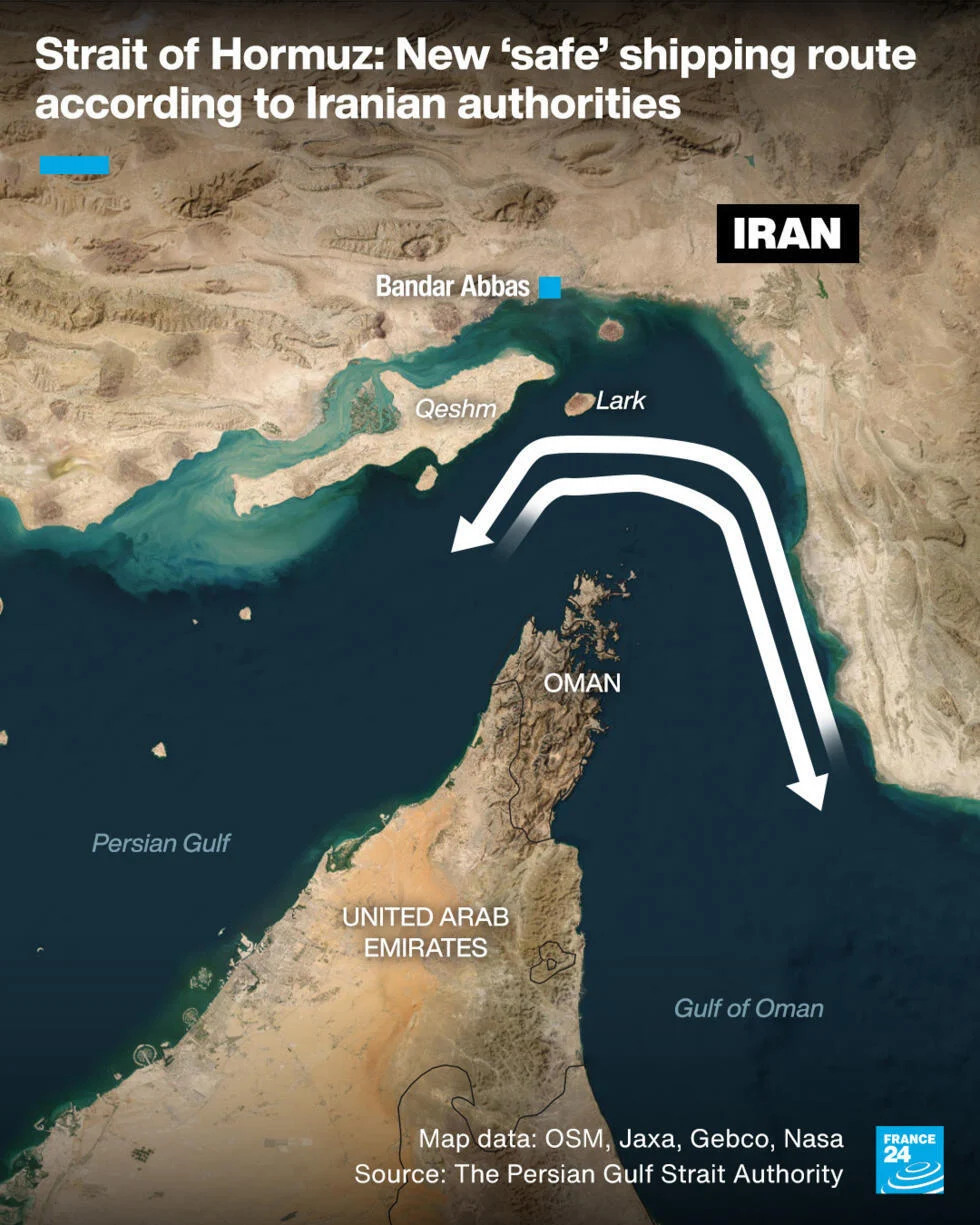
The conflict centers on the IRGC’s declaration that only state-authorized maritime routes will be permitted for transit. Any vessel deviating from these Iranian-defined corridors, the Islamic Republic warns, will no longer be guaranteed safe passage. This decree effectively challenges the long-standing international norms established by the International Maritime Organization (IMO) in 1968, which utilize a "traffic separation scheme" to manage the flow of vessels through the 33-kilometer-wide strait.
For decades, this "maritime motorway" has functioned as the global standard, utilizing two lanes separated by a buffer zone to prevent collisions. However, Tehran’s recent aggressive posturing has effectively rendered the central corridor off-limits, forcing commercial traffic into precarious, untested, or high-risk alternatives.
Chronology of a Crisis: From Diplomacy to Kinetic Warfare
The current escalation is the culmination of weeks of failed de-escalation efforts.
- June 18: The Joint Maritime Information Centre (JMIC), a naval monitoring body supported by the United States, officially recommends an alternative route through Omani territorial waters. This route is deemed "mine-free" and intended to bypass the Iranian-controlled central corridor.
- June 24: Arsenio Dominguez, Secretary-General of the IMO, issues a formal alarm, confirming reports of sea mines within the traditional shipping lanes. He estimates that upwards of 80 mines would require clearance before the central strait could be considered safe for commercial traffic.
- June 25: A cargo ship attempting to utilize the recommended Omani alternative route is struck by a missile of unknown origin 7.5 nautical miles southeast of Dahit. The attack signals that the alternative, "safe" route is now firmly in the crosshairs of regional hostilities.
- Late June (Weekend): The cycle of violence accelerates. The U.S. launches retaliatory airstrikes following the maritime attacks. Iran responds by launching drone and missile strikes against targets in Bahrain and Kuwait, effectively placing formal peace negotiations on an indefinite hold.
- June 29: Despite a tentative agreement between Washington and Tehran to cease direct attacks, traffic remains crippled. Data from Kpler confirms that only two ships successfully navigated the Omani route—one entering and one exiting the Gulf—as fear permeates the shipping industry.
The Mirage of the "Safe Route"
While the Omani coastal route was presented as a solution, maritime experts warn that it is far from an ideal substitute. Dirk Siebels, a specialist at Risk Intelligence, notes that this corridor has historically been underutilized due to its proximity to the coastline, which leaves vessels with virtually no room to maneuver in the event of engine failure or steering malfunctions.
"This stretch of water existed, but it was rarely used because it runs along the coastline and poses greater safety risks," Siebels explains. "If something goes wrong on board, you are relatively close to the shore. You have very little room to react."
Furthermore, the threat of sea mines—whether real or perceived—has created a psychological blockade. As Siebels aptly points out, the mere rumor of mines is often sufficient to halt commerce. "No one is in a position to say whether the threat is real or a bluff, but it doesn’t matter. All it takes is to sow doubt so that no one takes the risk. The economic cost of insurance premiums alone makes the route untenable."

Official Responses: A Diplomatic Tug-of-War
The international community has responded with a mix of cautious military support and diplomatic condemnation. Following a meeting at the Élysée Palace, French President Emmanuel Macron announced that France would collaborate with Oman to clear mines from the Strait, aiming to restore "free and unconditional passage."
This move was met with immediate, sharp resistance from Tehran. Iranian Deputy Foreign Minister Kazem Gharibabadi took to social media to warn against "provocations," asserting that under the terms of their interim arrangement, demining is the sole prerogative of the Iranian state. This rigid stance reflects Iran’s desire to maintain the Strait as a primary lever of influence in its ongoing conflict with Washington.
Meanwhile, the UN-backed plan to evacuate approximately 11,000 vessels trapped in the Gulf has been suspended. The memorandum of understanding, which originally included a 30-day window for Iran to clear the mines, is currently hanging by a thread as trust between the signatory parties continues to erode.
Supporting Data: The Economic and Logistical Impact
The numbers illustrate a shipping industry in retreat. Prior to the recent escalation, the alternative Omani route was seeing a modest increase in traffic, with roughly 20 ships passing through in May and early June. That number spiked to 60 vessels as companies scrambled to avoid the central corridor. However, following the June 25 attack, that momentum vanished.
The logistical bottleneck is not merely a regional issue; it is a global economic threat. With a significant portion of the world’s liquified natural gas (LNG) and crude oil transiting these waters, any sustained closure or even a "slow-down" causes ripple effects in global energy markets. Insurance companies have begun to classify the entire region as a "High Risk" zone, causing premiums to skyrocket, which ultimately drives up the cost of energy for consumers globally.
Implications: A Future of Persistent Volatility
The standoff at the Strait of Hormuz represents more than just a struggle over water rights; it is a fundamental challenge to the global order. The implications of this crisis are multi-faceted:
- Erosion of Maritime Law: By unilaterally dictating which routes are "authorized," Iran is effectively challenging the United Nations Convention on the Law of the Sea (UNCLOS). If this precedent is allowed to stand, other regional powers may feel emboldened to exert control over other global chokepoints.
- The Weaponization of Infrastructure: The use of mines—or the threat thereof—to manipulate global trade routes transforms essential infrastructure into a kinetic weapon. This forces the international community to balance between "freedom of navigation" operations and the risk of full-scale regional conflict.
- The Fragility of Peace Talks: The integration of maritime security into broader ceasefire negotiations has backfired. Instead of acting as a trust-building measure, the Strait has become a bargaining chip that can be toggled to apply pressure on the West. As long as the waterway remains a point of contention, any formal agreement to end the war remains unlikely.
As France, the UK, and their coalition partners prepare to provide technical expertise for mine-clearing, they do so under the shadow of Iranian threats. The coming weeks will be a test of whether international diplomacy can reclaim the freedom of the seas, or if the Strait of Hormuz will continue to be a gated waterway, controlled by those who hold the most dangerous cards. For now, the world’s energy lifeline remains under lock and key, with the key resting firmly in Tehran’s hand.