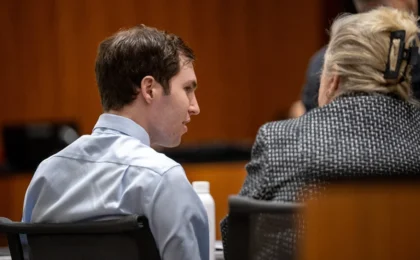
A South Carolina courtroom became the focal point of a complex intersection between public safety, gig-economy vulnerability, and severe mental illness as a judge denied bond for a woman accused of a violent assault on a rideshare driver. Naziyha Weatherall, a Greenville County resident, faces multiple felony charges after allegedly stabbing her Lyft driver 11 times and fleeing in his vehicle.
During the bond hearing, prosecutors described a terrifying sequence of events, while the defense countered with a narrative of a young woman in the grip of an acute, untreated psychiatric emergency. The incident has reignited local and national discussions regarding the safety protocols afforded to gig-economy workers and the capacity of the judicial system to manage defendants suffering from severe mental illness.
1. Main Facts of the Case
The criminal charges against Naziyha Weatherall stem from a violent encounter on April 22 in Greenville County, South Carolina. According to court records, Weatherall is charged with:
Attempted Murder
Carjacking
Possession of a Weapon During a Violent Crime
The prosecution alleges that Weatherall summoned a Lyft rideshare vehicle and, during the course of the ride, launched an unprovoked attack on the driver. The victim was stabbed 11 times before Weatherall allegedly forced him out of the vehicle and drove away in it.
At a bond hearing on Friday, a Greenville County judge officially denied Weatherall’s request for bond. The decision came after intense arguments from both sides. The prosecution characterized Weatherall as an extreme danger to the community, highlighting the random and brutal nature of the assault.
Conversely, the defense argued that Weatherall was experiencing a severe mental health crisis at the time of the incident, driven by profound paranoia and undiagnosed or under-treated schizophrenia. The defense petitioned the court to release her into the custody of her family and a social worker, who had arranged for her placement at an inpatient psychiatric treatment facility.
Ultimately, the judge ruled that Weatherall must remain in custody at the Greenville County Detention Center, pending a comprehensive, court-ordered psychological evaluation scheduled for September.
2. Chronology of the Incident and Legal Proceedings
To fully understand the gravity of the case, it is necessary to examine the timeline of events leading up to the attack, the violence of April 22, and the subsequent legal milestones.
Pre-Incident Mental State and Paranoia
In the days and hours leading up to April 22, Weatherall’s mental health had reportedly deteriorated significantly. According to her defense counsel, she was suffering from severe paranoia, believing that she was being actively monitored, tracked, and targeted by unknown individuals. This delusional state eventually led her to believe that she was the victim of a human trafficking ring.
The Attempt to Contact Law Enforcement
On the day of the attack, Weatherall intended to seek help from the police. Believing she was in imminent danger, she decided to travel to a local police station to file a report.
The Mother’s Warning: Recognizing her daughter’s unstable state, Weatherall’s mother took the proactive step of calling the local police department. She informed officers that her daughter was suffering from a psychiatric crisis and was currently en route to the station to report imaginary threats.
Summoning the Rideshare: Lacking alternative transportation, Weatherall ordered a Lyft ride to transport her to the station.
The Attack on April 22
During the commute, Weatherall’s psychological crisis intensified. According to her defense attorney, the confined space of the vehicle, combined with her escalating paranoia, convinced her that the Lyft driver was part of the conspiracy to traffic her.
The Escalation: In a state of panic, Weatherall allegedly drew a weapon and began stabbing the driver.
The Assault: The driver was stabbed 11 times in various parts of his body as he attempted to defend himself while operating the vehicle.
The Carjacking: The driver was forced out of the vehicle. Weatherall then took control of the car and fled the scene.
Arrest and Initial Detention
Law enforcement officers quickly located the stolen vehicle and apprehended Weatherall without further incident. She was booked into the Greenville County Detention Center, where she has remained since her arrest.
June Court Orders
Recognizing the potential role of mental illness in the crime, a Greenville County judge ordered competency and observation evaluations in June. These initial evaluations aimed to determine whether Weatherall understood the charges against her and could assist in her own defense.
The August Bond Hearing
On Friday, Weatherall appeared in court for a formal bond hearing. The prosecution presented the details of the attack, the victim’s wife provided emotional testimony, and the defense argued for a transfer to a psychiatric facility. The judge denied bond and maintained her detention.
Upcoming September Evaluation
Weatherall is scheduled to undergo a rigorous, independent psychological evaluation in September. This evaluation will determine her long-term competency to stand trial and assess her criminal responsibility at the time of the offense.
3. Supporting Data and Courtroom Testimony
The bond hearing on Friday featured emotional and highly detailed arguments from the prosecution, the victim’s family, the defense, and the defendant’s mother.
The Prosecution’s Arguments and the Victim’s Trauma
The prosecuting solicitor presented a stark narrative of the events, emphasizing the vulnerability of the victim and the sheer violence of the act.
"The victim was simply just trying to do his job and was stabbed 11 times," the solicitor stated. "Not only was he stabbed 11 times, his car was then carjacked by this defendant."
The prosecution argued that the random nature of the attack made Weatherall a unpredictable threat to the public, asserting that no amount of supervision outside of a secured facility could guarantee community safety.
The victim was unable to attend the hearing due to the physical and psychological trauma of the event. His wife spoke on his behalf, expressing the profound impact the crime has had on their lives:
"What concerns us most is that happened while my husband was simply working," she testified. "He was not looking for any confrontation, he was providing a service to a person. If this level of violence could happen to someone who was simply doing his job, we are concerned about potential risks to other people in our community."
The Defense’s Argument of a Psychiatric Emergency
Weatherall’s defense attorney urged the court to view the case not as a premeditated criminal act, but as the tragic byproduct of a severe psychiatric failure. The defense highlighted several key mitigating factors:
No Prior Record: Weatherall had no history of criminal arrests or violent behavior prior to April 22.
Severe Diagnoses: She has since been diagnosed with schizophrenia and other severe mental health conditions.
Current Stability: The defense argued that since being detained and placed on proper antipsychotic medication, Weatherall has stabilized, is fully cooperative, and is currently competent.
The Proposed Plan: The defense requested that she be released on bond to a specialized, secure treatment facility where her mental health could be managed by professionals, rather than keeping her in a standard jail environment.
The Mother’s Apology
Weatherall’s mother also addressed the court, offering an emotional apology to the victim and his family while pleading for medical intervention for her daughter.
"She’s not a criminal. She would never, ever, ever hurt anybody like that," her mother said. "And I understand the family’s side, I truly do, because we are all suffering. We all are."
4. Official Responses
The incident has drawn formal responses from the rideshare corporation involved and local law enforcement authorities.
Lyft’s Corporate Response
Following the bond hearing, a spokesperson for Lyft issued a statement to the media, condemning the violence and outlining the actions the company has taken in the wake of the attack:
"Violence like this has no place in the Lyft community or in our society," the spokesperson said. "The driver’s well-being has been our priority, and we have reached out to them and their family to offer support."
Lyft confirmed that it has permanently deactivated the rider accounts associated with Weatherall and is continuing to cooperate fully with the Greenville County Sheriff’s Office and the local solicitor’s office in their ongoing investigation.
Law Enforcement and Prosecution Stance
The Greenville County Sheriff’s Office and the local Solicitor’s Office have maintained a firm stance on the necessity of detention. While acknowledging the defense’s claims regarding mental illness, prosecutors emphasized that the severity of the physical injuries inflicted on the driver—coupled with the theft of the vehicle—requires a prioritize-safety-first approach.
5. Broader Implications
The case of Naziyha Weatherall highlights several systemic issues that extend far beyond Greenville County, sparking critical discussions on gig-worker safety and the legal handling of psychiatric crises.
Gig Economy Vulnerabilities and Driver Safety
Rideshare drivers operate under unique and often dangerous conditions. Unlike traditional taxi services, which frequently feature physical partitions (such as bulletproof glass) between the driver and passenger, rideshare drivers typically operate standard consumer vehicles without physical barriers.
This case underscores several ongoing safety concerns within the gig economy:
Anonymity and Screening: While drivers must undergo background checks, passengers can often set up accounts with minimal verification, sometimes using prepaid cards or aliases.
In-Vehicle Security: There are growing calls from labor advocates for rideshare platforms to subsidize the installation of dash cameras and physical partitions to protect drivers from rear-seat physical assaults.
Emergency Features: Although platforms like Lyft and Uber have integrated "panic buttons" and GPS tracking into their applications, these features are often difficult to utilize during a sudden, fast-moving physical attack.
Mental Health and the Justice System
This case also illustrates the ongoing struggle of the American legal system to address defendants who commit violent acts during active psychotic episodes.
Legal Concept
Definition in this Context
Relevance to Weatherall Case
Competency to Stand Trial
The defendant’s current mental capacity to understand court proceedings and assist their attorney.
Weatherall’s defense claims she is currently stable and competent due to jail-administered medication.
Criminal Responsibility (Insanity)
The defendant’s mental state at the exact time the crime was committed, determining if they could distinguish right from wrong.
This will be the primary focus of the scheduled September psychiatric evaluation.
Diversion to Treatment
Placing a mentally ill defendant in a psychiatric facility rather than a traditional prison.
The judge denied this option for now, citing the immediate risk to public safety.
The court’s decision to deny bond reflects a common judicial precedent: when a violent crime occurs, public safety concerns almost always override therapeutic placement options in the initial stages of prosecution, regardless of the defendant’s mental state during the offense. Weatherall will remain jailed as the legal system prepares to evaluate her psychiatric standing in September, a process that will ultimately dictate whether her case proceeds to a criminal trial or is diverted to the state’s mental health system.