By Investigative Desk
A major maritime disaster unfolded in the Mediterranean Sea this past Sunday as a passenger ferry carrying more than 250 people capsized while en route from the breakaway territory of Northern Cyprus to the Turkish mainland. The incident, which has triggered a massive search-and-rescue operation, has cast a somber shadow over the busy maritime corridor connecting the island to the Turkish province of Mersin.
While official figures regarding the exact number of survivors and fatalities remain fluid, the government of the self-proclaimed Turkish Republic of Northern Cyprus (TRNC) has confirmed that lives were lost. As emergency crews continue to comb the waters, questions regarding vessel safety, weather conditions, and maritime oversight have begun to dominate the regional discourse.
Main Facts: A Maritime Crisis Unfolds
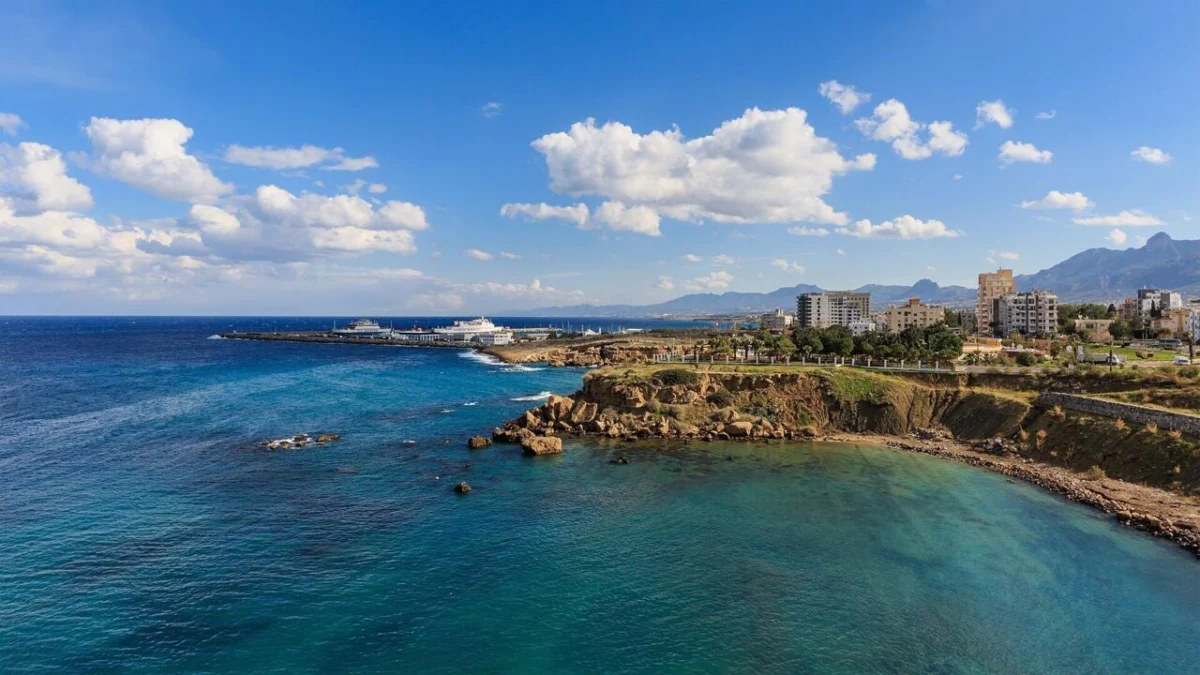
The vessel, a catamaran-style ferry, departed from the port of Kyrenia (Girne) on Sunday morning, bound for the Turkish port of Tasucu. The route is a critical artery for the breakaway state, serving as a primary link for residents, students, and tourists traveling between Northern Cyprus and the Turkish mainland.
Shortly after departure, the vessel encountered catastrophic mechanical or structural failure. According to reports from the Turkish state-run broadcaster TRT, the ferry began taking on water just a few kilometers off the coast. Within a short window of time, the vessel lost stability and capsized, plunging hundreds of passengers into the open sea.
Visual evidence captured at the scene paints a harrowing picture: survivors clad in bright orange life vests are seen drifting in the choppy waters, surrounded by the debris of the capsized vessel. The presence of these life vests suggests that at least some safety protocols were initiated, though the speed with which the ship took on water clearly overwhelmed the crew’s ability to prevent a disaster.
Chronology of the Disaster
The timeline of the tragedy remains under investigation, but initial reports suggest the sequence of events unfolded as follows:
- Pre-departure: The ferry cleared port protocols at Kyrenia, departing on its scheduled journey to Tasucu under standard maritime conditions.
- The Critical Failure: Approximately a few kilometers out to sea, the vessel experienced a sudden ingress of water. The exact cause—whether a collision with a submerged object, a hull breach, or an engine room failure—remains unknown.
- The Capsize: Within minutes of the initial distress, the vessel’s stability was compromised. The catamaran design, which provides speed and comfort, can be notoriously unstable once water breaches the lower compartments, leading to the rapid capsizing reported by eyewitnesses.
- Emergency Response Initiation: Once the vessel overturned, distress signals were transmitted. Rescue vessels from the Turkish Coast Guard, local maritime authorities, and private fishing boats in the vicinity were dispatched to the site.
- Ongoing Recovery: As of Sunday evening, search-and-rescue efforts continued through the night, with divers and aerial support searching for missing passengers.
Supporting Data: The Kyrenia-Tasucu Corridor
The ferry route between Kyrenia and Tasucu is one of the most heavily trafficked maritime paths in the Eastern Mediterranean. Serving as the primary lifeline for Northern Cyprus, which is not internationally recognized except by Turkey, this route facilitates the transport of thousands of passengers annually.
Maritime Infrastructure and Regulation
Several private companies operate ferry services on this route, utilizing a mix of high-speed catamarans and traditional roll-on/roll-off ships. The competitive nature of this market, combined with the aging nature of some vessels in the regional fleet, has long been a subject of concern for maritime safety experts.
- Vessel Type: Catamarans are favored for their speed, capable of cutting travel time significantly. However, they require rigorous maintenance to ensure hull integrity.
- Traffic Volume: On any given weekend, particularly during peak travel seasons, these ferries operate at high capacity, often carrying hundreds of passengers, vehicles, and cargo.
- Weather and Seas: The Mediterranean, while often perceived as calm, can develop sudden swells and currents that pose significant challenges to smaller, lightweight passenger vessels.
Official Responses and Accountability
The reaction from the highest levels of government was swift, reflecting the gravity of the situation.
The Prime Minister’s Statement
Unal Ustel, the Prime Minister of the self-proclaimed Turkish Republic of Northern Cyprus, addressed the nation shortly after the incident. In a statement carried by the Turkish state news agency Anadolu, Ustel confirmed the worst: "There are some fatalities." He stopped short of providing an exact toll, emphasizing that the priority remains the rescue of survivors and the care of those currently being brought to shore.
Transportation Ministry Coordination
Erhan Arikli, the Minister of Transportation for Northern Cyprus, has been coordinating with Turkish counterparts in Ankara. Arikli confirmed to TRT that the ship had overturned and that extensive rescue crews were already on the scene, including naval assets. "We are working with all available resources to account for every passenger," Arikli stated.
Investigating the Operator
One of the most pressing questions is the identity of the operator. Several companies manage the Kyrenia-Tasucu route, and authorities have not yet disclosed which firm was responsible for the vessel. Investigators are expected to impound records, examine the vessel’s maintenance logs, and question the crew to determine if human error or mechanical neglect played a role in the disaster.
Implications of the Tragedy
The capsizing of this ferry is not merely a local tragedy; it holds deep implications for the future of maritime travel in the region and the political status of Northern Cyprus.
The Question of Safety Oversight
This disaster is likely to prompt a wholesale review of maritime safety regulations in Northern Cyprus. If investigations reveal that the ferry was overcrowded or improperly maintained, the government will face intense pressure to overhaul its regulatory framework. International maritime bodies, though limited in their direct reach due to the territory’s political status, may demand transparency regarding the safety standards of the entire fleet operating out of Kyrenia.
Economic and Diplomatic Consequences
The Kyrenia-Tasucu route is vital for the economy of Northern Cyprus. A suspension of ferry services—which is highly probable as investigations commence—would effectively isolate the territory, impacting everything from tourism and education to the supply of essential goods. Furthermore, the disaster may spark a diplomatic debate regarding the safety protocols enforced by the Turkish authorities, who provide the primary oversight for the territory’s maritime connections.
The Human Cost
Beyond the policy and economic fallout, the human cost is immeasurable. The images of passengers floating in life vests have evoked a visceral response from the public. For the families of those missing, the wait for information is agonizing. The trauma of this event will likely impact the community in Northern Cyprus for years to come, serving as a grim reminder of the risks associated with the dependency on aging maritime infrastructure.
A Call for Reform
As rescue efforts transition into recovery, the focus will inevitably shift toward accountability. Maritime experts suggest that the region needs:
- Stricter Inspections: Mandatory, independent safety audits for all vessels operating on the Mediterranean routes.
- Emergency Preparedness: Increased presence of dedicated search-and-rescue assets in the Kyrenia-Tasucu corridor.
- Transparency: Public access to safety records for all passenger ferry operators.
In conclusion, while the world watches the unfolding recovery efforts, the tragedy off the coast of Cyprus serves as a somber warning. The sea, while a bridge between cultures and territories, remains an unforgiving environment that demands absolute adherence to safety and maintenance. Until the investigation concludes, the focus remains on the survivors and the families of the victims, while the international community waits to see if this disaster will lead to the long-overdue modernization of maritime safety in the Eastern Mediterranean.