In a landmark development for the circular economy, a research team at Virginia Tech has unveiled a pioneering chemical process capable of transforming one of the world’s most stubborn waste products—polyvinyl chloride (PVC)—into high-performance polyalphaolefins (PAOs). These synthetic hydrocarbons serve as the backbone for premium industrial lubricants, including high-grade engine oils. The findings, published on August 5 in the journal Nature, offer a dual-pronged solution to pressing environmental challenges: the mitigation of plastic waste accumulation and the decarbonization of the lubricant supply chain.
The PVC Conundrum: A Persistent Pollutant
Polyvinyl chloride is ubiquitous in modern society, serving as the material of choice for household plumbing, window frames, medical tubing, and credit cards. However, its very durability is its greatest flaw when it reaches the end of its lifecycle. Unlike polyethylene or PET, which are relatively straightforward to recycle, PVC is notoriously difficult to process.
The primary hurdle lies in its chemical composition. PVC contains chlorine, which complicates standard recycling streams and releases hazardous byproducts if incinerated. Furthermore, PVC is frequently loaded with a complex cocktail of plasticizers and additives designed to alter its flexibility and longevity. Because of these chemical complexities, most PVC finds its way into landfills, where it persists for centuries.
Simultaneously, the industrial world remains heavily reliant on lubricants. From the engine oil in a family sedan to the specialized fluids required for jet engines and heavy machinery, lubricants are the “silent heroes” of modern infrastructure. However, the production of these lubricants is traditionally energy-intensive and carbon-heavy. By pivoting to a methodology that utilizes discarded PVC as a raw material, Virginia Tech’s researchers are effectively turning a persistent pollutant into a high-value industrial asset.
A Chronology of Innovation: From Surfactants to Synthetic Oil
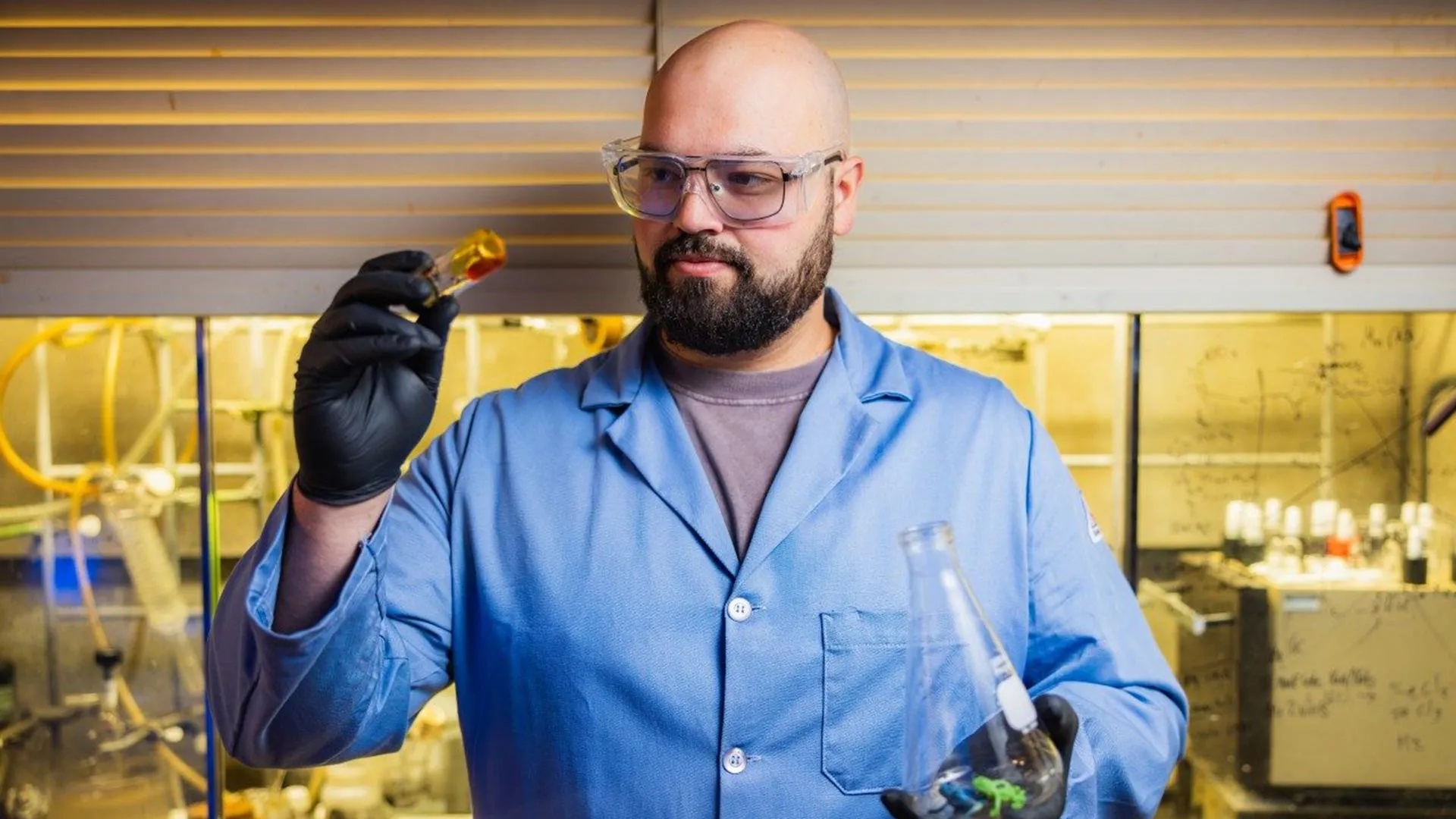
The path to this discovery was not linear; it was built upon years of methodical research into plastic upcycling. Guoliang "Greg" Liu, a chemist and chemical engineer at Virginia Tech, has long been at the forefront of repurposing polymers.
The Foundational Studies
Before tackling PVC, Liu’s laboratory gained international attention for developing methods to convert polyethylene waste into surfactants—the active ingredients in soaps and detergents. These previous studies, published in Science and Nature Sustainability, established a proof-of-concept: that the chemical bonds in plastic waste could be broken and rearranged to create commercially viable products. With these successes, the team turned their focus toward the “hard mode” of polymer recycling: PVC.
The "Three Musketeers" and the Pivot
Liu assembled a dedicated team of graduate researchers to tackle the PVC challenge. The group, whom Liu affectionately refers to as the "Three Musketeers," consisted of Eric Munyaneza Nuwayo, a doctoral candidate in his final year; Connor S. Thompson, a chemistry graduate student who shifted his focus to the project; and Abby Civiello, a first-year graduate student whose early contributions were described as pivotal.
The team’s initial approach followed their established methodology: attempting to chemically transform the PVC molecule by replacing its chlorine atoms with other functional groups. However, the results were lackluster. The resulting materials were inconsistent, gooey, and lacked the structural integrity required for industrial applications.
The breakthrough occurred during a moment of scientific serendipity. "One day I realized—if this polymer is so gooey and so soft, why don’t I just keep breaking the polymer chains down to smaller segments?" Liu recalled. By shifting the focus from modifying the polymer to degrading it into specific, smaller hydrocarbons, the team successfully synthesized a high-quality oil.
The Technical Process: Turning Plastic into Power
The methodology developed at Virginia Tech is remarkably elegant in its simplicity. It begins with the mechanical breakdown of PVC waste. The plastic is placed into a solvent and treated with aluminum trichloride and alpha olefins. The mixture is then heated to 158 degrees Fahrenheit—a relatively low temperature for chemical processing—for a duration of three hours.
During this reaction, the PVC polymer chains are effectively "unzipped" and reconstructed. The final stage involves extracting a thick, high-performance oil from the solvent. Laboratory testing confirmed that this oil possesses the necessary viscosity and stability to function as a premium lubricant.
Collaborative Validation
To ensure the product met rigorous industrial standards, Liu engaged in a collaborative effort spanning several institutions:
- Performance Testing: Samples were sent to Ali Erdemir at Texas A&M University, a world-renowned expert in tribology (the study of friction and lubrication), who verified the performance capabilities of the new oil.
- Computational Modeling: William Goddard at Caltech utilized advanced chemical computations to map the reaction pathway and explain why the process yielded such high-quality hydrocarbons.
- Economic Analysis: Xi Chen, a colleague at Virginia Tech, developed production models to evaluate the scalability and economic feasibility of the process, ensuring that the research could translate from a laboratory bench to a manufacturing facility.
Official Responses and Strategic Implications
The academic and industrial communities have reacted to the publication with significant interest. The implications of this research extend far beyond the laboratory, touching on environmental policy and industrial sustainability.
"Number one, we have proved that it is feasible to use plastic waste to make high-performance lubricants. Number two, these lubricants are green, and they can meet the emerging needs for sustainability by the market," Liu noted during the project’s unveiling.
For the industry, the appeal of this process is two-fold. First, it offers a way to lower the carbon footprint of lubricant production by using recycled carbon rather than virgin fossil feedstocks. Second, it creates a market-driven incentive for PVC recycling. If PVC becomes a valuable commodity for lubricant manufacturers, waste management firms will have a financial motive to invest in better collection and separation technologies, effectively pulling plastic out of the waste stream.
Future Outlook: Scaling the Solution
While the team has successfully demonstrated the feasibility of the process, the road ahead focuses on scaling and optimization. The current research has proven that PVC can be upcycled; the next phase involves refining the process to be even more energy-efficient and ensuring it can handle the varied, contaminated nature of post-consumer plastic waste.
Xi Chen’s economic modeling suggests that if implemented at scale, this technology could disrupt the conventional supply chain for lubricants. By integrating the process into existing plastic recycling infrastructure, the researchers aim to make the oil not just a laboratory curiosity, but a widely available commercial product.
"Lubricants are the silent hero out there," says Liu. "We often don’t recognize they exist, but they are out there working quietly. We want to be able to produce the oil on a larger scale to reach more people in the world."
As the world grapples with the mounting crisis of plastic pollution, the work of the Virginia Tech team represents a shift in philosophy. By viewing waste not as trash, but as a secondary raw material, they are demonstrating that the tools to solve our most pressing environmental problems may already exist—hidden within the very materials we currently throw away. The "Three Musketeers" have provided a blueprint, and the industrial world is now watching to see how quickly this liquid gold can be brought to market.