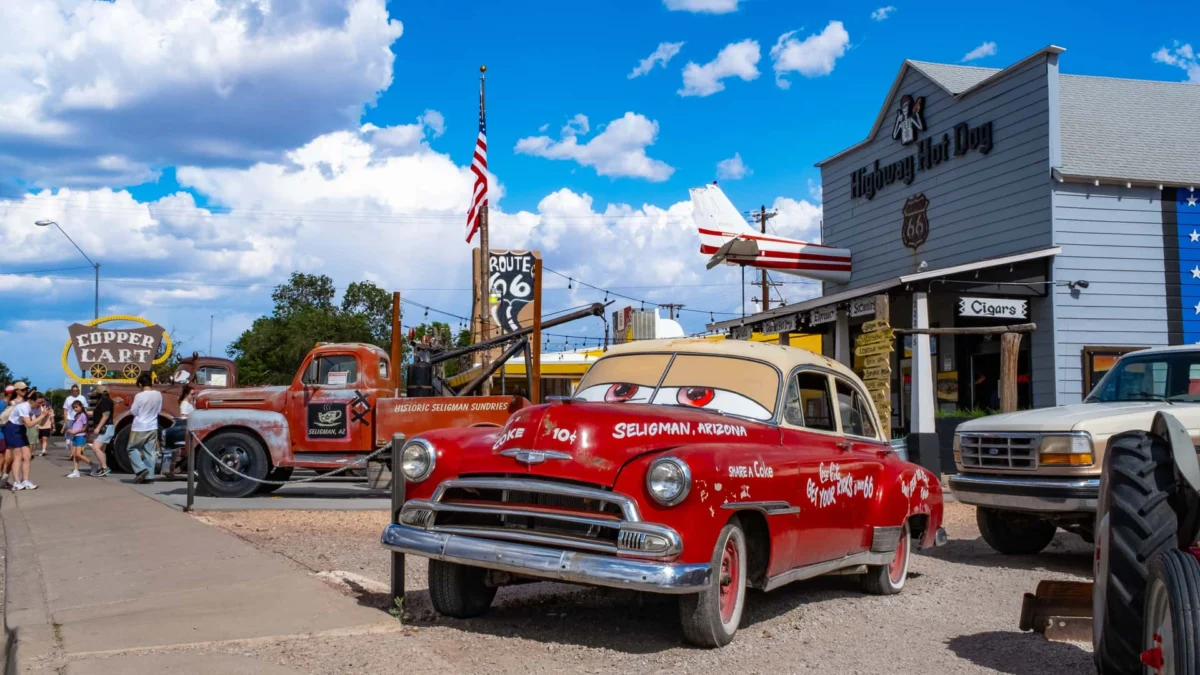
In the vast, sun-drenched expanse of the American Southwest, where the horizon stretches indefinitely and the desert floor mimics the color of aged parchment, lies a town that serves as a bridge between reality and cinematic folklore. Seligman, Arizona, a modest enclave with a population of fewer than 800 people, does not boast skyscrapers or high-speed transit. Instead, it offers something increasingly rare in the modern age: a preserved slice of authentic Americana, frozen in the golden era of the mid-20th century.
To the casual observer, Seligman is a charming, if dusty, roadside stop. To the millions of families who have watched Pixar’s 2006 blockbuster Cars, however, it is something far more significant. It is the spiritual home of Radiator Springs—the fictional, struggling town that served as the backdrop for Lightning McQueen’s journey of discovery. But unlike the animated world, the story of Seligman is not a fairytale; it is a complex chronicle of economic decline, grassroots preservation, and the enduring resilience of the "Mother Road," Route 66.
The Historical Context: The Rise and Fall of the Mother Road
To understand the significance of Seligman, one must understand the trajectory of Route 66 itself. Established in 1926, the "Main Street of America" spanned over 2,400 miles, connecting Chicago to Santa Monica. It was the primary artery for the westward migration of Americans seeking a new life, particularly during the Great Depression and the Dust Bowl years.
For decades, towns like Seligman thrived on the steady stream of travelers needing fuel, food, and respite. The economy of these small towns was entirely dependent on the constant flow of automobiles. However, the mid-1950s brought the Interstate Highway Act, championed by President Dwight D. Eisenhower. The subsequent construction of the high-speed Interstate 40 (I-40) effectively bypassed the local, winding stretches of Route 66.
By the 1960s, the bypass was complete, and the impact on small towns was catastrophic. As traffic diverted to the sterile, efficient convenience of the interstate, the "Mother Road" began to wither. Motels, diners, and service stations—the lifeblood of these communities—began to shutter, leaving behind ghost towns that stood as monuments to a bygone era of travel.
Chronology: From Obsolescence to Cultural Landmark
The survival of Seligman is not an accident of geography, but a result of deliberate human intervention.
- 1926–1950s: The Golden Age. Seligman serves as a critical junction, particularly famous for the "Angel & Vilma Delgadillo’s Route 66 Gift Shop and Visitor Center." It is a bustling stop for those traversing the American West.
- 1978: The Bypass. I-40 officially replaces the segment of Route 66 that runs through Seligman, removing the town from the primary national transit map. The local economy experiences a sharp, agonizing decline.
- 1987: The Birth of an Association. Led by local barber and visionary Angel Delgadillo, the "Historic Route 66 Association of Arizona" is formed. Delgadillo, often cited as the "Guardian Angel of Route 66," lobbied the state government to designate the old road as a historic site. This move was the first major step in rebranding the road from a functional highway to a tourism destination.
- 2001–2006: The Pixar Connection. During the development of Cars, the Pixar creative team, led by director John Lasseter, embarked on a research trip across the United States. They interviewed local business owners, including Delgadillo, and documented the aesthetic of the towns that had been bypassed by the interstate.
- 2006: The Release of Cars. The film’s success catapults towns like Seligman into the global spotlight. A new generation of travelers, inspired by the movie, begins to visit the town, ensuring its economic survival.
Supporting Data: The Economics of Nostalgia
The transformation of Seligman is a case study in "heritage tourism." While accurate census data for the town’s tourism-specific revenue is often rolled into regional Yavapai County reports, the impact is visually and demographically apparent.
According to the Historic Route 66 Association, since the revitalization efforts began, thousands of international visitors—particularly from Europe and Japan—have made Seligman a "bucket list" destination. The town’s economy, once on the brink of total collapse, now supports a cluster of thriving small businesses:
- Retail Density: Despite having fewer than 800 residents, the main drag of Seligman hosts a disproportionately high number of gift shops, cafes, and museums.
- Visitor Volume: Peak travel months see an influx of thousands of tourists per week.
- Infrastructure Investment: In the last decade, several historic buildings have been restored to their 1950s glory, preserving the architectural integrity of the town rather than replacing it with modern commercial structures.
The "Radiator Springs" Aesthetic: Reality Meets Fiction
Walking through the center of Seligman is an exercise in sensory nostalgia. The town has embraced its role as a living museum. Visitors are greeted by a kaleidoscope of vintage signage, neon lights that buzz to life at dusk, and a collection of automobiles that look as if they were pulled straight from the Pixar animation studio’s blueprints.
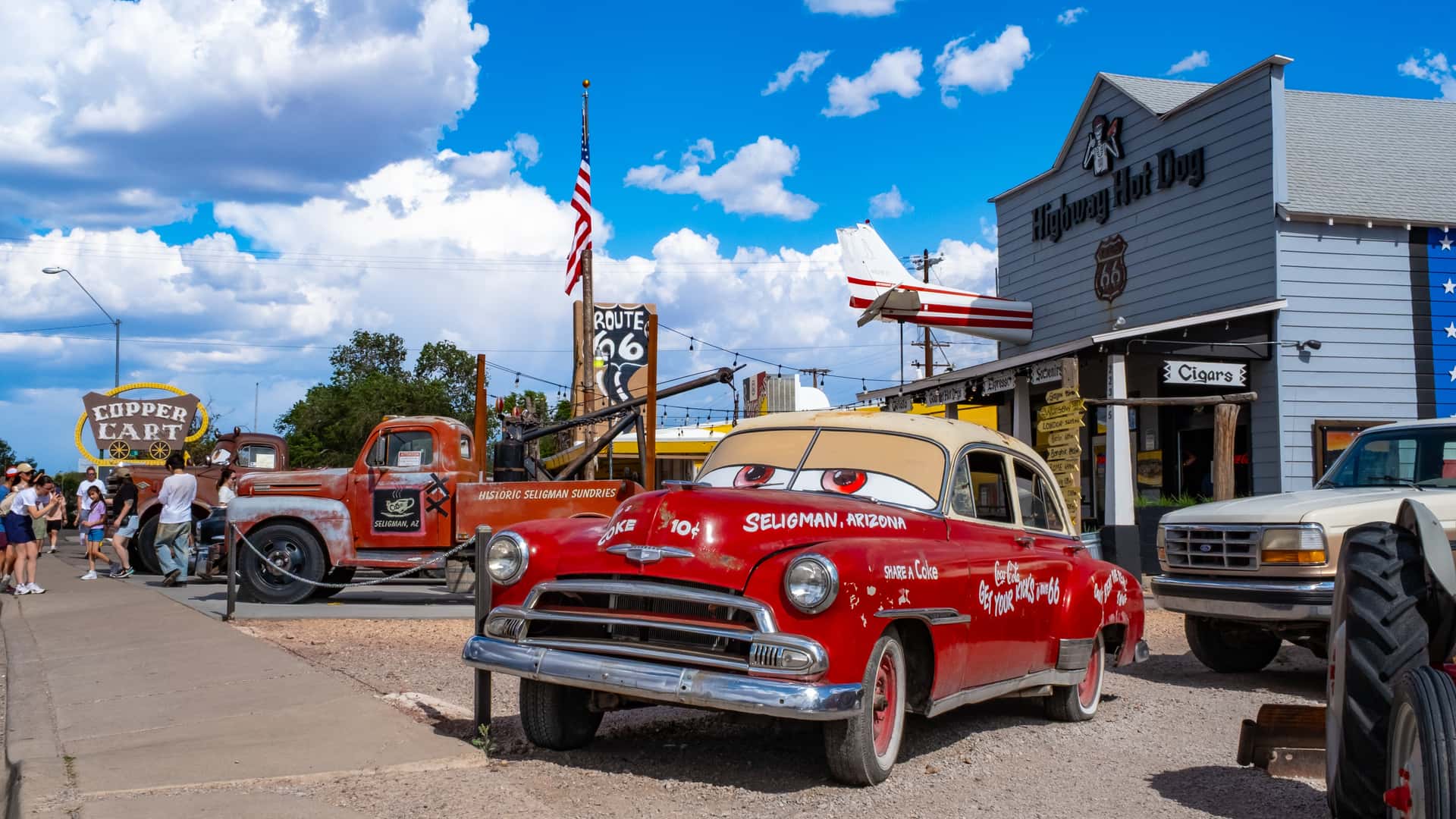
There are rusted 1950s tow trucks painted to resemble "Mater," and sleek, polished cruisers parked at angles that echo the staging of the film’s characters. The murals adorning the brick walls serve as a visual history of the town, blending the real-life history of the Route 66 Association with the fictional iconography of the film.
However, the town’s charm lies in its authenticity. Unlike a theme park, there is no scripted experience here. The rust on the fenders is genuine oxidation, the dust is real desert sand, and the people running the shops are often the same families who witnessed the town’s near-extinction in the 1970s. This creates a "thin" line between fiction and reality, where the traveler feels they are participating in the history of the place rather than merely observing it.
Official Perspectives: The Local Legacy
The residents of Seligman are deeply aware of their status as the "inspiration" for a global phenomenon. Angel Delgadillo, now in his 90s, has frequently spoken about the importance of keeping the history of the road alive. In various interviews, he has noted that the road is not just asphalt; it is a collection of memories.
Local officials and business owners maintain a symbiotic relationship with the film’s legacy. While they do not own the rights to the characters (which belong to Disney/Pixar), the town’s branding as the "Birthplace of Historic Route 66" and its unofficial designation as the "Real-Life Radiator Springs" has allowed them to market themselves to a global audience without needing a corporate partnership.
"The movie brought the world to our doorstep," says one local shop owner. "But the people who come here stay because they realize this isn’t a movie set. This is a town that fought to stay on the map when the whole world tried to move on without us."
Implications: The Future of Small-Town Preservation
Seligman stands as a beacon for other bypassed towns across America. Its success carries several significant implications for urban planning and cultural preservation:
- Cultural Branding: Seligman proves that a town’s identity—even if it is defined by economic struggle—can be its most valuable asset. By embracing their history as a "forgotten" town, they created a narrative that resonated with a global audience.
- The Power of Narrative: The intersection of popular culture and local history is a potent driver of economic stability. The association with Cars gave people a reason to visit, but the town’s commitment to quality and preservation is what keeps them returning.
- Sustainability vs. Tourism: One of the ongoing challenges for Seligman is maintaining its authentic charm while managing the pressures of increased tourism. As the town grows in popularity, the risk of "Disney-fication"—where the town becomes a caricature of itself—remains a concern for local leaders.
Ultimately, Seligman is more than a tourist trap. It is a testament to the idea that progress, while often necessary, should not come at the expense of our cultural heritage. The town has managed to survive the transition from a necessary transit point to a destination in its own right.
Whether one is a fan of high-octane animation or a devotee of American history, a drive through Seligman offers a rare chance to slow down. In a world that is constantly accelerating, moving toward the next, faster, more efficient "interstate," Seligman invites us to take the exit, roll down the windows, and appreciate the beauty of the road we might otherwise leave behind. It reminds us that even when the world moves on, there is value in the places that choose to stay put.