For more than 60 years, the Ford Mustang has stood as the definitive archetype of American automotive culture. From its humble beginnings in 1965 as an affordable, stylish cruiser to the tire-shredding, track-focused juggernaut that is the seventh-generation S650, the "pony car" has consistently balanced accessibility with high-octane performance. Yet, as the global automotive landscape shifts toward hyper-sophisticated aerodynamics and exotic supercar aesthetics, the Mustang faces a perpetual challenge: how to evolve without losing the soul that made it an icon in the first place.
Enter digital visionary and 3D rendering artist Luca Serafini. Renowned for his ability to bridge the gap between retro nostalgia and futuristic design—having previously reinterpreted legends like the Ferrari Testarossa and the BMW Z4—Serafini has turned his lens toward Dearborn’s prized stallion. His latest project offers a compelling glimpse into a potential future where the Mustang sheds its "muscle car" skin in favor of a sleeker, more exotic silhouette.
The Evolution of an Icon: A Historical Chronology
To understand the weight of Serafini’s vision, one must look at the trajectory of the Mustang’s design language.
- 1964–1966 (The Genesis): The original Mustang was defined by its "long hood, short deck" proportions. It was a revolutionary departure from the heavy, bloated American sedans of the era, focusing instead on European-inspired elegance.
- 1967–1973 (The Muscle Era): As the horsepower wars heated up, the Mustang grew in size and aggression. This period birthed the iconic Shelby variants and wide-bodied fastbacks that cemented the Mustang as a performance powerhouse.
- 1974–1978 (The Mustang II): A controversial departure, this generation prioritized fuel economy during the oil crisis, shrinking the platform significantly. It was a pragmatic pivot that saved the nameplate but alienated purists.
- 1979–1993 (The Fox Body): A boxy, lightweight, and utilitarian era that eventually became the darling of the drag racing and aftermarket modification scenes.
- 2005–2014 (The Retro Revival): Ford masterfully tapped into nostalgia, returning to the design cues of the 1967 fastback. This proved that the Mustang’s strength lay in its heritage.
- 2015–2023 (The Global Pivot): With the S550, the Mustang moved to independent rear suspension, signaling a shift toward world-class handling and sophistication.
- 2024–Present (The S650): The current generation represents the most technologically advanced and aggressive Mustang to date, featuring digital-first interiors and razor-sharp styling, yet it remains firmly rooted in the traditional muscle car architecture.
The Serafini Vision: Pushing the Boundaries of Design
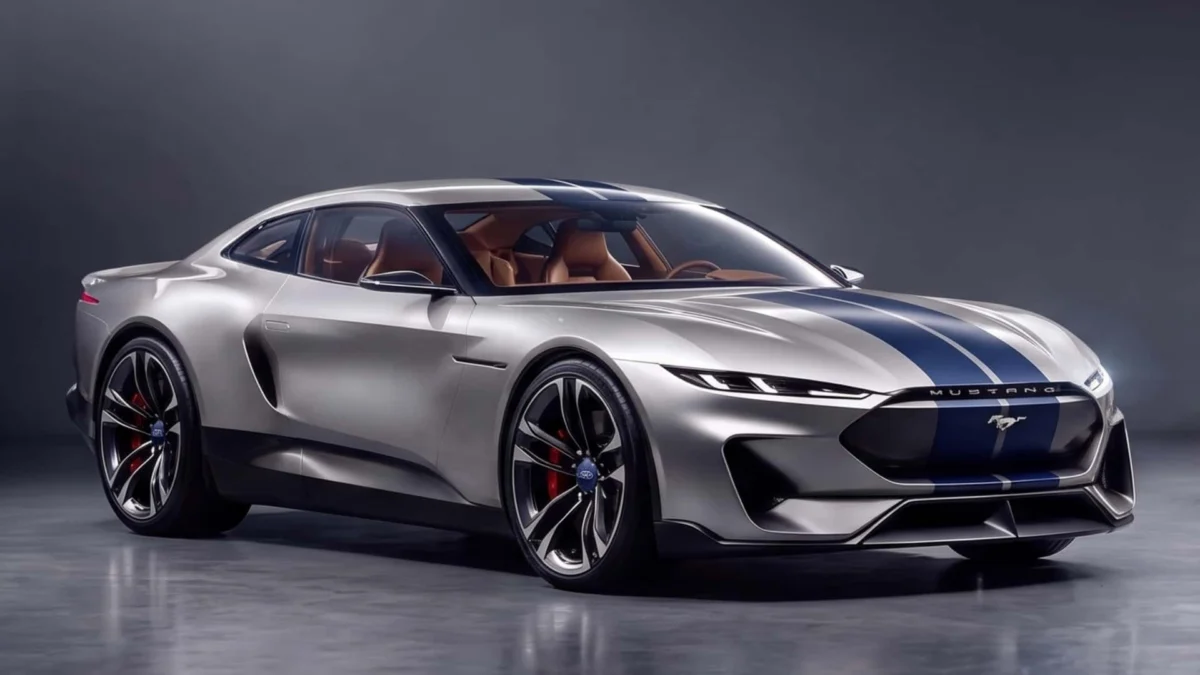
Serafini’s rendering does not attempt to dismantle the Mustang’s identity; rather, it refines it with a scalpel. The project retains the essential proportions—the long, sweeping hood and the set-back cabin—that define the silhouette. However, the execution is markedly different.
Sculptural Minimalism
One of the primary critiques of modern mass-produced sports cars is the reliance on "plastic-heavy" surfacing—intricate but often unnecessary lines and aggressive vents that can look dated within a few years. Serafini’s Mustang opts for a more fluid, athletic body language. The body panels appear stretched over the chassis, creating a "shrink-wrapped" effect that is more reminiscent of Italian grand tourers than Detroit iron.
Front-End Aggression
The most striking transformation occurs at the front. The signature pony logo remains anchored in the center, but it is now flanked by a "MUSTANG" wordmark integrated directly into the grille. By vertically compressing the headlights, Serafini has given the vehicle a more grounded, predatory stance. The air intakes are no longer just functional holes; they are sharp, geometric elements that flow seamlessly into the fender lines, reducing visual clutter and emphasizing width.
The Rear Facia and Greenhouse
Moving to the rear, the design remains unmistakably Mustang, but the execution is undeniably futuristic. The vertical taillights—a hallmark of the model since its inception—have been slimmed down to elegant strips of light. The integrated aero lip and the twin round exhaust pipes exiting the lower fascia provide a nod to high-performance track cars, suggesting a vehicle that is as comfortable on a circuit as it is on a boulevard. Notably, Serafini incorporates a "Camaro-inspired" greenhouse, which helps taper the rear deck for a more aerodynamic, high-impact finish.
Supporting Data: Why Design Evolution Matters
Ford’s design team currently faces a competitive environment where rivals like the Chevrolet Corvette have moved to a mid-engine platform, and luxury European brands continue to dominate the "exotic" aesthetic space. Market data suggests that while brand loyalty keeps the Mustang relevant, the next frontier for the pony car is to capture the attention of a younger, design-conscious demographic.
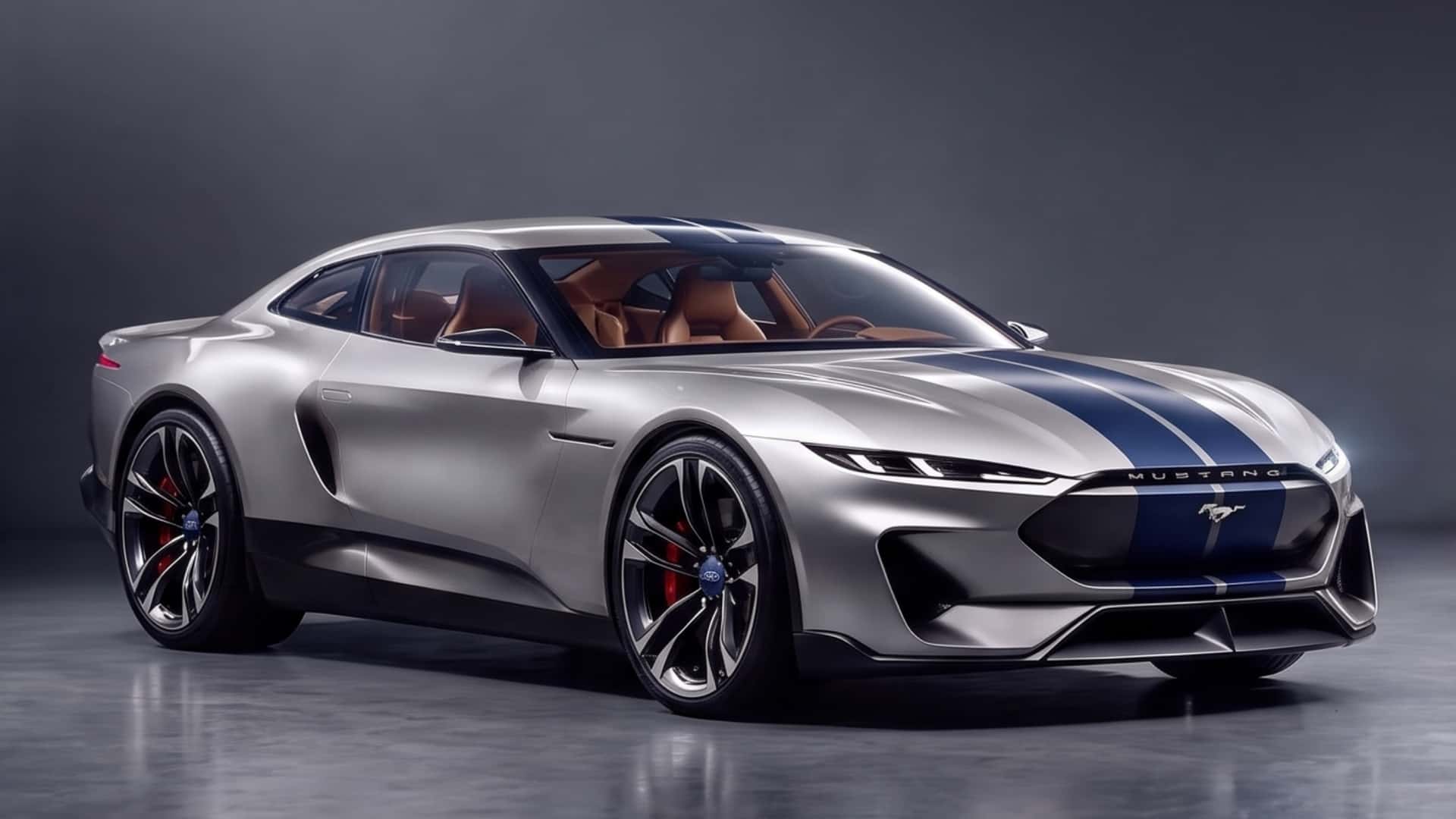
According to automotive industry analysts, the "premiumization" of the performance segment is a major trend. Customers are increasingly looking for vehicles that combine the raw power of a V8 engine with the sculptural quality of a boutique supercar. Serafini’s rendering acts as a proof-of-concept for this market segment: a car that retains the Mustang’s visceral appeal while elevating its exterior design to a level that could compete with vehicles costing twice as much.
Implications for the Mustang’s Future
While Ford has not commented on this specific rendering, the company has historically shown an interest in exploring design concepts that push the envelope. The success of the Mustang Mach-E, though controversial, proved that the Mustang brand could be applied to new segments without destroying the equity of the name.
The implications of a design shift like the one proposed by Serafini are significant:
- Market Expansion: A more exotic-looking Mustang could allow Ford to market the car against entry-level exotics rather than just traditional muscle car rivals.
- Aerodynamic Efficiency: Moving away from the "boxy" muscle car aesthetic allows for better drag coefficients, which is crucial as the automotive industry transitions toward high-speed electric or hybrid powertrains.
- Heritage Preservation: By keeping the core proportions—long hood, short deck—Ford can continue to leverage its 60-year history while appearing to lead the market rather than reacting to it.
The Verdict: A Modern Icon in Waiting
Renderings like those created by Luca Serafini are, by definition, works of fiction. They represent the "what if" scenarios that designers dream about during late-night brainstorming sessions. However, they serve a vital purpose in the automotive ecosystem: they challenge the status quo.
The current S650 Mustang is a triumph of engineering and design, but it is also a car that respects the constraints of a 60-year-old formula. Serafini’s vision shows us that the formula is not a cage, but a canvas. If Ford ever decides to take the Mustang further upmarket—perhaps for a future performance flagship or a limited-edition halo car—the blueprint provided by this rendering offers a compelling direction.
It is a design that acknowledges the past, embraces the technological requirements of the present, and points toward a future where the Mustang is not just an American icon, but a global design reference. For now, we are left to admire the digital artistry, but the conversation it sparks—about what a Mustang can be versus what it has been—is exactly the kind of discourse that keeps the brand relevant in an ever-changing world.
Motor1’s Perspective: While this rendering remains firmly in the realm of digital art, it highlights the potential for the Mustang to evolve into something even more special. The marriage of traditional muscle-car proportions with the sleek, athletic surfacing of a modern exotic creates a car that is both familiar and exciting. If this is where the future of the pony car is heading, the next 60 years of Mustang look brighter—and faster—than ever.