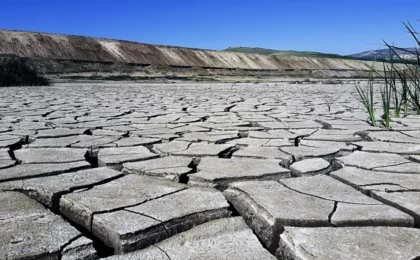
Beneath our feet lies a bustling, invisible metropolis. Soil is far more than mere dirt; it is the foundation of our global food supply, a massive reservoir for carbon sequestration, a natural water filtration system, and the habitat for over 50% of the world’s biodiversity. Yet, despite its critical role in sustaining life on Earth, soil biodiversity is facing a silent, global crisis. As soil health declines, so too does our ability to maintain agricultural productivity, ensure food security, and preserve the delicate balance of our ecosystems.
In a pioneering effort to bridge the gap between scientific inquiry and public awareness, researchers from the University of Zurich (UZH) and Agroscope—Switzerland’s federal center of excellence for agricultural research—embarked on a peculiar, high-impact mission in 2021. The project, aptly titled "Proof by Underpants" (Beweisstück Unterhose), transformed thousands of ordinary citizens into active participants in a national ecological study, using cotton underwear as a proxy for soil vitality.
The Genesis of a National Experiment
The impetus for "Proof by Underpants" was twofold: to generate a massive, standardized dataset on soil health across diverse landscapes and to educate the public on the importance of the organisms that reside beneath their lawns and fields. Soil scientists have long grappled with the logistical difficulty of monitoring biological activity across thousands of hectares simultaneously. Professional research teams, restricted by time and funding, rarely have the capacity to sample at such a granular, nationwide scale.
By leveraging the power of citizen science, the UZH and Agroscope team bypassed these constraints. In 2021, the project recruited 1,000 volunteers, providing them with a standardized kit and instructions. Over the course of the experiment, these participants buried more than 2,000 pairs of 100% cotton underwear and 12,000 tea bags at roughly 1,000 locations across Switzerland.
The methodology was simple yet ingenious: cotton is composed of cellulose, a primary food source for soil microorganisms like bacteria, fungi, and earthworms. By burying the underwear at a set depth and allowing them to decompose over two months, researchers could use the degree of fabric degradation as a quantifiable metric for soil biological activity. After the incubation period, volunteers excavated the remnants, documented their state through standardized photography, and sent the samples—along with accompanying soil specimens—back to the lab for rigorous analysis.
Chronology of a Scientific Breakthrough
The success of the project relied on a strict, synchronized timeline.
- Spring 2021: Recruitment of 1,000 citizen scientists began, with the project gaining significant media traction due to its quirky premise.
- Early Summer 2021: Distribution of test kits occurred across all Swiss cantons, ensuring a diverse range of elevations, climates, and soil types were represented.
- Mid-Summer 2021: The "burial phase" took place. Volunteers adhered to strict protocols regarding soil depth and site selection to ensure data consistency.
- Late Summer 2021: The "excavation phase" allowed for the collection of data, capturing a snapshot of biological activity during the peak growing season.
- 2022–2023: Laboratory analysis of the recovered cotton, soil organic matter, and microbial composition took place at the UZH and Agroscope facilities.
- 2024: The final results were published in the scientific journal Plants, People, Planet, marking the official conclusion of the data synthesis and the recognition of 240 participating volunteers as official co-authors.
Supporting Data: What the Underwear Revealed
The findings from the "Proof by Underpants" study provided the most comprehensive map of biological activity in Swiss soils to date. The data revealed a striking variance in decomposition rates, effectively creating a "heatmap" of underground health.
The Land-Use Hierarchy
The study found that land-use practices were the single most significant predictor of decomposition rates—often carrying more weight than localized soil chemistry or climate factors.
- Private Gardens: These locations exhibited the fastest decomposition rates. The research suggests that gardens, often rich in organic compost and subject to varied planting regimes, provide an ideal habitat for earthworms and microbial colonies.
- Agricultural Fields and Meadows: These areas ranked in the middle of the spectrum. While generally productive, the mechanical disturbances of plowing and the use of chemical inputs often created a less hospitable environment for soil life compared to the sheltered, nutrient-rich environment of a private garden.
- Lawns: Surprisingly, manicured lawns showed the lowest levels of biological activity. The researchers attributed this to the tendency of lawns to be treated with heavy fertilizers, pesticides, and the frequent removal of biomass (grass clippings), which depletes the soil of the carbon it needs to support a diverse underground ecosystem.
Chemical Composition and Soil Activity
While land use was the primary driver, chemical indicators were not ignored. High nutrient levels were generally associated with faster decomposition; however, the researchers noted that this was a double-edged sword. While nutrient-rich soils facilitate rapid breakdown, they do not necessarily reflect a "healthy" ecosystem in every context.
Official Responses and Ecological Implications
The project has garnered significant attention from the agricultural and environmental sectors. Co-study leader Professor Marcel van der Heijden of UZH emphasized that the findings serve as a diagnostic tool for land managers. "Our results show that how soil is managed can significantly affect both soil life and soil quality," van der Heijden noted. "Healthy, biologically active soil is crucial for fertility, nutrient cycling, and many other ecosystem services that society relies upon."
The "Too Much of a Good Thing" Paradox
One of the most nuanced findings of the study was the realization that faster decomposition is not always a positive outcome. Franz Bender, head of the agroecological assessments team at Agroscope, warned against misinterpreting rapid breakdown as a universal indicator of health.
"In near-natural habitats, such as forests, very high nutrient levels can actually indicate an imbalance," Bender explained. Similarly, in domestic gardens, rapid decomposition of the underwear might signal an oversupply of nutrients—a "luxury consumption" of fertilizer that could lead to nutrient runoff and environmental degradation. The team advises that gardeners and farmers alike should reconsider their reliance on mineral fertilizers, opting instead for organic compost, diverse crop rotations, and reduced tillage.
The Future of Citizen Science
The legacy of "Proof by Underpants" extends beyond soil science; it serves as a masterclass in public engagement. By involving 240 citizen scientists as co-authors, the researchers fostered a deeper sense of ownership and scientific literacy among the public.
The project successfully demonstrated that complex environmental monitoring does not always require high-tech, multi-million dollar sensor arrays. Sometimes, a pair of cotton underwear and a curious citizen are enough to move the needle on environmental policy. The researchers are now advocating for the creation of an "Underwear Index"—a standardized, easy-to-understand metric that could be adopted globally to help farmers and gardeners track their soil’s health over time.
As we face the challenges of a changing climate and an growing global population, the importance of our soils cannot be overstated. Projects like this prove that when science invites the public into the lab—or in this case, into the backyard—we gain more than just data. We gain a collective understanding that the future of our food, our environment, and our climate begins beneath the surface, waiting for us to pay attention.