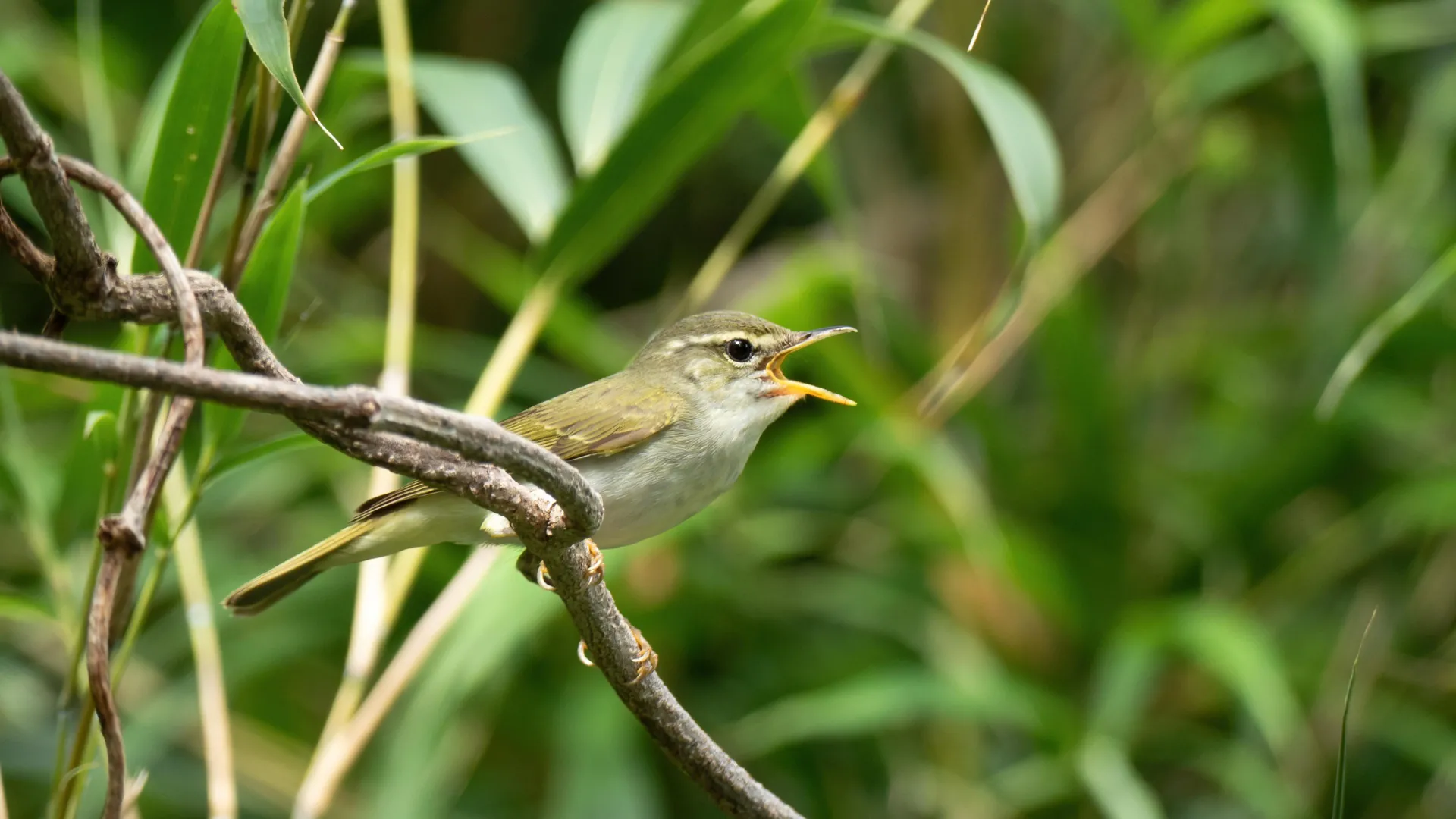
In a landmark discovery that has sent ripples through the ornithological community, scientists have officially recognized a new bird species residing within the Japanese archipelago. The Tokara Leaf Warbler (Phylloscopus tokaraensis), a bird so physically similar to its cousin that it remained hidden in plain sight for decades, has been formally identified through the rigorous application of modern genomic science.
This breakthrough, a collaborative effort between Uppsala University, the University of Gothenburg, and leading Japanese research institutions, marks the first time a new bird species has been described in Japan since the 1982 discovery of the Okinawa Rail. The findings highlight not only the sophisticated nature of contemporary taxonomy but also the urgent necessity of genetic analysis in identifying and protecting global biodiversity.
Main Facts: A Tale of Two Islands
The subject of this discovery is a small, migratory passerine previously categorized under the single species known as the Ijima’s Leaf Warbler (Phylloscopus ijimae). For years, ornithologists believed that the birds occupying the Izu Islands, located south of Tokyo, were the same as those found on the Tokara Islands, a volcanic chain situated approximately 1,000 kilometers to the southwest.
Despite the vast geographical distance separating these two populations, the birds appeared identical to the naked eye. Their plumage, size, and behavioral traits were so closely aligned that they were considered one and the same. However, the application of whole-genome sequencing has shattered this assumption. Researchers have confirmed that the Tokara Leaf Warbler is a distinct species, separated by significant genetic markers and subtle, yet distinct, variations in vocalizations.
Chronology: A Decade of Investigation
The path to this discovery was neither sudden nor straightforward. It represents a decade of meticulous inquiry that bridged the gap between historical museum collections and cutting-edge genetic technology.
The Initial Divergence (2014–2016)
The journey began approximately ten years ago when preliminary genetic data suggested that the warblers from the Izu and Tokara island chains were not as closely related as their morphology implied. Initial mitochondrial DNA testing hinted at a deep evolutionary split, but the findings were not yet conclusive enough to warrant a formal taxonomic reclassification.
Fieldwork and Data Collection (2017–2020)
Recognizing the potential for a major discovery, the research team embarked on extensive fieldwork. This involved capturing birds for blood sampling, documenting their nesting habits, and performing high-fidelity recordings of their songs across both island groups. Simultaneously, the team conducted a deep-dive analysis of historical museum specimens, some of which had been collected over a century ago, to establish a baseline for genetic comparison.
Genomic Breakthrough (2021–2023)
The turning point arrived with the completion of whole-genome analyses. By comparing the entire genetic blueprints of the two populations, the researchers identified significant, fixed differences that indicated long-term reproductive isolation. When combined with behavioral analysis—specifically the song patterns which serve as a critical reproductive barrier in warblers—the evidence became irrefutable.
Formal Recognition (2024)
Following the peer-review process, the formal description of Phylloscopus tokaraensis was published, cementing its status as a distinct entity in the avian tree of life.
Supporting Data: Why DNA Changed the Narrative
The case of the Tokara Leaf Warbler serves as a masterclass in the limitations of "classical" taxonomy. In an era where field observation was the primary tool for identification, these birds were destined to be categorized together. The "cryptic" nature of the species—where two species are morphologically indistinguishable but genetically distinct—is a growing field of interest for evolutionary biologists.
The Power of the Genome
Whole-genome analysis revealed that the Tokara and Izu populations possess distinct evolutionary trajectories. The genomic data shows that these birds have likely been separated for a sufficient period to accumulate unique mutations that prevent interbreeding. This genetic divergence is mirrored by their vocalizations; the Tokara Leaf Warbler sings a song that is distinct enough to be recognized by others of its kind, ensuring that they seek mates within their own population rather than "accidentally" hybridizing.
Population Demographics and Geography
The geography of the discovery is as significant as the biology. The Tokara Islands cover a combined land area of just over 100 square kilometers, spread across twelve islands. This incredibly limited habitat range means the entire species is confined to a space smaller than the island of Fårö off the coast of Sweden. Such extreme geographic isolation is a classic driver of speciation, as small, isolated populations evolve rapidly in response to local pressures.
Official Responses: Insights from the Scientific Community
The research team, led by notable ornithologists including Per Alström of Uppsala University, emphasizes that this discovery is a call to action for conservationists worldwide.
"This shows how important it is to use genetic methods to reveal hidden biodiversity at a time of global biodiversity crisis," says Alström. "These methods provide the foundational knowledge required for effective nature conservation. We cannot protect what we do not know exists."
Alström further noted the complexity of the identification process: "The new species is a little cryptic and tricky to define. In terms of appearance, it doesn’t differ from the Ijima’s Leaf Warbler. It is DNA analyses and differences in song that show this is a separate species."
The collaboration between Swedish and Japanese institutions has been lauded as a model for international scientific cooperation. By integrating local ecological knowledge from Japanese researchers with the advanced genomic sequencing capabilities of the Swedish teams, the study was able to achieve a level of precision that would have been impossible for either party working in isolation.
Implications: The Looming Conservation Crisis
The discovery of the Tokara Leaf Warbler is bittersweet. While it is a triumph for science, it is also a cautionary tale regarding the fragility of island ecosystems.
Limited Genetic Diversity
A critical finding of the research is that both the Ijima’s Leaf Warbler and the newly described Tokara Leaf Warbler exhibit very low genetic diversity. This is a common phenomenon in "island endemics"—species that evolve on small islands often go through "bottlenecks" where the population size drops significantly, leaving only a small gene pool for future generations. Low genetic diversity makes a species highly susceptible to environmental shifts, such as climate-driven changes in vegetation, the introduction of invasive predators, or the rapid spread of avian diseases.
The Need for Proactive Conservation
The Ijima’s Leaf Warbler is currently classified as "Vulnerable" by the International Union for Conservation of Nature (IUCN) and is protected in Japan as a "Natural Monument." The researchers are now advocating for the same status for the Tokara Leaf Warbler.
The implications for conservation are clear:
- Redefining Status: Conservation lists must be updated immediately to reflect that the "Ijima’s Leaf Warbler" population is effectively halved, as it is now two separate species, each with a smaller population than previously thought.
- Monitoring: Continued long-term monitoring is required to track population trends. Because these birds are migratory, they face threats not only on their breeding islands but also along their migration routes and in their wintering grounds.
- Habitat Preservation: Given their restricted range, any degradation of the Tokara Islands—whether through infrastructure development, tourism, or climate change—could result in the extinction of the species before it is even fully understood.
Conclusion: A New Chapter in Avian Science
The identification of the Tokara Leaf Warbler is a testament to the fact that we have not yet finished cataloging the natural world. In an age where many believe the majority of species have already been identified, this discovery serves as a humble reminder of the "hidden" biodiversity that persists in remote corners of our planet.
As we face an unprecedented global biodiversity crisis, the work of researchers like Alström and his colleagues provides a roadmap for the future. By embracing genetic technologies and fostering international collaboration, we can uncover the silent histories of the creatures with whom we share this Earth.
The Tokara Leaf Warbler, with its unique song and distinct genetic fingerprint, now takes its place in the record books—not merely as a curiosity of science, but as a sentinel for the importance of protecting the delicate, isolated, and often invisible threads that weave together the tapestry of life. Whether this new species thrives or fades will depend on our ability to translate this scientific breakthrough into meaningful, on-the-ground conservation action.