In the bustling, historic streets of Europe, the automobile remains the undisputed king of urban mobility. Despite the continent’s dense transit networks and increasing regulatory pressure to decarbonize city centers, the convenience of the private car—specifically its ability to haul groceries, transport children, and accommodate the spontaneous needs of modern life—has kept it deeply embedded in the social fabric. For decades, urban planners have argued for a shift toward micromobility, yet a persistent psychological and practical barrier remains: the "car trunk" factor.
Belgian startup Any is aiming to dismantle this status quo. By introducing what it calls the "Life Utility Vehicle" (LUV1), the company is attempting to bridge the gap between the speed of a motorcycle and the utility of a cargo bike.
The Genesis of the LUV1: Redefining Two-Wheeled Utility
The philosophy behind Any is deceptively simple: "Designed for real life." While electric scooters and bicycles have proliferated across European capitals, they often fall short when users need to move more than just themselves. Any’s LUV1 is an electric motorcycle that boasts a top speed of 100 km/h (62 mph) while offering 120 liters of storage capacity—a volume specifically calculated to replicate the functionality of a car’s trunk.
"It came from asking a simple question: what does a real week actually need?" the company noted in a recent LinkedIn update. "Groceries, weekend bags, suitcases—the stuff you don’t want to leave behind just because you’re on two wheels, not four."
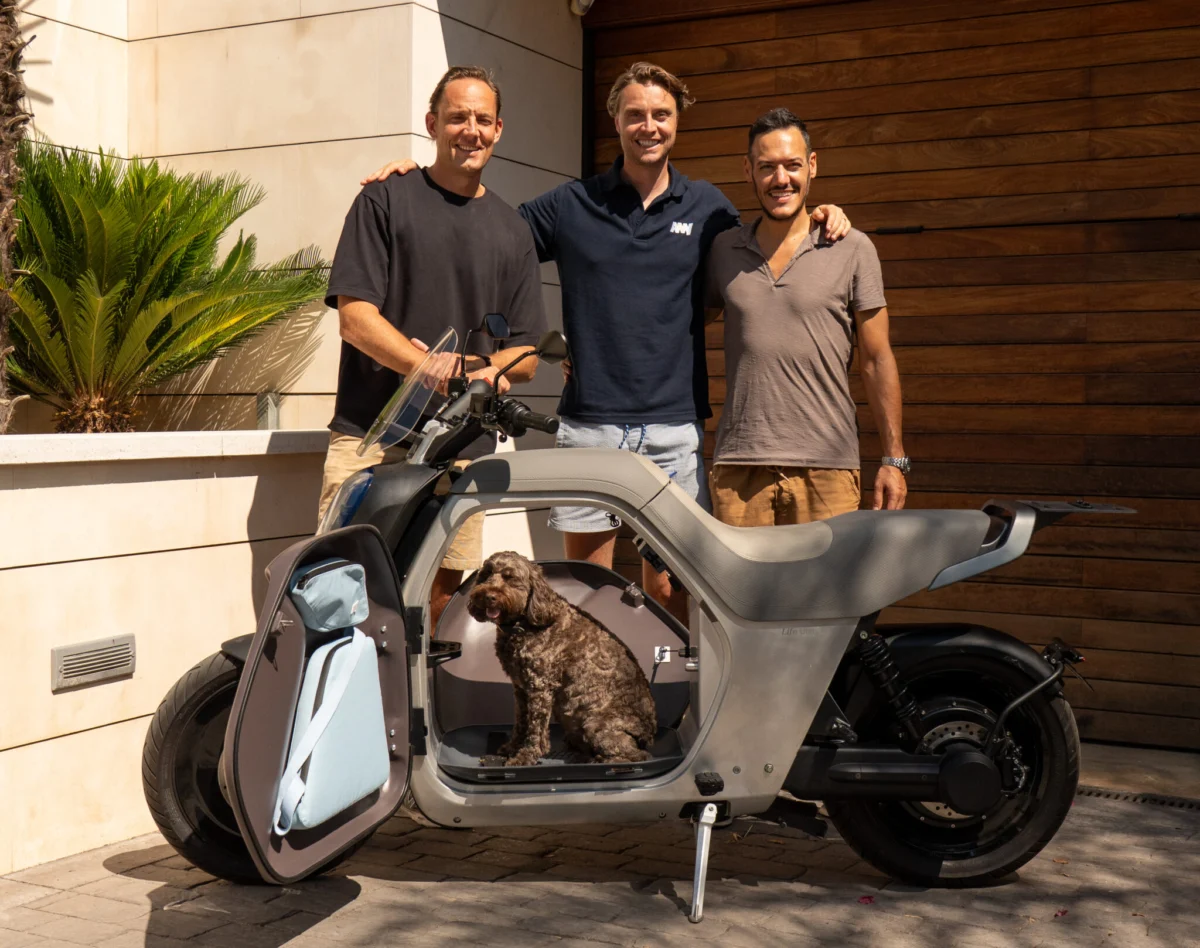
The LUV1 is not merely a motorcycle; it is a modular platform. Customers can select an open frame or choose from various panel configurations, enabling the bike to serve as a mobile dog carrier, a workhorse for professional equipment, or a reliable companion for camping trips. With optional accessories like windshields, heavy-duty racks, and weather-proof ponchos, the vehicle is being positioned as a genuine alternative for families and professionals alike.
Chronology: From Milan Prototypes to Market Traction
The journey of Any has been swift, characterized by high-profile design backing and rapid community validation.

- May 2026 (Milan Design Week): The LUV1 made its public debut. The prototype, designed under the creative direction of Lowie Vermeersch—the former design director at the legendary Italian design house Pininfarina—immediately generated buzz. Its aesthetic, which balances industrial utility with sleek, modern minimalism, garnered significant media attention.
- Summer 2026: Following the Milan debut, Any launched its preorder campaign. The configurator tool, which allows potential owners to customize their LUV1, became the primary touchpoint for early adopters.
- Late 2026: Within its first 100 days of the preorder campaign, the startup secured over 600 reservations. Each reservation requires a €49 ($57) fee, which is fully refundable and credited toward the final purchase price.
- November 2026 – May 2027: The company solidified its financial foundation by raising €1.5 million in initial venture capital, followed by a €1.25 million top-up in May, bringing total funding to €2.75 million.
- The Year Ahead: Any is now preparing for its first customer deliveries while simultaneously scouting for a Series A funding round of at least €10 million to scale production.
Supporting Data: Engineering a Competitive Edge
The LUV1’s market entry is supported by a sophisticated engineering team and a strategic approach to regulatory compliance. Alessandro Mangano, the head of engineering, brings a pedigree that includes stints at Ferrari, Aprilia, and Piaggio Group. This expertise has been critical in ensuring the LUV1 is not just a concept, but a performative machine.
Key Specifications and Market Position
- Range: Up to 87 miles (140 km) per charge via dual swappable batteries.
- Pricing: Starting at €7,000 ($8,150), placing it in direct competition with high-end electric cargo bikes while remaining significantly more affordable than traditional urban automobiles.
- Regulatory Advantage: The vehicle is designed to fall under the A1 license category, making it accessible to a much broader demographic than high-performance motorcycles.
- Production Scaling: With a target of 10 million euros in Series A funding, the company aims to move from prototype development to full-scale manufacturing by the close of the current year.
Official Responses and Strategic Vision
The leadership at Any, including co-founder and CCO Erik de Winter and CEO Pieter Van de Velde, is acutely aware that they are entering a crowded market. The European Association of Motorcycle Manufacturers (ACEM) has projected that the two-wheeler market will be predominantly electric by 2030, putting Any in the path of industry giants like Piaggio and Harley-Davidson.
However, the team at Any believes their "Life Utility" branding is the secret sauce. Erik de Winter has indicated that the company is already in talks with last-mile delivery providers who see the LUV1 as a way to increase efficiency in congested urban cores.
"We are not just building a bike; we are building a portfolio of vehicles," de Winter noted. The company’s roadmap hints at further innovations, including potential three-wheeled variants designed to offer even greater stability and cargo capacity, further eroding the dominance of the four-wheeled car.
The Implications for Urban Mobility
The implications of Any’s success—or failure—extend far beyond the company’s balance sheet. If the LUV1 succeeds in convincing suburban and urban commuters to trade in their second cars for a modular motorcycle, the environmental impact would be significant.
1. Decarbonization of Short-Distance Travel
Most urban trips are under 10 kilometers and involve only one or two passengers. By shifting these trips from heavy, combustion-engine vehicles to efficient electric two-wheelers, cities can drastically reduce both carbon emissions and traffic congestion.

2. The Shift in Infrastructure Needs
A widespread adoption of "Life Utility Vehicles" would necessitate a change in city planning. If commuters arrive in city centers with bikes that require 120 liters of secure, lockable storage, municipalities will need to rethink parking solutions. Current bicycle parking is often inadequate for a vehicle of the LUV1’s size and weight, while car parking is increasingly being reclaimed for pedestrian use.
3. The Democratization of Performance
By keeping the price point accessible and the licensing requirements low, Any is tapping into a market segment that feels alienated by both the high cost of EVs and the "toy-like" nature of many entry-level e-bikes. If the LUV1 proves that a two-wheeler can be a true "family car" replacement, it could spark a ripple effect among other manufacturers, pushing the entire industry to prioritize utility over raw speed.
Conclusion: A Long Road Ahead
Any faces the classic "valley of death" for hardware startups: the transition from a successful prototype and a few hundred reservations to mass production and profitable delivery. Securing the necessary €10 million for Series A will be the company’s most significant hurdle to date.
However, the company’s ability to recruit top-tier talent from the automotive world, combined with its clear understanding of the "missing link" in urban mobility, suggests that Any is not just another fleeting startup. By focusing on the tangible, everyday needs of the modern consumer—groceries, gear, and versatility—Any is betting that it can change how we think about the commute. The road to replacing the car is long and filled with regulatory and logistical challenges, but if the LUV1 is any indication, the two-wheeled future might be much more capable than we ever imagined.
Disclaimer: This article may contain affiliate links. Purchases made through these links may result in a commission for the publisher, which does not affect editorial independence.