Introduction: The CERD Intervention
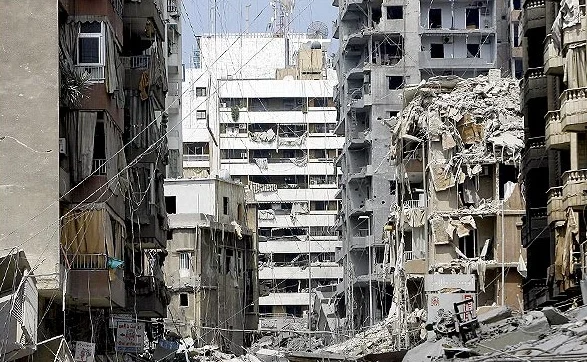
In a significant escalation of international legal scrutiny, the United Nations Committee on the Elimination of Racial Discrimination (CERD) issued a formal, urgent warning on Wednesday regarding the ongoing conflict in Lebanon. Invoking its "Early Warning and Urgent Action Procedure," the committee expressed profound alarm over the mounting civilian death toll and the massive displacement of populations resulting from Israeli military operations.
The Committee’s statement serves as a stark reminder to the international community that the prohibition of racial discrimination is absolute and non-derogable, even—and perhaps especially—during times of armed conflict. By acting under this specialized procedure, the UN body is signaling that the patterns of warfare and displacement currently observed in Lebanon may be violating the fundamental tenets of the International Convention on the Elimination of All Forms of Racial Discrimination (ICERD), a treaty ratified by Israel in 1979.
Chronology of Escalation and Monitoring
The current crisis in southern Lebanon is the culmination of months of intense hostilities between the Israel Defense Forces (IDF) and the Shia Islamist paramilitary group Hezbollah.
- Early 2026: Tensions along the Blue Line reached a breaking point, leading to the initiation of large-scale military maneuvers.
- March 2026: The IDF ramped up its strategic displacement campaign, issuing over 70 distinct evacuation orders that impacted nearly 190 towns and villages across southern Lebanon. UN officials immediately questioned the legality of these "blanket" orders, noting their failure to meet the strict requirements of international humanitarian law.
- July 2026: By the end of the month, UN monitoring reports indicated that more than 360,000 individuals remained displaced. The sheer volume of people fleeing their homes has created a humanitarian vacuum that international aid organizations are struggling to fill.
- August 2026: The CERD formal intervention marks a new phase, moving the conversation from general humanitarian concern to a specific investigation into whether these military practices constitute a form of systemic racial discrimination or the dehumanization of specific ethnic groups.
Supporting Data and Humanitarian Metrics
The scale of the displacement in Lebanon is unprecedented in the context of recent regional conflicts. According to CERD, the logistical and humanitarian burden on the Lebanese population is exacerbated by the nature of the evacuation orders. These orders, frequently disseminated via social media platforms such as X (formerly Twitter) by the IDF’s Arabic-language spokespersons, warn civilians that remaining near designated "military targets" exposes them to imminent danger.
However, the effectiveness of these warnings has been widely criticized. Human rights monitors argue that "blanket" orders fail to provide safe passage or adequate shelter, effectively forcing civilians into a state of permanent instability. The CERD report highlights that these displacement patterns are not merely random; they correlate with demographic shifts that raise significant concerns under the committee’s formal monitoring mandate. When displacement falls disproportionately on specific ethnic or national groups, it triggers an inquiry into whether the military strategy is being used as a tool for demographic engineering, which is strictly prohibited under international human rights frameworks.
Legal Framework: The Geneva Convention and ICERD
The intersection of the Fourth Geneva Convention and the ICERD creates a complex legal minefield for the belligerents.
Article 49 of the Fourth Geneva Convention
Article 49 explicitly prohibits the individual or mass forcible transfer of civilians, as well as their deportation from occupied territory. Exceptions are permitted only when the security of the population or "imperative military reasons" demand an evacuation. The international community, led by the UN, is currently debating whether the IDF’s actions meet the "imperative" threshold or if they constitute a breach of customary international humanitarian law.
The Mandate of CERD
The CERD’s intervention rests on a specific interpretation of "effective control." Under the ICERD, states are obligated to prevent racial discrimination, including against non-citizens residing in areas under their effective control. The committee contends that official state rhetoric, if dehumanizing, constitutes a form of discrimination. The current conflict has seen a rise in inflammatory language from various actors, which the committee warns could be fueling animosity and providing a pretext for indiscriminate strikes that predominantly impact Lebanese civilians.
Official Responses and Strategic Justifications
The Israeli Position
The Israeli government and the IDF maintain that their operations are purely defensive and directed toward the dismantling of Hezbollah’s military infrastructure. Israel categorizes Hezbollah as an Iranian-backed terrorist organization that utilizes civilian areas—such as schools, hospitals, and residential neighborhoods—to house weapons and command centers.
The IDF argues that its evacuation orders are a precautionary measure designed to save civilian lives, thereby complying with its obligations under international law. By notifying residents in advance, Israel claims it is attempting to minimize collateral damage in a high-density, hostile environment. The IDF further points to rocket barrages launched from Lebanon into northern Israel, which have forced the evacuation of Israeli civilians, as proof that Hezbollah’s actions are the primary cause of the regional displacement crisis.
The Perspective of International Observers
International observers and UN officials remain skeptical of the Israeli justification. High-level human rights representatives have previously warned that the strikes may constitute international crimes. The concern is that the "military target" designation is being applied too broadly, effectively rendering large swathes of southern Lebanon "free-fire zones." Furthermore, the psychological impact of constant, blanket evacuation orders is seen by many NGOs as a form of collective punishment that violates the spirit of the Geneva Conventions.
Implications for the Future
The warning issued by the CERD is more than a procedural notice; it is a signal of growing institutional impatience with the status quo.
Long-term Displacement
The primary implication of the current conflict is the creation of a permanent class of internally displaced persons (IDPs) within Lebanon. With infrastructure destroyed and villages leveled, the potential for these populations to return home is diminishing by the day. This creates a risk of long-term instability and radicalization, which could have ripple effects across the Middle East.
International Legal Precedent
The investigation into whether military operations constitute racial discrimination sets a critical precedent. If the CERD formally finds that the IDF’s displacement orders and subsequent military strikes have a discriminatory basis, it could provide a foundation for further litigation in international courts, including the International Criminal Court (ICC) or the International Court of Justice (ICJ). Such findings would severely damage Israel’s standing in the international community and complicate its ongoing security cooperation with Western allies.
Humanitarian Crisis Management
In the short term, the CERD’s statement acts as a call to action for the international aid community. The committee is essentially demanding that the global community prioritize the protection of civilians over military exigencies. This requires not only immediate humanitarian aid but also sustained diplomatic pressure to ensure that both the IDF and Hezbollah adhere to the principle of distinction—the requirement to differentiate between combatants and civilians at all times.
Conclusion
As the conflict in Lebanon continues to grind on, the intervention of the UN Committee on the Elimination of Racial Discrimination underscores the terrifying reality for the civilian population trapped in the middle. Whether these operations are viewed as a necessary defense against a terrorist organization or as an indiscriminate campaign that violates the human rights of an entire ethnic group remains the core point of contention. What is certain, however, is that the legal and humanitarian costs of this conflict are reaching a breaking point, and the international community’s ability to uphold the laws of war will be tested in the weeks and months to come. The call for an immediate end to indiscriminate attacks is not just a plea for peace; it is a mandate for the preservation of human dignity in one of the world’s most volatile regions.