Main Facts
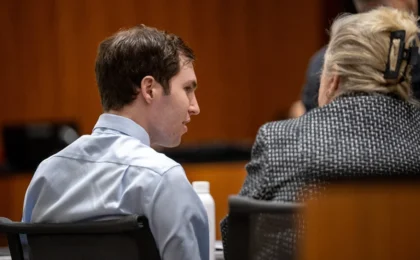
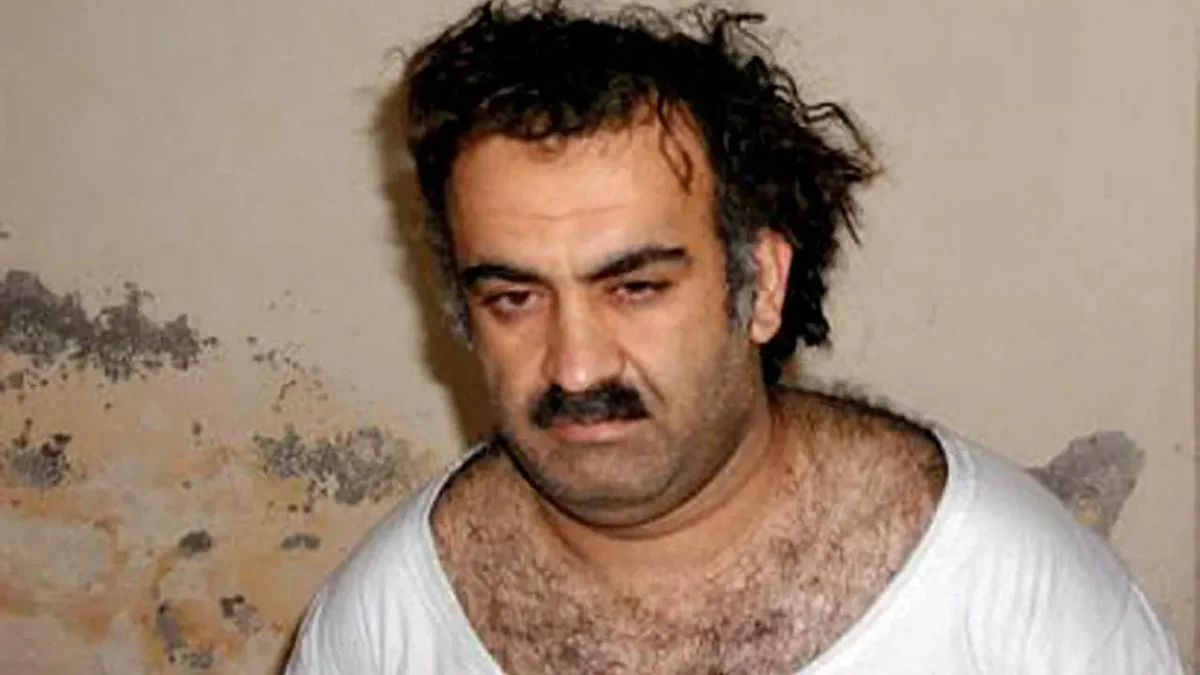
In a landmark ruling that establishes a definitive—albeit highly delayed—pathway toward a trial on the merits, a military judge has scheduled the trial of Khalid Sheikh Mohammed, the self-proclaimed mastermind of the September 11, 2001, terrorist attacks, and his three alleged co-conspirators for June 5, 2028.
The scheduling order, issued on Wednesday by Army Lt. Col. Michael Schrama, represents a significant rejection of the federal government’s push for a speedier timeline. Prosecutors had requested that the trial begin on January 11, 2027. However, Lt. Col. Schrama ruled that a 2027 start date was logistically unfeasible, citing an extensive backlog of unresolved pretrial matters, complex evidentiary disputes, and critical constitutional questions that must be settled before a jury can be empaneled.
"A realistic trial date must account for the hearing and resolution of pretrial evidentiary and compliance motions, including the FBI LHM suppression motions," Schrama wrote in his scheduling order.
Mohammed and his co-defendants—who have been detained at the U.S. military prison at Guantanamo Bay, Cuba, since 2006 after being captured in 2003—face charges of terrorism, hijacking, and the murder of nearly 3,000 people. The attacks, which saw hijacked commercial airliners weaponized against the World Trade Center in New York, the Pentagon in Virginia, and a field in Shanksville, Pennsylvania, remain the deadliest acts of terrorism on American soil.
The establishment of the June 2028 trial date comes after more than two decades of legal gridlock, systemic procedural delays, and a highly publicized, politically charged battle over aborted plea agreements that would have taken the death penalty off the table.
Chronology of the 9/11 Military Commission Case
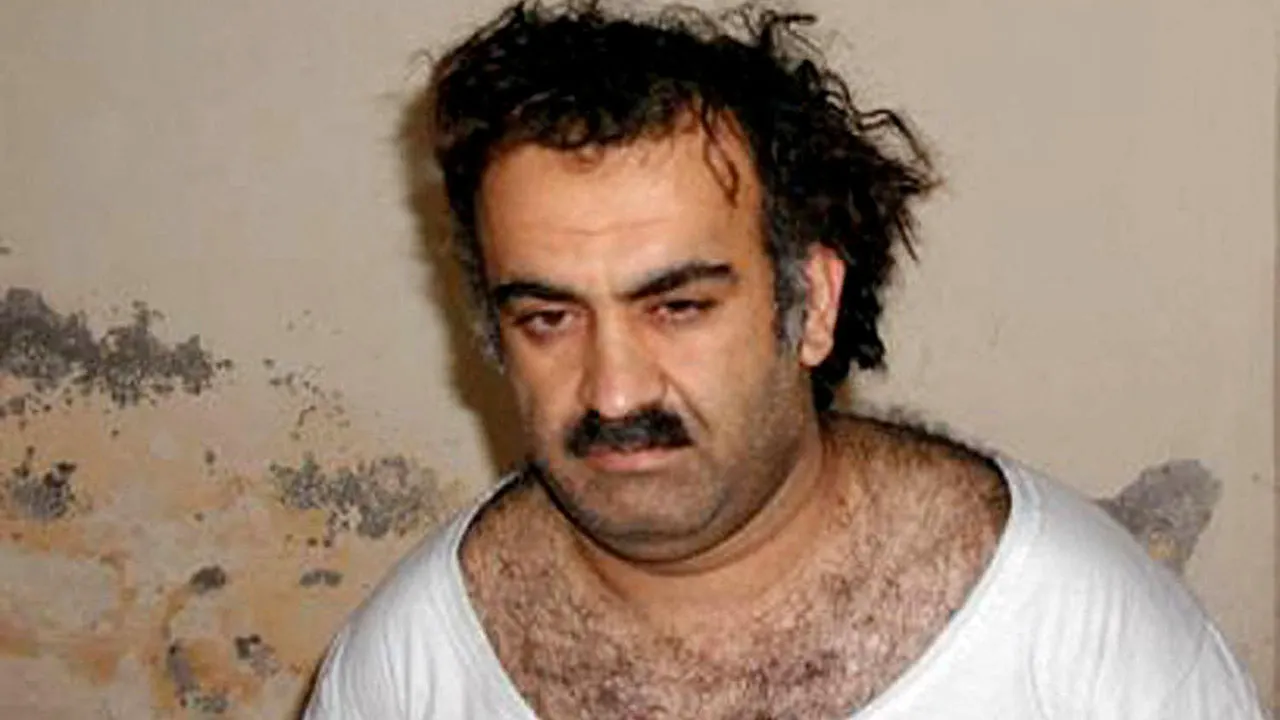
The road to the 2028 trial date is one of the most protracted and legally convoluted chapters in the history of American jurisprudence. To understand the significance of Lt. Col. Schrama’s order, it is necessary to examine the timeline of the case:
The Attacks and Capture (2001–2003)
- September 11, 2001: Al-Qaeda hijackers seize four commercial aircraft, killing 2,977 people.
- March 1, 2003: Khalid Sheikh Mohammed is captured by U.S. and Pakistani forces during a joint raid in Rawalpindi, Pakistan.
- 2003–2006: Mohammed and his co-conspirators are held in secret CIA "black sites" overseas. During this period, Mohammed is subjected to "enhanced interrogation techniques," including waterboarding 183 times, sleep deprivation, and physical abuse. These interrogation methods would later become the central legal obstacle to bringing the case to trial.
Transfer to Guantanamo and Initial Arraignment (2006–2012)
- September 2006: President George W. Bush announces the transfer of Mohammed and 13 other "high-value detainees" to the military detention camp at Guantanamo Bay to face trial under military commissions.
- June 2008: The defendants are arraigned for the first time under the Military Commissions Act of 2006. However, the charges are later dismissed and refiled after the Obama administration and Congress revise the military commission system in 2009 to bolster detainee rights and restrict the use of evidence obtained through coercion.
- May 5, 2012: Mohammed and four co-defendants are formally arraigned a second time on capital charges.
Pretrial Paralysis (2012–2024)
- 2012–2024: The case remains stuck in the pretrial phase for twelve years. Progress is repeatedly halted by disputes over the admissibility of statements made by the defendants, the classification of government documents, logistical hurdles, the retirement of successive military judges, and the COVID-19 pandemic. Defense attorneys argue that statements made by the defendants during "clean team" FBI interrogations at Guantanamo were irreparably tainted by their prior torture at CIA black sites.
The Plea Deal Drama and Appellate Rulings (2024–2025)
- July 2024: Susan Escallier, the convening authority for military commissions, approves pre-trial plea agreements for Mohammed and two co-defendants, Walid bin Attash and Mustafa al-Hawsawi. Under the deals, the defendants agree to plead guilty to all charges in exchange for a maximum sentence of life in prison without parole, officially removing the death penalty as an option.
- August 2024: Following intense political backlash and outcry from some victims’ families, Defense Secretary Lloyd Austin summarily revokes the plea deals, asserting that the decision to take the death penalty off the table in a case of this magnitude should rest with him as the senior defense official.
- Late 2024 – 2025: Defense attorneys challenge Austin’s revocation. A military judge initially rules that Austin lacked the authority to tear up the signed plea deals. However, the U.S. Court of Appeals for the District of Columbia Circuit steps in, ruling 2-1 in 2025 that Austin acted within his legal authority when he overrode the convening authority and restored the capital prosecution.
- Wednesday: Lt. Col. Schrama issues the Trial Scheduling Order (TSO) setting the June 5, 2028, trial date.
Supporting Data and Procedural Milestones
Lt. Col. Schrama’s scheduling order establishes a rigorous, multi-phase framework designed to guide the military commission through complex pretrial litigation to a final verdict.
Key Trial Milestones under the 2028 Order
| Milestone / Procedural Event | Scheduled Date / Timeline |
|---|---|
| Jury Selection (Empanelment) | Begins June 5, 2028 |
| Opening Statements | 30 days after jury empanelment concludes |
| Prosecution’s Case-in-Chief | Begins immediately following opening statements |
| Defense Motion for Finding of Not Guilty | Within 14 days of the prosecution resting |
| Prosecution Response to Defense Motion | Within 14 days of the defense filing |
| Defense Reply to Prosecution Response | Within 7 days of the prosecution response |
| Prosecution Reopening of Case (if needed) | Up to 45 days after initial presentation concludes |
| Defense Presentation of Evidence | 60 days after the prosecution rests its case-in-chief |
The "scaffolding" of this schedule assumes the completion of several prior, highly technical milestones, notably the FBI LHM (Letterhead Memorandum) suppression motions. These motions represent the core legal battleground of the prosecution. The defense is seeking to suppress FBI interview records (the LHMs) compiled during "clean team" interrogations. The defense argues these interviews, though conducted by non-coercive FBI agents years after the defendants’ capture, were still psychologically coerced because the defendants believed they would be returned to CIA torture chambers if they did not cooperate.
Furthermore, Lt. Col. Schrama emphasized that the court will not tolerate further delays. The order states that, absent an extraordinary showing of "good cause," the military commission will not grant extensions or continuances for critical components of the trial, including motions for findings of not guilty or the presentation of rebuttal and surrebuttal evidence.
Official Responses and Legal Arguments
The setting of the 2028 trial date has reopened deep wounds and reignited fierce debates among government officials, legal scholars, defense attorneys, and the families of the victims.
The Department of Defense and the Judiciary
In withdrawing the plea deals and pushing for a full trial, Defense Secretary Lloyd Austin emphasized the government’s duty to provide a transparent, public accounting of the events of September 11.
This view was echoed by the D.C. Circuit Court of Appeals in its 2025 ruling. Judges Patricia Millett and Neomi Rao wrote in the majority opinion:
"Having properly assumed the convening authority, the Secretary determined that the families and the American public deserve the opportunity to see military commission trials carried out. The Secretary acted within the bounds of his legal authority, and we decline to second-guess his judgment."
Defense Counsel
Defense attorneys have expressed profound skepticism regarding the feasibility and fairness of a 2028 trial. They argue that the government’s insistence on a capital trial, despite the extensive history of state-sanctioned torture, has compromised the integrity of the proceedings.
"Setting a trial date for 2028—a quarter of a century after our client was first captured and tortured—is a stark admission of the failure of the military commission system," said one defense representative. "By keeping the death penalty on the table, the government ensures that this case will remain mired in appellate litigation for decades to come, even after a verdict is reached."
Victims’ Families
The 9/11 community remains deeply divided over the judicial path forward.
- Proponents of a Capital Trial: Many family members of the victims have long demanded that Khalid Sheikh Mohammed face the death penalty. For this group, the plea deals were seen as a betrayal of justice, and they welcome Lt. Col. Schrama’s order as a necessary step toward holding the perpetrators fully accountable under the law.
- Proponents of the Plea Agreements: Other family members express exhaustion and frustration with the endless delays. They argue that the plea agreements would have secured guaranteed life-without-parole sentences, brought an immediate end to the litigation, avoided decades of post-trial appeals, and allowed the defendants to answer key lingering questions about the operational details of the attacks.
Implications of the 2028 Trial Date
The decision to schedule the trial for 2028 carries profound implications for the U.S. military justice system, the future of the Guantanamo Bay detention camp, and the international precedent set by the military commissions.
1. The Viability of Military Commissions vs. Federal Courts
The extraordinary delay in prosecuting the 9/11 defendants stands in stark contrast to the U.S. federal court system (Article III courts). Since 2001, federal prosecutors have successfully tried, convicted, and sentenced hundreds of terror suspects—including high-profile figures like World Trade Center bomber Ramzi Yousef and "shoe bomber" Richard Reid—in swift, standardized proceedings. The 2028 trial date for Mohammed will likely cement the historical consensus that the post-9/11 military commission system was structurally ill-equipped to handle complex national security cases involving state-sanctioned torture.
2. The Legacy of Guantanamo Bay
By the time the trial begins in June 2028, the defendants will have spent 25 years in U.S. custody—22 of them at Guantanamo Bay. This timeline guarantees that the controversial detention facility will remain open and operational through at least the end of the decade, complicating long-standing bipartisan efforts by multiple presidential administrations to shut down the camp and resolve the status of its remaining detainees.
3. The Post-Trial Appeals Process
Even if the trial proceeds on schedule in 2028 and results in a conviction and death sentence, the legal saga will be far from over. Under the Military Commissions Act, any capital conviction is subject to mandatory appeals through the military court system, followed by the D.C. Circuit Court of Appeals, and potentially the Supreme Court of the United States. Given the unique constitutional questions surrounding the case—including the use of evidence derived from torture and executive branch interference—the appellate process could easily consume another decade, meaning a final resolution may not be realized until the late 2030s or beyond.