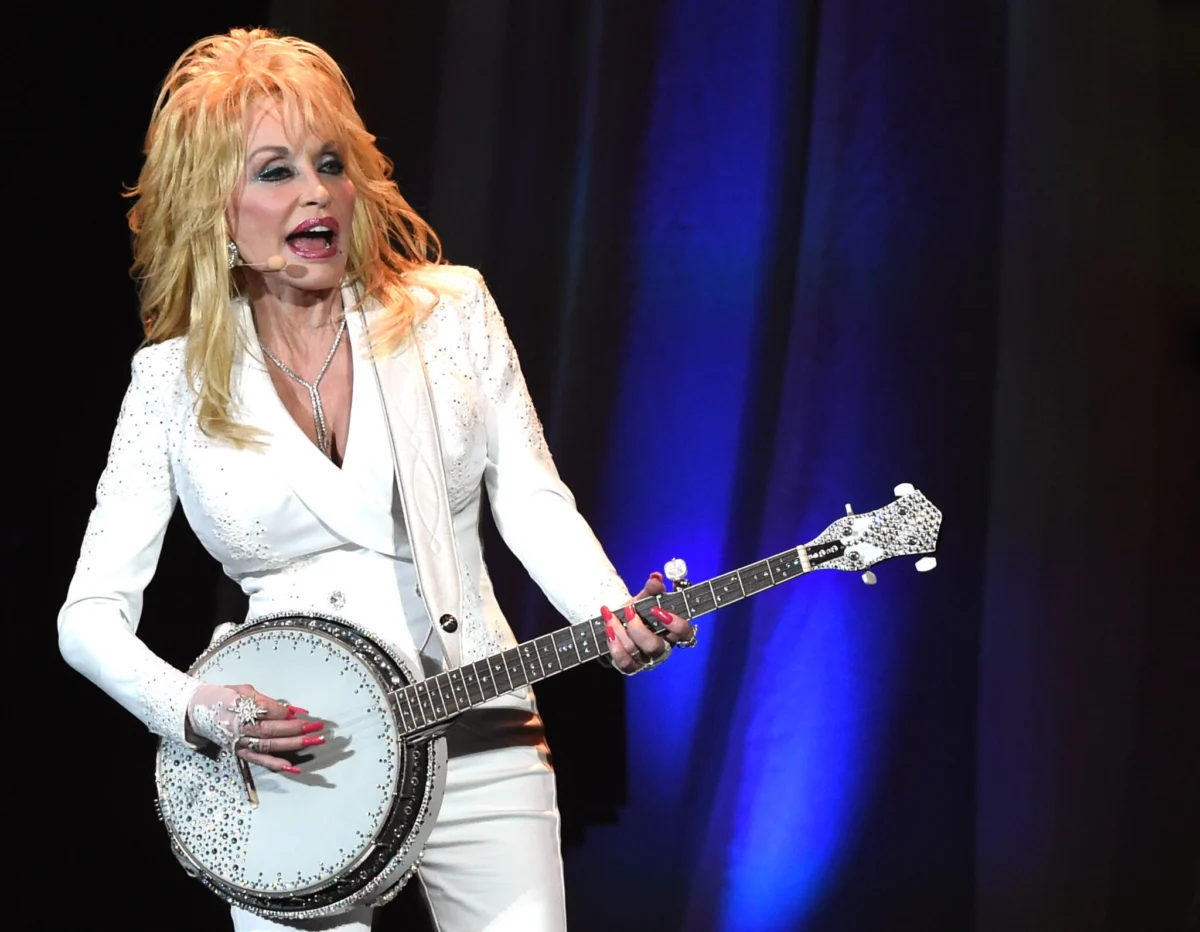
The world is currently mourning the loss of a titan. Dolly Parton, the queen of country music, a philanthropist of unparalleled reach, and a quintessential American icon, passed away on Tuesday following a brief but courageous battle with cancer at the Vanderbilt-Ingram Cancer Center in Nashville. She was a national treasure whose influence transcended the boundaries of genre, age, and geography.
While the music industry and her millions of fans grapple with the silence left in the wake of her passing, there is a singular, tantalizing mystery that remains: a secret song, locked away in a wooden box, waiting for the year 2046. As Parton herself once joked with a mix of characteristic wit and existential concern, she ensured that even in death, she would have one final surprise for the world.
The Time Capsule: A Chestnut Legacy
In 2015, during the height of her creative powers and with an eye toward the distant future, Parton orchestrated the burial of a special "Dream Box" at her Dollywood DreamMore Resort and Spa in Pigeon Forge, Tennessee. The box, constructed from wood of the American Chestnut tree, was more than a mere publicity stunt; it was a deeply personal tribute to her uncle and early mentor, Bill Owens, who had spent much of his life championing the reforestation of the American Chestnut.
Inside this capsule, Parton placed physical artifacts of a mystery composition: cassette tapes, CDs, and the necessary playback hardware to ensure that, no matter the technological landscape of 2046, the song could be retrieved. The instructions are clear and unyielding. The box is to remain sealed until January 19, 2046—the day that would have marked Parton’s 100th birthday.
A placard inside the box reads: "The chestnut ‘Dream Box’ is a repository of Dolly’s wishes and memories for the future. It will not be opened until Dolly’s birthday on January 19, 2046. The Dream Box itself is a tribute to her original mentor and uncle, Bill Owens, who has worked tirelessly to preserve the American Chestnut tree. As a final tribute, Dolly placed a song which she has written to be released as her last. Entitled ‘My Place In History,’ only Dolly will know its melody and content until 2046."
A Career Defined by Storytelling
To understand the weight of this secret, one must look at the chronology of Parton’s life. Born in the Great Smoky Mountains, she rose from humble beginnings to become a global superstar. Her catalog—spanning over five decades—includes hits like "Jolene," "9 to 5," and "I Will Always Love You," a track that famously became one of the best-selling singles of all time after Whitney Houston’s rendition.
Throughout her career, Parton’s songwriting was her greatest currency. She was a prolific storyteller, possessing an uncanny ability to distill the human experience into three-minute vignettes. The decision to bury "My Place In History" was not merely a whim; it was a deliberate act of legacy-building. It was a bridge between the woman who grew up without electricity in a one-room cabin and the future generations who will inherit a world she helped shape.
However, the passage of time has always weighed on the artist. In a 2022 appearance on The Kelly Clarkson Show, Parton expressed a mix of pride and anxiety regarding the project. "They weren’t expecting me to be there at all," she said, reflecting on the 2046 deadline. "I’m just saying, I might be there. Who knows? But the point is, there is a song—I figure it’ll probably disintegrate, probably nobody ever hears it. That’s what bothers me, to think that it’s gonna be a song that nobody’s ever gonna hear if it rots in there before they open it."
Despite her concerns about the integrity of the media, she maintained a steadfast belief in the quality of the work. "It’s a really good song," she told Clarkson, before adding with a laugh, "But yes, I have a song that’s buried that nobody’s gonna hear—I don’t know whose damn idea that was."
The Final Act: A Multi-Front Posthumous Plan
Parton’s death has triggered a complex apparatus of posthumous projects. Her team, long accustomed to her meticulous management of her brand, has confirmed that the "Dream Box" is only one piece of a larger tapestry of forthcoming releases.
Beyond the secret song, the industry is preparing for a wave of content that bears her signature. Among the most anticipated is the upcoming Broadway production, Dolly, A True Original Musical. Scheduled to open on January 19, 2027—what would have been her 81st birthday—the show is expected to be a definitive biographical retrospective, likely featuring never-before-heard anecdotes and musical arrangements that have been under development for years.
Simultaneously, the Parton estate is moving forward with a new Nashville museum and hotel complex. These physical spaces are designed to serve as sanctuaries for her memorabilia, from the iconic rhinestones of her stage costumes to the original manuscripts of her greatest hits. Additionally, commercial ventures, including a line of Purina dog treats and her "Cup of Ambition" coffee brand, will proceed as planned, serving as a testament to the business acumen that made her the most successful female country artist in history.
Official Responses and Public Outpouring
The statement released by her representatives to People magazine captured the essence of her public persona: "Our beloved Dolly Parton spent her life and career bringing joy, laughter, hope and integrity into everything she touched. Her unmatched generosity reached the lives of countless people whom she would never meet, yet she was always there to offer a helping hand."
The outpouring of grief has been global. From Nashville to London, fans have gathered to pay their respects. Politicians, fellow musicians, and world leaders have praised her not just for her music, but for her "Imagination Library," which has provided millions of free books to children worldwide. Her legacy is one of radical kindness—a deliberate choice to be a light in a sometimes dark world.
Implications: The Ethics of Posthumous Art
The existence of "My Place In History" raises fascinating questions about the nature of artistic legacy. In an era where AI-generated music and posthumous "reconstructions" are becoming commonplace, Dolly Parton has taken a different approach: she has authored her own afterlife.
By choosing to bury her final work, she has reclaimed the narrative of her exit. She has dictated the terms of her final release, ensuring that when the world finally hears "My Place In History," it will be exactly as she intended—untouched by modern producers or revisionist editing. It is a rare act of agency in an industry that often treats artists as commodities even after their passing.
Furthermore, the "Dream Box" serves as a cultural time capsule. By including physical media, Parton was making a statement about the impermanence of digital formats. In 2046, when a future generation opens the box, they will find not just a song, but a relic of the early 21st century.
Conclusion: A Promise Kept
As the industry moves forward, the shadow of the year 2046 looms large. There is a sense of collective anticipation, a shared secret that the world will hold for the next two decades. Dolly Parton may have physically left us, but she has woven herself into the fabric of time.
She has left us with a final riddle, a song that is simultaneously a goodbye and a greeting to a future she will not see. As we wait for the chestnut box to be opened, we are reminded of the lyrics she penned so long ago, and the philosophy she lived by. Dolly Parton never did anything halfway. She left us her music, her books, her businesses, and, perhaps most importantly, a mystery to keep us looking toward the future with the same hope and "Cup of Ambition" that she carried throughout her extraordinary life.
The stage is quiet for now, but in the heart of the Smoky Mountains, a song is waiting—a final, private performance that will one day belong to everyone. Until 2046, we listen to the echo of her voice, comforted by the knowledge that the best is, in some small way, yet to come.