Main Facts: The Remarkable Resurgence of Vertiv Holdings
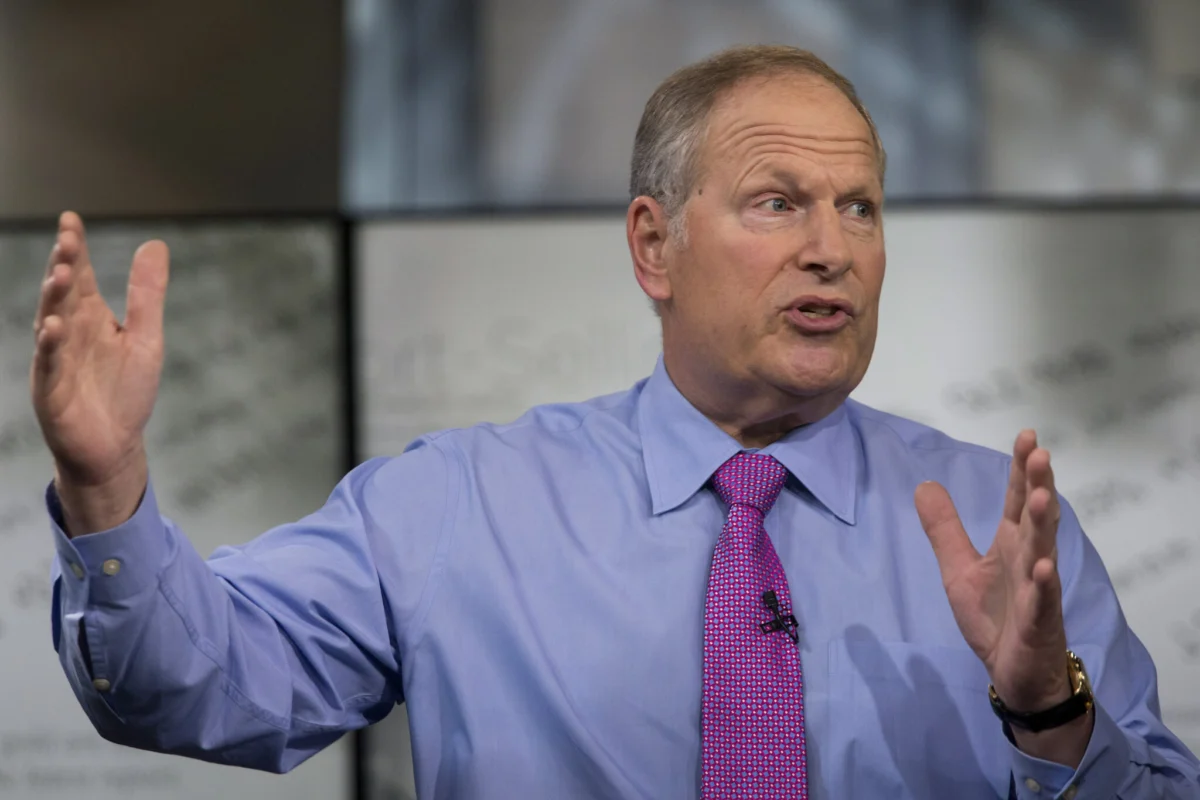
In the volatile landscape of American industry, few narratives are as compelling as the "second act" of David Cote. Once the architect of a historic turnaround at Honeywell International, Cote has transitioned from a storied retirement into the executive chairmanship of Vertiv Holdings, a legacy cooling company that has become a linchpin of the global Artificial Intelligence (AI) revolution.
Under Cote’s guidance, Vertiv has seen its market capitalization skyrocket from under $11 billion at the time of its public debut to a staggering $109 billion. This nearly tenfold increase reflects more than just market enthusiasm; it represents a fundamental shift in how the world’s digital infrastructure is managed. Vertiv, an 80-year-old firm previously known for traditional data center cooling, has repositioned itself as the premier provider of the thermal management systems required to keep high-performance AI chips from overheating.
The success of Vertiv stands in stark contrast to Cote’s earlier career setbacks, most notably his high-profile exit from General Electric (GE) under the legendary Jack Welch. Today, Cote’s trajectory serves as a case study in strategic patience, operational discipline, and the ability to identify "secular tailwinds"—long-term trends like AI and data expansion—before they become obvious to the broader market.
Chronology: From the Night Shift to the Global Boardroom
The GE Years and the Welch Rejection (1974–1999)
David Cote’s journey began far from the executive suite. He started his career as a night-shift worker at a GE aircraft engine plant in New Hampshire. Over the course of 25 years, he climbed the ranks of the industrial conglomerate, eventually being tapped to lead GE’s massive appliance business.
However, in 1999, his ascent hit a wall. In a now-famous encounter in the GE dining room, then-CEO Jack Welch—regarded at the time as the "Manager of the Century"—informed Cote that he wanted him out of the company by year-end. Despite Cote’s repeated inquiries into his failings, Welch provided no specific explanation. This rejection by the most celebrated CEO of the era could have been a career-ending blow, but Cote pivoted quickly, securing the top job at TRW before moving to Honeywell.
The Honeywell Revival (2002–2018)
Cote took the helm at Honeywell in 2002, inherited a company struggling with internal fragmentation and stagnant growth. Over the next 15 years, he engineered an operational revival that transformed Honeywell into an industrial powerhouse. By the time he retired in 2018, the company had delivered shareholder returns that exceeded the S&P 500 by 150%.
The Birth of the Second Act (2018–2020)
Retirement proved brief for Cote. Driven by the belief that he had one more major project in him, he partnered with Goldman Sachs to form a Special Purpose Acquisition Company (SPAC). The team screened over 1,000 potential targets before settling on Vertiv, a struggling spin-off from Emerson Electric. Cote’s thesis was simple but profound: the world was producing data at an exponential rate, but the infrastructure to cool that data was lagging.
The Vertiv Rollercoaster (2020–Present)
Vertiv went public on the New York Stock Exchange (NYSE) in early 2020, just three weeks before the COVID-19 pandemic paralyzed the global economy. The company initially struggled, facing supply chain disruptions and a critical internal error: underpricing its equipment by 20% to 30% during a period of high inflation. By early 2023, the stock had plummeted 55% from its highs.
Cote responded by immersing himself in day-to-day operations, working with the board to install a new CEO, Giordano Albertazzi, and refocusing the company on liquid cooling technology. This pivot perfectly timed the explosion of generative AI, leading to the current $109 billion valuation.
Supporting Data: The Metrics of Growth and Recovery
The scale of Cote’s success is best understood through the hard data of Vertiv’s operational turnaround and the broader market context:
- Market Capitalization: Growth from $11 billion (2020) to $109 billion (2024).
- Stock Volatility: A 55% decline in stock price between 2021 and early 2023, followed by a recovery that saw the stock price increase by over 800% from its lows.
- Pricing Corrections: During the 2021-2022 inflationary period, Vertiv realized it was underpricing its complex cooling systems by 20% to 30%. The subsequent "price-cost" correction added hundreds of millions to the bottom line.
- Strategic M&A: The late 2023 acquisition of CoolTera, a specialist in liquid cooling, allowed Vertiv to dominate the "direct-to-chip" cooling market, which is essential for NVIDIA-based AI data centers.
- Comparative Performance: Cote’s tenure at Honeywell delivered returns 150% greater than the S&P 500 over 15 years.
Official Responses and Leadership Philosophies
The narrative of David Cote is part of a broader conversation regarding leadership in the modern era. While Jack Welch’s era was defined by "rank and yank" and short-term earnings management, Cote’s approach emphasizes long-term operational excellence.
The Euronext Perspective
In a parallel to Cote’s focus on delivery over optics, Stéphane Boujnah, CEO of Euronext, recently emphasized the importance of results over social status. "I’m not fascinated by the lifestyle of my peers… I’m just trying to be efficient and to deliver what the shareholders want me to deliver," Boujnah stated. This sentiment echoes Cote’s "no-nonsense" New Hampshire roots and his focus on the "small things."
The Jimmie Johnson Rule
Retired NASCAR champion Jimmie Johnson recently shared insights that mirror Cote’s attention to detail. Johnson credits his multimillion-dollar success to "shining his shoes and arriving 10 minutes early." This philosophy—that small, disciplined habits lead to massive outcomes—is visible in Cote’s insistence on fixing Vertiv’s pricing models and operational bottlenecks when the company was at its lowest point in 2022.
Political and Economic Reactions
The success of titans like Cote often draws scrutiny in the political sphere. While Elon Musk argues that billionaire taxes cannot solve the U.S. debt crisis, Senator Bernie Sanders has proposed a 5% wealth tax to fund direct payments to Americans. These debates highlight the tension between the massive wealth created by industrial "second acts" and the growing calls for economic redistribution in an era of $40 trillion national debt.
Implications: AI, Geopolitics, and the Future of Industry
The rise of Vertiv and the career of David Cote have several far-reaching implications for the global economy and the future of the industrial sector.
1. The Infrastructure of the AI Boom
The most immediate implication is the validation of AI as a "hard" industrial trend rather than just a software phenomenon. As companies like Anthropic seek valuations of $2 trillion—potentially surpassing SpaceX—the demand for the physical hardware provided by companies like Vertiv will only intensify. If Anthropic and OpenAI are the "brains" of the AI era, Vertiv provides the "circulatory system" that keeps those brains from burning out.
2. The Fallacy of the "Defining Setback"
Cote’s journey provides a profound lesson for executive leadership. His rejection by Jack Welch was once seen as a judgment on his potential. Instead, it was a catalyst for a career that eventually outshone the very company that let him go. This suggests that in the modern corporate world, "cultural fit" is often mistaken for "competence," and a bad outcome at one firm is rarely a predictor of future failure.
3. Geopolitical and Macroeconomic Headwinds
Despite the success of companies like Vertiv, the broader economic landscape remains fraught with risk. Federal Reserve Chair Kevin Warsh faces a critical test as rising bond yields and trade tensions—particularly with Iran and Canada—threaten to stifle growth.
The ongoing conflict with Iran and its ability to continue oil exports could prolong global instability into 2027. Furthermore, Canada’s hard-line trade stance with the U.S. suggests that even close allies are moving toward more protectionist policies. For industrial leaders like Cote, navigating these geopolitical waters is just as critical as managing the factory floor.
4. The "Vibe-Coding" Generation
Finally, Cote’s story of starting from the night shift finds a modern echo in Gen Z entrepreneurs. From the 18-year-old junk remover using "vibe-coded" pricing calculators to the founder of the $1.2 billion platform Preply, a new generation is proving that the path to the "corner office" is no longer linear. Whether through a 25-year climb at GE or a viral social media venture, the core principles of identifying a market gap and executing with discipline remain the same.
In conclusion, David Cote’s $100 billion success with Vertiv is a testament to the power of the "long game." By surviving the rejection of the 20th century’s most famous CEO and navigating the volatility of a global pandemic, Cote has cemented his legacy as one of the most resilient and visionary leaders in American industrial history. As the AI era continues to unfold, his "second act" may well become the blueprint for the next generation of industrial titans.