In the landscape of European historical cinema, few subjects remain as haunting and under-addressed as the systemic, state-sponsored sterilization of Roma women in Czechoslovakia. Slovakian filmmaker Ivan Ostrochovský’s latest feature, Only Beautiful Things to Look At, attempts to grapple with this dark chapter of 20th-century history. Set against the backdrop of the 1980s, the film utilizes a meticulous, painterly aesthetic to recreate the era’s fashions and domestic environments. However, the film’s central artistic choice—to cloak a brutal eugenics program in soft-focus, high-contrast beauty—has ignited a critical debate regarding whether such a presentation honors the victims or, conversely, sanitizes a legacy of trauma that extended well into the 21st century.
A Chronology of Coercion: From State Policy to Modern Reckoning
To understand the weight of the critique leveled against Ostrochovský’s work, one must acknowledge the historical reality of the Czechoslovakian state’s reproductive policies. The practice of coercing Roma women into sterilization began in earnest during the 1970s and continued with alarming consistency throughout the 1980s.
Government officials often framed these procedures as "family planning" initiatives aimed at improving the "quality of life" for marginalized communities. In practice, however, these were tools of state-sanctioned racism. Roma women were frequently coerced into signing consent forms they could not read, often while under the duress of labor or during Cesarean sections. These women were rarely informed that the procedure—which left a telltale scar beneath the navel, referred to euphemistically by staff as "the bow"—was irreversible.
The state’s campaign did not end with the dissolution of Czechoslovakia. Investigations by human rights organizations have confirmed that coerced sterilizations persisted in both the Czech and Slovak Republics long after the fall of communism, with documented cases occurring as late as the early 2000s. By centering the narrative in the 1980s without clearly articulating the longevity of these abuses, critics argue that the film risks relegating the atrocity to a "museum piece"—an artifact of a bygone era rather than a living, breathing injustice.
The Cinematography of Privilege: Analyzing the Narrative Lens
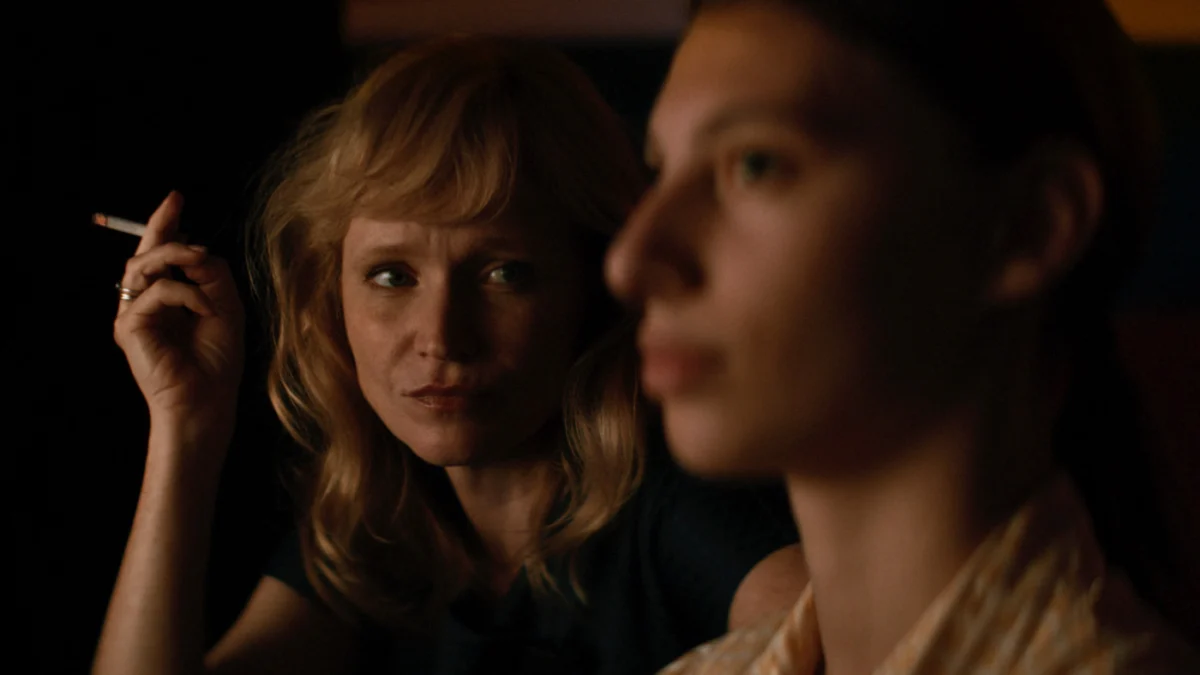
The primary point of contention in Only Beautiful Things to Look At is its perspective. The film is anchored by the character of Ingrid (played by Anna Geislerová), a white female doctor at the hospital where these procedures are carried out. Through her, we witness the bureaucracy of the state’s medical apparatus.
The film opens with a powerful, if problematic, sequence: a montage of young Roma women being lectured on the "benefits" of sterilization. While the director’s intent is clearly to humanize these women, the execution relies heavily on visual dignity while denying them a voice. They are presented as silent subjects of a portrait, their pain processed only through the growing moral awakening of their white superior.
This narrative architecture—the "moral awakening of the white protagonist"—is a well-worn trope that some critics feel undermines the gravity of the subject matter. Ingrid’s life is portrayed as an enviable, pastoral fairytale. She resides in a glass-walled home overlooking a lush forest, spends her evenings listening to classical music with her husband, and moves through the world with a sense of aesthetic grace that contrasts sharply with the gritty, cramped realities of the Roma patients. By focusing on Ingrid’s internal conflict, the film risks shifting the audience’s empathy away from the victims and toward the woman facilitating their erasure.
Supporting Data and the "Invisible" Victims
The tragedy of the Roma sterilization program is often buried under the weight of impersonal statistics, which makes the film’s attempt to focus on individual lives commendable. However, the internal logic of the film leaves significant gaps in the historical record.
For instance, the film fails to fully explore the linguistic and systemic barriers that allowed these crimes to occur. Many victims were never provided with interpreters, and the medical documentation was frequently forged or falsified to meet government-mandated quotas. While the film’s co-writer, Marek Leščák, works alongside Ostrochovský to build a narrative of systemic pressure, the focus remains stubbornly on Ingrid’s personal disappointment—specifically her frustration at being passed over for a promotion by her male colleagues. While this adds depth to Ingrid’s character, it creates a jarring juxtaposition: the struggle for gender equality in the workplace is framed as being of equal, if not greater, dramatic urgency than the systematic violation of ethnic minority women.
The Divergent Paths of the Sisters: A Missed Opportunity
Perhaps the most compelling thread in the film belongs not to Ingrid, but to Agata (Simona Boledovičová), an orderly at the hospital, and her sister Jula (Eva Mores). Agata’s journey—as she reconciles her desire for assimilation with the reality of her Romani identity—provides the most fertile ground for exploration.
The contrast between the sisters’ lives is stark: Jula, living in a crumbling tenement with her children, and Agata, navigating the sterile, polished corridors of the hospital. Their relationship is fraught with the unspoken resentment that often accompanies the "passing" of one sibling while the other remains tethered to the community. In one of the film’s most moving sequences, the sisters share a moment of connection during a family bath time. It is a rare, raw glimpse into the humanity that the state sought to strip away. Yet, even this is sidelined, as the film insistently returns to the macro-closeups of Ingrid’s blue eyes and the "beauty" of her surroundings, ultimately prioritizing the viewer’s visual comfort over the sisters’ complex, often painful, reality.
Official Responses and the Burden of Representation
The silence surrounding these policies for decades was a deliberate state strategy. When official investigations finally began in the early 2000s, the response from the governments of the Czech and Slovak Republics was slow and often defensive. Compensation schemes were established, but many victims found the processes bureaucratic and humiliating, often requiring them to relive the trauma without receiving meaningful apologies or justice.
The cultural response to these policies, including films like Only Beautiful Things to Look At, carries a heavy burden. If a film is to tackle such a sensitive subject, it must grapple with the question of whether it is contributing to a collective memory or merely providing a "beautiful" surface for a gruesome reality. By opting for a high-aesthetic, soft-focus approach, the filmmakers may have intended to highlight the banality of evil—how beauty and cruelty can coexist in the same space—but the result is a film that feels disconnected from the urgency of the issue.
Implications: Can Art Do Justice to Atrocity?
The fundamental challenge presented by Ostrochovský’s work is one of perspective. When we tell stories of systemic oppression, who is the protagonist? And more importantly, who is the witness?
By choosing to frame the sterilization program through the eyes of a white doctor, the film effectively asks the audience to relate to the perpetrator’s conscience rather than the victim’s body. While the film is undeniably well-intentioned and technically proficient, it raises a vital question for modern cinema: is it possible to show "too much beauty" when depicting a history of state-sanctioned violence?
As we move further away from the 1980s, the temptation to polish the rough edges of history becomes greater. However, the persistence of anti-Roma discrimination and the lingering trauma of the sterilization policies suggest that this is not a history that can be safely tucked away behind the glass of a museum display. To truly address the "ugly things" of the past, filmmakers must be willing to let go of the aesthetic comfort that prevents audiences from confronting the uncomfortable, unvarnished truth. Only Beautiful Things to Look At serves as a poignant reminder that while history may be captured in beautiful frames, it is the fragments left outside those frames that often tell the most important, and the most devastating, stories.