The retail landscape in India is undergoing a seismic shift. For years, the convenience of online shopping was defined by next-day or two-day delivery windows. Today, that paradigm has been shattered by the rise of "quick commerce"—a high-stakes, hyper-local delivery model that promises groceries and daily essentials in the time it takes to brew a cup of coffee. As Indian startups have successfully conditioned millions of consumers to expect instant gratification, the giants of e-commerce—Walmart-owned Flipkart and global titan Amazon—are now scrambling to reclaim their territory.
The Ascent of Flipkart Minutes: A Rapid Convergence
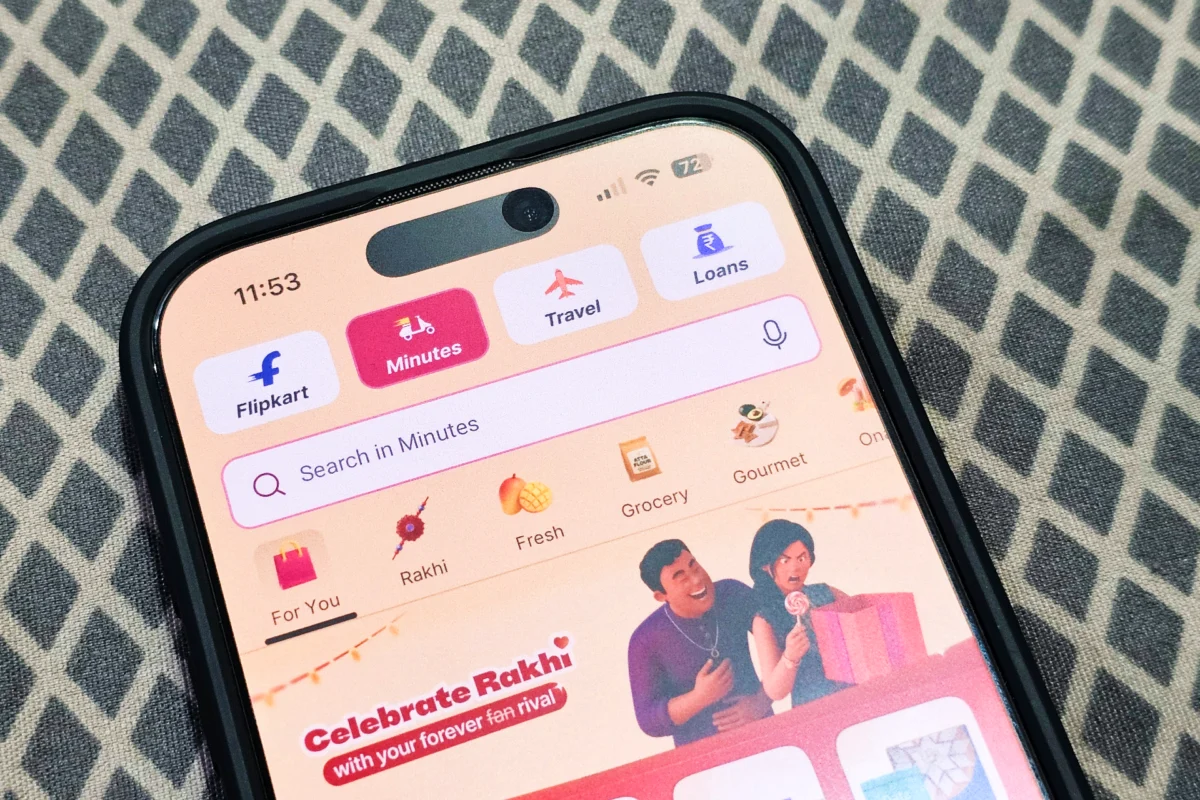
Flipkart’s foray into the instant-delivery arena, branded as "Flipkart Minutes," has evolved from a experimental launch in August 2024 into a formidable operational force. According to industry insiders, the service has seen an explosive trajectory, currently fulfilling between 1.1 million and 1.2 million orders per day. This is a staggering leap from the approximately 390,000 to 400,000 orders recorded in November 2023.
This rapid scaling has placed the two-year-old service within striking distance of Swiggy’s Instamart, a pioneer of the sector, which currently handles roughly 1.4 million daily orders. For Flipkart, a company that built its reputation on traditional, warehouse-based e-commerce, this pivot represents a defensive necessity and an offensive masterstroke. By rapidly integrating a network of over 1,000 micro-fulfillment centers—small, localized warehouses positioned in high-density urban areas—Flipkart is effectively bridging the gap between its legacy infrastructure and the "10-minute" promise.
A Chronology of the Quick-Commerce Revolution
To understand the current intensity of the battle, one must look at the timeline of the "quick-commerce" emergence in India:
- 2013: Grofers (the predecessor to Blinkit) is founded, laying the early groundwork for rapid grocery delivery, though the technology and consumer demand for 10-minute fulfillment were yet to coalesce.
- 2020: The COVID-19 pandemic serves as a massive catalyst. Swiggy launches Instamart, recognizing that the demand for contactless, fast delivery of essentials is no longer a luxury but a necessity.
- 2021: Zepto enters the fray, doubling down on the 10-minute delivery model and securing significant venture capital, forcing incumbents to react. Blinkit rebrands from its original model to fully embrace the quick-commerce paradigm.
- 2023: The market begins to consolidate, with Zomato’s acquisition of Blinkit proving to be a decisive move in capturing market share.
- August 2024: Flipkart officially enters the battle with the rollout of Flipkart Minutes, signaling that the "big tech" players are no longer willing to let startups dominate the segment.
Supporting Data: The Current Market Hierarchy
While Flipkart’s growth is impressive, the incumbent startups continue to command the highest volumes. Data from market research firm Datum Intelligence highlights the current pecking order:
- Blinkit: Remains the undisputed market leader, processing 3.4 million to 3.6 million orders daily.
- Zepto: Maintains a firm second position, with daily volumes reaching 2.4 million to 2.6 million.
- Swiggy Instamart: Continues to scale, with 1.4 million daily orders and a massive footprint of 1,200 dark stores across 130+ cities.
- Flipkart Minutes: Rapidly closing in on the third spot, demonstrating the fastest growth velocity among the top players.
The economic metrics behind these numbers are equally compelling. Swiggy recently disclosed that more than 45% of its dark-store network is now contribution-margin positive, a significant milestone in an industry once criticized for unsustainable cash burn. Similarly, Flipkart’s growth is fueled by a robust retention engine; 65% to 70% of its monthly users are repeat buyers, and transaction frequency per customer has climbed by 50% to 60% year-over-year.
The Strategic Advantage of Big Tech
Why are Flipkart and Amazon succeeding where others struggled to enter? Satish Meena, an adviser at Datum Intelligence, suggests that the advantage lies in the "installed base."
"Flipkart is already a serious player," Meena explains. "They have spent billions of dollars and years of effort acquiring the Indian consumer. When you open 1,000 dark stores and start doing a million orders a day, it’s not just a pilot project—it’s a systemic shift."
Flipkart is leveraging its existing logistics network to optimize the "last mile." By adding roughly 100 micro-fulfillment centers each month, they aim to hit a target of 1,500 facilities by the end of 2026. This infrastructure allows them to reduce average delivery times from 13 minutes last year to approximately 11 minutes today.
Amazon’s Parallel Push: The "Now" Strategy
Amazon is not a passive spectator in this war. The Seattle-based giant is aggressively scaling "Amazon Now," its quick-commerce play. During a recent visit to India, CEO Andy Jassy noted that the service is Amazon’s fastest-growing business in the country. The company has publicly committed to a 300-city expansion and a matching goal of 1,000+ micro-fulfillment centers. Amazon’s strategy is predicated on integrating quick commerce into its "Prime" ecosystem, betting that the convenience of instant delivery will drive higher subscription renewals and platform stickiness.
Official Responses and Industry Silence
Despite the high-profile nature of this competition, the primary stakeholders—Flipkart, Amazon, Swiggy, Zepto, and Blinkit—have largely maintained a "no comment" stance regarding specific strategic maneuvers. This silence is typical of the Indian tech sector, where competitive intelligence is closely guarded and public statements are reserved for investor relations and major funding announcements. However, the actions of these companies speak louder than press releases: the race to build the most efficient, automated, and geographically dense delivery network has become the single most important investment priority for all five firms.
Implications: The New Consumer Standard
The broader implications of this "war for the minute" are profound for the Indian retail economy. Analysts at Bernstein have noted that while broader consumer demand in India showed signs of cooling in mid-2024, the quick-commerce segment remained an outlier, showing resilient growth in active users.
The most critical implication is the permanent change in consumer behavior. As Meena points out, there is no "turning back" once a consumer becomes accustomed to 10-minute delivery for groceries, perishables, and household staples. "Can you go back to scheduled delivery now in grocery? No," he says. "You will not go back."
This creates a high-stakes environment where any e-commerce platform that fails to offer instant delivery risks irrelevance. For the consumer, this translates into an era of unprecedented convenience. For the companies, it represents an existential challenge: they must now operate two distinct businesses—a long-tail, warehouse-based e-commerce model for general goods and a high-velocity, dark-store-based model for essentials—simultaneously.
As the battle intensifies, the cost of customer acquisition will likely rise, and the efficiency of the "dark store" will become the primary differentiator. For India, a country that has rapidly skipped traditional retail stages to reach this point, the next two years will likely see a consolidation of the market, as the sheer scale required to sustain 10-minute delivery begins to favor the players with the deepest pockets and the most advanced logistics AI. The war is far from over, but the battlefield has been clearly defined: it is, quite literally, a matter of minutes.