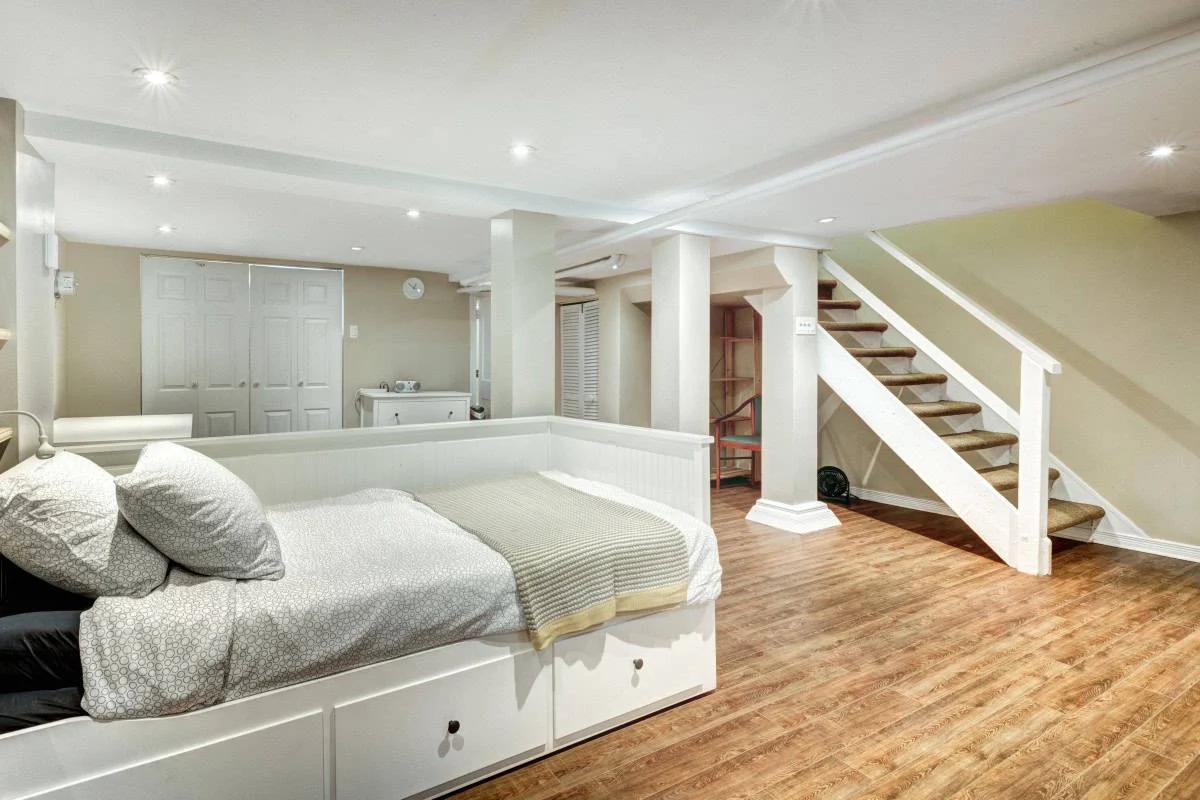
A finished basement is often viewed as the "secret weapon" of home ownership—that expansive, hidden square footage that can transform from a cold, concrete storage area into a luxurious guest suite, a high-tech home cinema, or a productive home office. In a post-2020 world, where the boundaries between home, work, and school have blurred, the demand for flexible, multi-purpose space has never been higher.
But before you commit to the heavy lifting of framing, drywalling, and electrical work, it is vital to pause and calculate the fiscal reality. Does finishing a basement actually add value to your home’s bottom line, or is it merely an expensive lifestyle upgrade? The answer is nuanced, depending heavily on your local real estate market, the quality of the finish, and the inherent structural characteristics of your home.
The Evolution of the Basement: From Storage to Essential Living
The pandemic fundamentally shifted the way we value our homes. As bedrooms were repurposed as makeshift offices and living rooms became classrooms, the "wasted" square footage beneath our feet became a focal point of renovation interest. However, while the livability of a home has skyrocketed in importance, the valuation metrics used by appraisers remain surprisingly rigid.
Finishing a basement is a major construction endeavor. It requires meticulous attention to moisture management, HVAC distribution, and local building codes. While the utility of the space increases immediately upon completion, homeowners must understand that the market treats below-grade space differently than the main floor.

Supporting Data: The ROI Reality
According to the 2022 Remodeling Impact Report from the National Association of Realtors (NAR), homeowners typically recoup approximately 86% of the project cost upon resale. Other industry estimates, such as those from construction cost analysts, place the range between 70% and 75%.
It is crucial to manage expectations: if you spend $20,000 on a renovation, you should anticipate a bump in market value of roughly $14,000 to $15,000. Rarely does a basement project result in a "profit" where the added value exceeds the cost of construction. The true return on investment (ROI) is found in the combination of improved daily quality of life and a faster, more competitive sale when the property finally hits the market.
The Mechanics of Appraisal: Why "Below-Grade" Matters
To understand the financial implications, one must understand how appraisers calculate Gross Living Area (GLA). In professional real estate appraisal, GLA is almost exclusively reserved for above-grade space.
"Finished basements are usually measured separately and given a lower price per square foot," explains Erik Kortz of Stella Construction & Home Services. "Appraisers typically value finished basement space at roughly 50% to 75% of the value per square foot of your main living area."

This means that if your home is valued at $200 per square foot for its main level, that stunning basement media room might only be credited at $100 to $150 per square foot. Furthermore, when an appraiser pulls "comps" (comparable home sales), they will only match your home against others with similar above-grade square footage. Your total home size might look impressive on a listing sheet, but the underlying valuation remains tethered to what is visible from the street.
Strategic Planning: Determining Your Goals
Before you break ground, you must categorize your motivation. Are you renovating for resale, or for your own enjoyment?
- The "Stay-Put" Strategy: If you plan to live in the home for another five to ten years, the ROI is less about immediate equity and more about the "utility value." The ability to host guests, provide a playroom for children, or create a private home gym adds immense personal value that cannot be captured on an appraisal report.
- The "Resale-Driven" Strategy: If your goal is to flip the home or increase its marketability for an imminent sale, you must be surgical. Focus on high-impact, low-cost upgrades that satisfy code requirements and maximize the "feel" of the space without over-capitalizing on luxury finishes that won’t see a full return.
The Legal and Safety Threshold: What Defines "Finished"?
A space is not "finished" simply because you’ve laid down carpet and painted the walls. To be legally classified as a living space—and thus potentially included in certain market valuations—it must meet strict building codes.
Critical Safety Requirements
- Egress Windows: If you are adding a bedroom, local code almost universally requires an egress window. This is a life-safety feature that allows for a quick exit in case of fire and provides entry for firefighters.
- Ceiling Height: Most jurisdictions require a minimum ceiling height (often 7 feet) for a space to be considered habitable.
- HVAC and Ventilation: You cannot simply block off existing vents. The space must have adequate heating, cooling, and air exchange to prevent the buildup of carbon monoxide or moisture.
- Permits: Performing this work without a permit is a massive "red flag" during a home inspection. It can lead to the buyer demanding the work be torn down or forcing you to pay for expensive retroactive inspections.
The Three Faces of Basements: Walk-out, Garden, and Standard
The type of basement you possess dictates its ceiling for value.

1. The Walk-out Basement
This is the "Gold Standard" of underground spaces. Because it features a door leading directly to the backyard, it feels like an extension of the ground floor. It allows for natural light and independent access, which is highly attractive to buyers. It has the highest potential for full appraisal value.
2. The Garden-Level Basement
These are partially submerged with windows that sit above the soil line. They offer a "middle ground" of value—significantly better than a dungeon-like cellar, but still lacking the seamless outdoor integration of a walk-out.
3. The Standard Basement
Fully underground with small, high-set windows. These are the most challenging to convert into high-value living space. They often require the most significant investment in lighting, moisture control, and structural egress to be considered anything other than a "utility room."
Expert Insight: Addressing the Foundation First
"The biggest driver of value is functional square footage that doesn’t feel like a typical ‘basement,’" notes a representative from the Jazz Construction Group. "A smart layout, such as a flexible living area combined with a full bathroom, provides the strongest ROI because it seamlessly expands the home’s primary livable space."

The experts emphasize that the most common mistake is prioritizing aesthetics over infrastructure. "Skipping foundational steps like waterproofing and humidity control leads to hidden mold, which becomes a catastrophic deal-breaker during a home inspection," they warn.
Six Tips to Maximize Your ROI
If you are moving forward with the project, follow these guidelines to ensure the money you spend is well-placed:
- Prioritize Moisture Control: Use high-quality vapor barriers and consider a sump pump or French drain system before finishing walls.
- Focus on Multi-Functionality: Create a space that can be a guest suite today and a hobby room tomorrow.
- Invest in Lighting: Use recessed LED lighting and consider light-colored finishes to combat the lack of natural sunlight.
- Use Durable Materials: Opt for luxury vinyl tile (LVT) or tile rather than hardwood, which can warp with basement humidity.
- Add a Bathroom: A full bathroom in the basement is the single biggest "value-add" feature you can include.
- Maintain Ceiling Height: Avoid bulky soffits or drop ceilings that make the room feel claustrophobic.
Final Verdict: Is It Worth It?
Finishing a basement is a significant commitment. For the homeowner planning a long tenure, the emotional and lifestyle returns are often well worth the cost. For the investor or the homeowner looking to sell in the short term, the math requires caution.
If you choose to proceed, approach the project as a structural investment rather than a DIY hobby. By securing the necessary permits, prioritizing safety and moisture control, and designing for maximum flexibility, you can turn an underutilized cellar into one of the most valuable assets in your home. Always remember: in the world of real estate, quality and compliance are the two factors that determine whether your basement is a "value-add" or a financial sinkhole.