Introduction: A Fragile Equilibrium
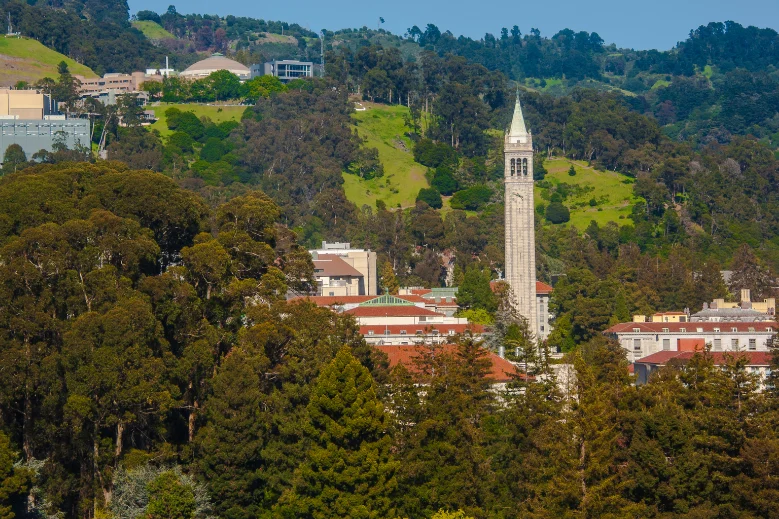
For decades, the University of California, Berkeley, has served as the symbolic crucible of American free speech. From the Free Speech Movement of the 1960s to the complex geopolitical tensions of the 2020s, the institution has long operated under the assumption that robust policies and legal frameworks are sufficient to govern discourse. However, a landmark report released Thursday by a faculty task force suggests that the university’s existing playbook may be inadequate for the modern, hyper-polarized era.
The report, titled Academic Freedom and Campus Climate, argues that legalistic protections—while necessary—are insufficient on their own. Instead, the task force posits that a campus climate "characterized by trust and good faith" is the true prerequisite for the university’s core mission. This document serves as a sobering acknowledgment that in an environment defined by deep ideological divides, formal rules often falter when the underlying social contract of mutual respect and administrative transparency begins to fray.
The Genesis of the Task Force
The task force was convened one year ago, not in a vacuum, but in the shadow of escalating campus friction. Its mandate was clear: to evaluate whether the conceptual frameworks currently governing higher education in America were robust enough to manage the emerging dilemmas at UC Berkeley, or if the changing political landscape necessitated a fundamental shift in approach.
Berkeley has been a microcosm of national tensions throughout the past year. The institution has found itself at the epicenter of federal investigations into alleged antisemitism, grappling with criminal charges against students involved in vandalism related to political installations, navigating the suspension of a lecturer for pro-Palestinian remarks in a classroom setting, and managing the fallout from the removal of political artwork from the Multicultural Community Center. These events, taken together, suggested a systemic challenge that went beyond the mere enforcement of student conduct codes.
Defining the "Ideal Climate"
The task force’s report defines the ideal campus climate as one grounded in the "confidence that each member of the campus community will follow through with what they have agreed to do." This, they argue, extends to a mutual expectation that individuals will advance the collective interests of the university while treating peers with "dignity, honesty, and fairness, even in the face of disagreement."
The report introduces a critical nuance: the distinction between the existence of a policy and the efficacy of its application. According to the task force, formal rules protecting academic freedom "may do little work in practice" if faculty members lack faith that administrators will shield them from external political pressures or internal blowback. Similarly, students who perceive that speech policies are applied inconsistently—depending on the political nature of the speech—will inevitably lose confidence in the administration’s neutrality.
Chronology of Contention: A Year in Review
To understand the urgency of the task force’s recommendations, one must look at the specific events that necessitated this internal audit:
- September 2025: UC Berkeley was forced to comply with a significant federal investigation regarding allegations of antisemitism on campus, highlighting the legal and reputational risks of perceived administrative inaction.
- Late 2025: The intersection of art and protest became a flashpoint when students were charged with felony vandalism following the destruction of an anti-TPUSA (Turning Point USA) art installation, sparking debates about the boundaries of political expression.
- December 2025: A lecturer was suspended following controversial pro-Palestinian comments made during class, reigniting the perennial debate over where academic freedom ends and the creation of a hostile learning environment begins.
- April 2026: The administration’s decision to remove political artwork from the Multicultural Community Center sparked outcry, raising questions about whether the university was prioritizing "neutrality" at the expense of student agency and community expression.
These incidents provided the empirical basis for the task force’s conclusion: that when the institution becomes a battleground for competing political agendas, the administration’s response (or lack thereof) carries as much weight as the policies themselves.
The "Civility" Paradox
One of the most provocative aspects of the report is the critique of "civility" as a standalone requirement. The task force notes that existing university policies frequently demand civility and respect from students and faculty, particularly when provocative or incendiary speakers are invited to campus.
However, the report points out a glaring asymmetry: "Policy documents focused on free speech often demand civility and respect from members of the campus community when controversial speakers are invited to campuses. But speakers themselves do not always adhere to the norms of civility and respect."

The task force argues that expecting students to maintain a posture of polite engagement while being the targets of inflammatory rhetoric is not only unrealistic but fundamentally unfair. They suggest that the university must stop framing "civility" as a universal requirement for the oppressed and the oppressor alike. Instead, they propose a more active administrative stance. When invited speakers target specific members of the campus community with derogatory claims, the university should not remain silent under the guise of "neutrality," but rather issue clear statements that reaffirm the institution’s values and commitment to the dignity of all its members.
Official Responses and the Stance of Neutrality
In the hours following the report’s release, the UC Berkeley administration issued a statement acknowledging the work of the Academic Senate and expressing a desire for continued collaboration.
"UC Berkeley doesn’t just support Free Speech and engagement with the issues of the day, we encourage it," the administration wrote. They doubled down on the principle of viewpoint neutrality, emphasizing that "when speaking for themselves, members of our community have every right to have their voices heard in support of the causes they believe in, and so this campus must and always will take a viewpoint-neutral approach when it comes to supporting freedom of speech and academic freedom."
This statement signals a potential point of friction. While the faculty task force is advocating for a more "candid" and value-based approach from leadership, the administration appears to be clinging to a strict interpretation of neutrality. The tension between "neutrality" and "moral clarity" remains the defining challenge for the university’s leadership.
Implications for the Future of Higher Education
The implications of the Berkeley report extend far beyond the borders of the Bay Area. Across the United States, public and private universities alike are struggling to maintain the traditional "marketplace of ideas" in an era of digital surveillance, social media outrage, and deeply entrenched political tribalism.
1. The Burden of Transparency
The task force’s primary recommendation—that officials be candid about their judgment calls—is a call for a new era of administrative transparency. When a decision is made to remove an art installation or sanction a lecturer, the university must explain the reasoning beyond citing a section of the faculty handbook. This transparency is intended to build the "trust" the report identifies as essential.
2. The Limits of Neutrality
The report challenges the notion that neutrality is synonymous with passivity. By suggesting that the university should speak out when speakers engage in derogatory or incendiary behavior, the task force is proposing a shift in how institutions define their role. It moves the university from being a mere landlord of space to an active participant in maintaining the community’s moral fabric.
3. Rebuilding the Social Contract
Ultimately, the report is an appeal to rebuild a fractured social contract. It suggests that even the best-written policies are insufficient if the community members do not believe that their institution is acting in "good faith." As universities continue to face intense scrutiny from state legislatures, donors, and the public, Berkeley’s attempt to codify "trust" as a structural requirement may become the new standard for campus management.
Conclusion: A Work in Progress
As the University of California, Berkeley, moves forward, the success of this report will be measured by its implementation. Will the administration adopt the task force’s call for greater candor? Will the Academic Senate find a way to reconcile the university’s commitment to viewpoint neutrality with the need to protect marginalized students from derogatory speech?
The report makes one thing abundantly clear: the era of "business as usual" for free speech on college campuses is over. The dilemmas facing Berkeley are not mere policy disputes; they are existential questions about what it means to be a community in a pluralistic society. For Berkeley, the birthplace of the Free Speech Movement, the challenge now is to prove that the university can be both a bastion of radical inquiry and a home where mutual trust is not just an aspiration, but a functional reality.