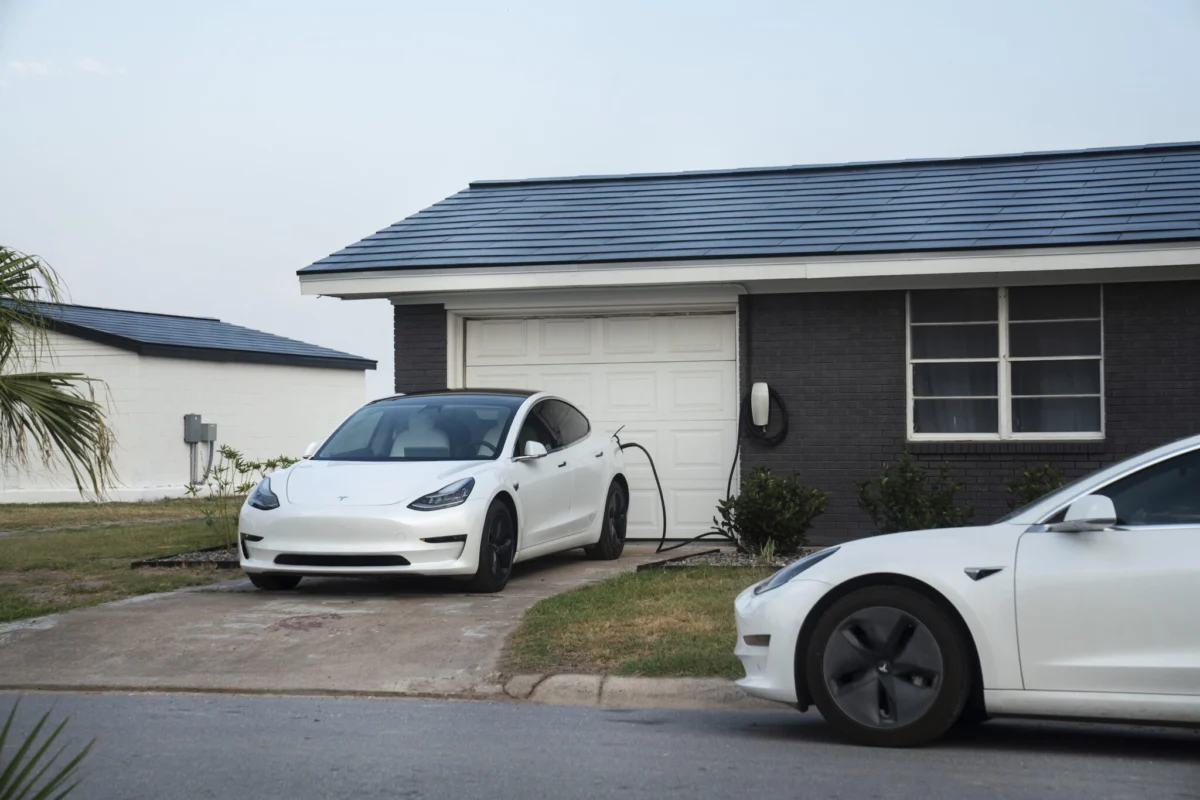
For nearly a decade, Tesla’s "Solar Roof" served as a centerpiece of Elon Musk’s vision for a vertically integrated sustainable energy empire. It was marketed not merely as a home upgrade, but as a lifestyle revolution—a "mini-power plant" disguised as elegant slate, terracotta, or textured glass shingles. It promised to marry aesthetic sophistication with utility, rendering traditional, bulky solar panels obsolete.
Today, that vision has quietly reached its end. Tesla has scrubbed all public-facing mentions of the Solar Roof from its official website. Attempts to navigate to the product’s dedicated landing page now trigger an automatic redirect to the company’s generic solar panel portal. With this digital erasure, the era of the Tesla Solar Roof has effectively concluded.
This pivot, first reported by Electrek, marks the quiet closure of a project that once held the lofty ambition of transforming the housing market. While some third-party installers suggest that residual inventory may allow for a trickle of remaining installations, the product is, for all intents and purposes, a defunct experiment.
A Chronology of a Disrupted Vision
To understand the demise of the Solar Roof, one must look back to its inception. When Tesla unveiled the product in late 2016, it was framed as the natural successor to the traditional rooftop solar array. Musk famously argued that if a roof needed replacing anyway, the Solar Roof could pay for itself through the electricity it generated.
However, the path from prototype to production was plagued by delays and iterative struggles. Between 2016 and 2019, the company went through multiple versions of the tile design. By the time the third iteration launched, Tesla had set an ambitious, if not hyperbolic, goal: installing 1,000 Solar Roofs per week.
The reality was far more modest. By 2022, reports indicated that installation rates had barely reached 20 to 40 units per week—a fraction of the scale required to make the manufacturing process economically viable. Years of "process refinement" had failed to turn the product into the mass-market juggernaut Musk had envisioned, leading to a slow, grinding decline that culminated in this week’s silent delisting.
The Economics of an Aberration
The fundamental challenge facing the Solar Roof was its inability to achieve the economies of scale that have defined the success of the broader solar industry.
The modern solar market is driven by the commoditization of silicon-based cells. Because the world produces billions of standardized, rectangular panels every year, the price of renewable energy has plummeted. Tesla, however, opted for a path of proprietary complexity. Each Solar Roof tile was a custom-engineered piece of hardware, unique to the system.
When a company relies on bespoke components, it must design and build its own specialized manufacturing equipment. This creates a vicious cycle: when sales volume remains low, the cost of that manufacturing equipment must be amortized over a smaller number of units. This caused the per-unit cost to skyrocket rather than drop.
While traditional panels became cheaper over time, the Solar Roof became a luxury outlier. Potential customers were often met with quotes ranging from $100,000 to over $200,000 for a single installation. Even when factoring in the cost of a high-end roof replacement, the price remained eye-wateringly high, alienating the mass market and restricting the product to a tiny niche of ultra-wealthy homeowners.
Physics vs. Aesthetics: The Engineering Hurdles
Beyond the economic hurdles, the Solar Roof struggled against the laws of physics. Integrating power-generating electronics into building materials is inherently difficult because the roof is the part of the house most exposed to the sun’s intense heat.
Electronic efficiency is notoriously sensitive to temperature. As a rule of thumb, solar cell voltage tends to decline by approximately 0.5% for every degree Celsius increase in temperature. Traditional solar panels mitigate this by leaving a physical gap between the panel and the roof, creating a convective cooling effect that allows air to flow underneath.
Tesla’s design, which prioritized a flush, seamless aesthetic, featured a much smaller gap for airflow. This led to trapped heat, which effectively throttled the system’s performance. Reports of "underproduction" were common in online owner communities, with many users noting that their systems were failing to meet the projected energy output by 20% or more.
Furthermore, the materials themselves faced durability challenges. There were documented instances of non-solar components warping under high temperatures and reports of roof underlayment melting. For a product designed to last for decades, these early signs of hardware fatigue were fatal to the brand’s reputation.
The Implications: Is Integrated Solar Dead?
With Tesla retreating from the integrated solar market, industry observers are left to wonder: does this signify the end of the "solar shingle" concept?
In the short term, the answer is no. Companies like GAF Energy and Merlin Solar continue to develop integrated roofing solutions, banking on the idea that homeowners are willing to pay a premium for curb appeal. For many, the aesthetic profile of a traditional panel is a non-starter. As long as there is a segment of the population that finds bulky, blue-tinted rectangles unappealing, there will be a market for integrated alternatives.
However, Tesla’s retreat serves as a sobering lesson for the sector. If a company with Tesla’s capital, brand cachet, and manufacturing expertise could not bridge the gap between "luxury design" and "functional efficiency," it suggests that the industry may need to pivot. Future success likely depends on simpler, more modular designs that avoid the trap of over-customization.
The "Musk Factor" and Future Innovation
The demise of the Solar Roof is also a reflection of the "fail fast" culture that characterizes many of Elon Musk’s ventures. When a project becomes a drag on resources—or when the engineering requirements prove too arduous to scale—the company does not hesitate to pivot back to core competencies. In this case, Tesla is refocusing its energy efforts on its traditional solar panel business and its massive battery storage ecosystem, which remain more reliable drivers of revenue.
Nevertheless, the failure of the Solar Roof will be viewed by some as an indictment of the entire integrated concept. By others, it may be viewed as a challenge. Throughout history, the collapse of a high-profile technology often paves the way for a more refined, second-generation product from a competitor.
The Solar Roof was a product of grand ambition—a attempt to force the future of home energy into a beautiful, seamless package. While it ultimately succumbed to the cold, hard realities of manufacturing costs and thermodynamic limits, it succeeded in one regard: it pushed the conversation about what a home could be. The dream of the energy-positive house remains, even if the specific hardware that promised to deliver it has been relegated to the history books.
As Tesla moves forward, the silence left by the Solar Roof’s departure will be filled by the next wave of innovators, all looking at the wreckage of this project and asking themselves how they might finally succeed where Tesla could not. Whether they can overcome the fundamental economic and physical barriers that grounded the Solar Roof remains the industry’s most pressing question.