Introduction: The Unexpected Transformation
Kenneth Branagh, a titan of the stage and screen, is arguably best known for his meticulous Shakespearean adaptations, his portrayal of Hercule Poirot, and his profound contributions to the classical canon of cinema. However, the venerable actor and director is currently embarking on a daring career pivot that sees him trading iambic pentameter for high-octane espionage. In the upcoming Apple TV+ action-comedy Mayday, set to debut on September 4, Branagh steps into the shoes of a former lethal KGB operative, starring alongside the quintessential modern action star, Ryan Reynolds.
For an artist whose career has been defined by intellectual rigor and dramatic gravity, the transition into the physical demands of an action-comedy was not something Branagh approached lightly. Rather than relying on stunt doubles or digital wizardry, Branagh opted for an old-fashioned, rigorous preparation process that caught even his production team off guard.
Main Facts: The Premise of Mayday
Set against the backdrop of the Soviet Union in 1987, Mayday follows the desperate flight of a U.S. Air Force pilot, played by Reynolds, who finds himself stranded in the unforgiving wilderness of Siberia following a crash. In a twist of fate, the American pilot must form an uneasy alliance with a singular character: a former KGB assassin who, in a quirk of characterization, is a die-hard fan of the film Top Gun.
The film promises to be a genre-bending fusion of Cold War paranoia and contemporary comedic sensibilities. For Branagh, the challenge was twofold: he needed to inhabit a character capable of sudden, lethal violence, and he needed to maintain the comedic rhythm necessary to trade barbs with a performer as quick-witted as Reynolds.
Chronology: The Journey to the Action Set
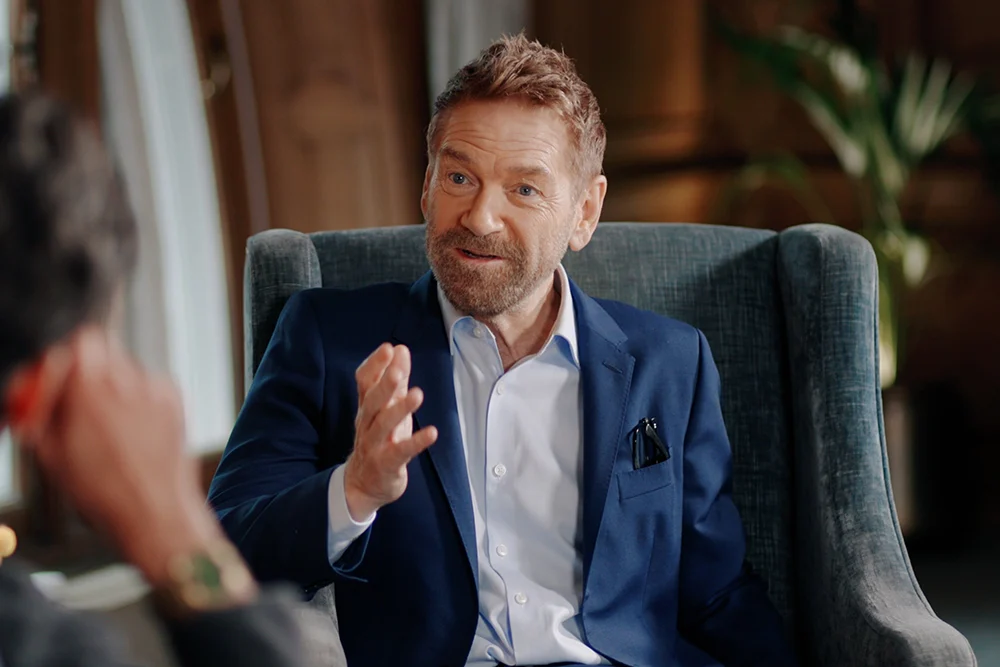
The development of Branagh’s character began months before the cameras rolled. Speaking at the Variety Lounge during the Edinburgh International Film Festival, Branagh detailed his conversation with the directors regarding his suitability for the role.
“I asked the directors, ‘What’s the way to do it if you’re a man of a certain age and it’s not your natural genre?’” Branagh recalled. The directorial response was simple but demanding: “Get here early.”
Branagh took this advice to heart. He arrived on set well ahead of the production schedule, dedicating himself to a regimen designed to make his body “a bit more flexible.” His goal was not merely to look the part of a cold-blooded operative, but to move like one. The level of commitment was such that the film’s stunt coordinators expressed genuine surprise. “The stunt guy said, ‘We’ve never had an actor for this long,’” Branagh shared. “I said, ‘I’m that scared.’”
This period of intense physical training allowed Branagh to participate in the advanced choreography of the film’s stunt sequences, a process he described as “very, very interesting and fun.”
Supporting Data: The Soccer Connection
While the cameras were rolling in the icy, desolate landscapes of Canada, the bond between Branagh and Reynolds deepened off-camera through their shared obsession with professional soccer. The two actors found common ground in the sport, though their allegiances are vastly different. Branagh is a lifelong, passionate supporter of Tottenham Hotspur, while Reynolds is famously the co-owner of Wrexham AFC, a club he purchased alongside Rob McElhenney.
Branagh expressed genuine admiration for the trajectory of Wrexham under the ownership of Reynolds and McElhenney. He recalled the skepticism that greeted the duo during their initial press conference, where they boldly declared their ambition to guide the club from non-league football to the Premier League.
“The snorts of derision were involuntary and fun, but now here they are in the Championship,” Branagh noted, referencing the second tier of English football. “Come on, this is quite something. So yes, we can be pretty nerdish about the beautiful game.” This mutual respect for the sport provided a necessary respite from the grueling filming schedule, allowing the two leads to develop a rapport that translates into the film’s on-screen chemistry.
Official Responses and Reflections
Branagh’s appearance at the Edinburgh International Film Festival was not solely to promote his upcoming action endeavor; he was also in attendance to receive the festival’s inaugural Outstanding Contribution to Cinema award. The festival also honored the 30th anniversary of his landmark 1996 adaptation of Hamlet, screening the full, unbridged four-hour version for an appreciative audience.
Reflecting on his storied past, the conversation naturally turned to a young Kate Winslet, who starred in the production when she was just 20 years old. Branagh revealed that he had originally auditioned Winslet for his 1994 film, Mary Shelley’s Frankenstein, but felt she was too young at 17.
“She, perhaps uniquely, is the person who walked into the room and brought with them a sense of self-possession, not arrogance, but just sort of being fully present,” he said. “She seemed to have a maturity beyond her years.”
It was during the production of Hamlet that Winslet received the life-altering phone call from James Cameron, informing her that she had landed the role of Rose in Titanic. Branagh vividly remembers the atmosphere surrounding that moment. “There was a lot of talk about this enormous film that was going to happen, and we were all big fans of Cameron’s. And you felt, we’re at a little pivotal moment,” he recalled. “There was a smell about Titanic that—aside from its name, its director and the subject—it would be very special.”
Aware of the impending global fame that would descend upon the young actress, Branagh took her aside after the call and offered a piece of prescient advice: “Enjoy every moment up until the premiere of that movie, because your life will change after it.” Looking back, Branagh quipped to the Variety audience, “I hope it wasn’t a depressing thing to hear!”
Implications: A New Chapter for Branagh
The transition from directing and starring in Shakespearean epics to participating in a high-budget Apple TV+ action-comedy marks a significant evolution in Kenneth Branagh’s career. It signals a willingness to engage with the modern blockbuster machine on his own terms—not as a director looking to impose his vision, but as an actor looking to challenge his own physical and stylistic limitations.
By leaning into the “lethal operative” archetype, Branagh is demonstrating a versatility that continues to keep his work fresh even after decades in the industry. The success of Mayday will likely depend on whether the audience embraces this transformation, but for Branagh, the project seems to have been a success regardless of the box office. The process of learning the craft of stunts, the camaraderie with Reynolds, and the sheer joy of stepping into a genre he had previously avoided have clearly provided him with a renewed sense of vigor.
As he prepares for the September 4 release, Branagh stands as a testament to the idea that a career in the arts is not a static pursuit. Whether he is reciting Hamlet’s soliloquies or maneuvering through a choreographed fight scene in the Siberian woods, the underlying principle remains the same: total, unwavering commitment to the work. As he moves forward, it is clear that audiences can continue to expect the unexpected from one of cinema’s most dedicated craftsmen.