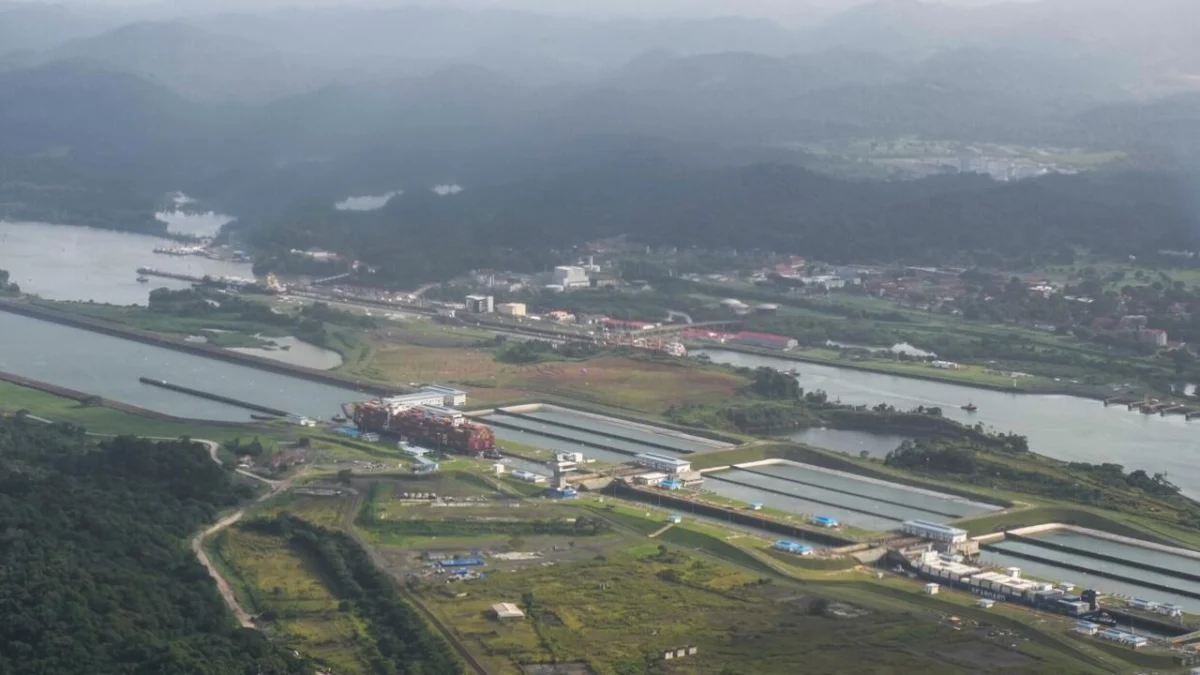
The Panama Canal, one of the most vital arteries of global commerce, is facing an unprecedented operational crisis. As the relentless grip of an intensifying El Niño weather pattern parches the region, the Panama Canal Authority (ACP) has announced a significant, multi-stage reduction in daily vessel transits. This strategic move, necessitated by critical water shortages, threatens to disrupt the delicate equilibrium of international supply chains that rely on the waterway to bridge the Atlantic and Pacific oceans.
For the global shipping industry, the announcement is a sobering reminder of the vulnerability of critical infrastructure to the volatile shifts of a changing climate. As water levels in the canal’s life-sustaining reservoirs plummet, the bottleneck is forcing stakeholders to recalibrate their expectations for maritime logistics in the coming months.
The Core Facts: A Systematic Squeeze on Maritime Traffic
The Panama Canal Authority has confirmed that beginning September 3, 2026, the number of daily vessel transits will be restricted to 34. This cap will be further tightened to 32 ships per day starting September 15. These figures represent a notable decrease from the current operational capacity of 36 ships per day.
The canal operates on a complex system of locks that rely entirely on the gravity-fed freshwater from two artificial lakes—Gatun and Alajuela. Unlike many other maritime shortcuts, the Panama Canal is not a sea-level passage; it is an inland waterway that requires millions of gallons of water to lift ships over the continental divide. When rainfall in the watershed drops below historical averages, the volume of water available to facilitate these transit cycles is severely compromised.
According to the ACP, the decision to throttle traffic is a proactive measure intended to protect the long-term sustainability of the waterway. By reducing the frequency of lock operations, the authority aims to preserve the remaining water reserves for essential transit needs, ensuring that the canal remains operational even as the drought persists.
Chronology of the Crisis: From Warning Signs to Policy Shift
The current reduction is the culmination of a months-long environmental deterioration. While the Panama Canal is accustomed to seasonal fluctuations, the 2026 iteration of El Niño has proven to be an outlier in both intensity and duration.
- Early 2026: Meteorological forecasts begin to signal the development of a strong El Niño event, characterized by the warming of surface temperatures in the central and eastern equatorial Pacific.
- May–July 2026: Rainfall in the Panama Canal watershed falls significantly below forecasted levels. The Authority begins monitoring water levels in Gatun Lake with increasing alarm.
- August 2026: As drought conditions intensify across Central America, the ACP implements initial water conservation measures, including a reduction in the maximum draft—the depth a ship can submerge—for the largest vessels (Neopanamax ships). This forces operators to carry lighter loads to prevent grounding.
- August 20, 2026: Following a week of sustained low water levels, the ACP officially announces the tiered reduction schedule for September, confirming the limit will drop to 32 transits daily by mid-month.
- Current Status: As of late August, the region remains under a severe drought alert, with neighboring nations like Honduras also reporting that nearly 80 percent of their territory is suffering from critical water shortages linked to the same climatic phenomenon.
Supporting Data: Why the Canal Matters
To understand the severity of these restrictions, one must look at the sheer volume of trade passing through this 50-mile stretch of engineered geography.
- Global Reach: The Panama Canal facilitates approximately 5 percent of total global maritime trade. It is the primary shortcut for goods moving from East Asia to the U.S. East Coast.
- U.S. Dependency: Roughly 40 percent of all container traffic entering the United States travels through the canal. For the American retail and manufacturing sectors, a slowdown in the canal is functionally equivalent to a slowdown in domestic inventory availability.
- The Watershed Reality: The canal requires approximately 50 million gallons of water per transit. Because the system relies on freshwater lakes, it is highly sensitive to regional precipitation. When the rain stops, the throughput stops.
The economic implications of a 10–12 percent reduction in transit capacity are profound. Shipping lines that cannot secure a transit slot—or are forced to reduce their cargo weight due to draft restrictions—must choose between waiting in a growing backlog of vessels or diverting to longer, more expensive routes, such as navigating around Cape Horn or through the Suez Canal, both of which add weeks of transit time and significant fuel costs.
Official Responses and Strategic Adjustments
The Panama Canal Authority has framed these restrictions as a "necessary sacrifice" for the sake of long-term viability. The agency’s leadership emphasizes that the water supply must be managed not just for the immediate term, but to ensure that the canal remains a reliable partner for global commerce throughout the duration of the current El Niño cycle.

"We are managing the reality of the watershed," an ACP spokesperson noted in a recent briefing. "Lower-than-forecast rainfall leaves us with no choice but to adjust our transit capacity to safeguard the sustainability of our water resources."
In addition to reducing the number of daily transits, the Authority has been aggressively investing in water management technologies and exploring the feasibility of new reservoirs to augment the existing water supply. However, these are long-term infrastructural projects. For the immediate future, the Authority is relying on operational agility:
- Draft Restrictions: Limiting the "depth" of ships allows for easier navigation through shallower waters, though it directly impacts the profitability of each individual ship’s voyage.
- Prioritization: The ACP has implemented a bidding system for transit slots, which allows high-value cargo vessels to pay a premium to jump the queue, though this creates a "two-tier" system that disproportionately affects smaller carriers.
Implications: A New Era of Climate-Informed Logistics
The ongoing drought in Panama is a harbinger of a broader transformation in global logistics. As climate change increases the frequency and severity of extreme weather events, the vulnerability of "chokepoints" like the Panama Canal becomes a central risk factor for multinational corporations.
1. Supply Chain Inflation
The most immediate impact will be on the cost of goods. With fewer slots available, transit fees are expected to rise. Furthermore, the necessity for ships to carry less cargo (due to draft limits) means that the cost per container increases. These costs are almost invariably passed on to the end consumer, contributing to inflationary pressures on imported goods in the U.S. and beyond.
2. The Shift to "Just-in-Case" Inventory
For years, companies have relied on "just-in-time" delivery models. The volatility of the Panama Canal, combined with the unpredictability of climate-driven events, is forcing a shift toward "just-in-case" inventory. Firms are now stockpiling goods in domestic warehouses to buffer against potential delays at the canal, a trend that changes the capital allocation strategies of major retailers.
3. Long-Term Infrastructure Resilience
The situation in Panama is pushing the global maritime community to consider alternative transit routes. While there is no true substitute for the Panama Canal, there is renewed interest in intermodal transport—the ability to offload goods at a Pacific port, move them by rail across a landmass, and reload them onto ships on the Atlantic side.
4. Climate Diplomacy
The drought also highlights the interconnectedness of regional climate stability. As El Niño continues to impact Central America, the regional response—ranging from agricultural water use to water management in the canal—will require a level of international cooperation that has not previously been tested. The Panama Canal Authority is effectively in a race against the atmosphere, managing a resource that is increasingly precious and unpredictable.
Conclusion: A Fragile Future
As the world moves into the latter half of 2026, all eyes remain on the Gatun Lake water gauges. The upcoming reduction to 32 ships per day is not merely a logistical adjustment; it is a signal of the new normal. The Panama Canal, once considered an ironclad guarantee of global trade, is now subject to the whims of a warming Pacific. For the global economy, the lesson is clear: the most sophisticated maritime infrastructure in the world is only as strong as the rain that falls upon its watershed.