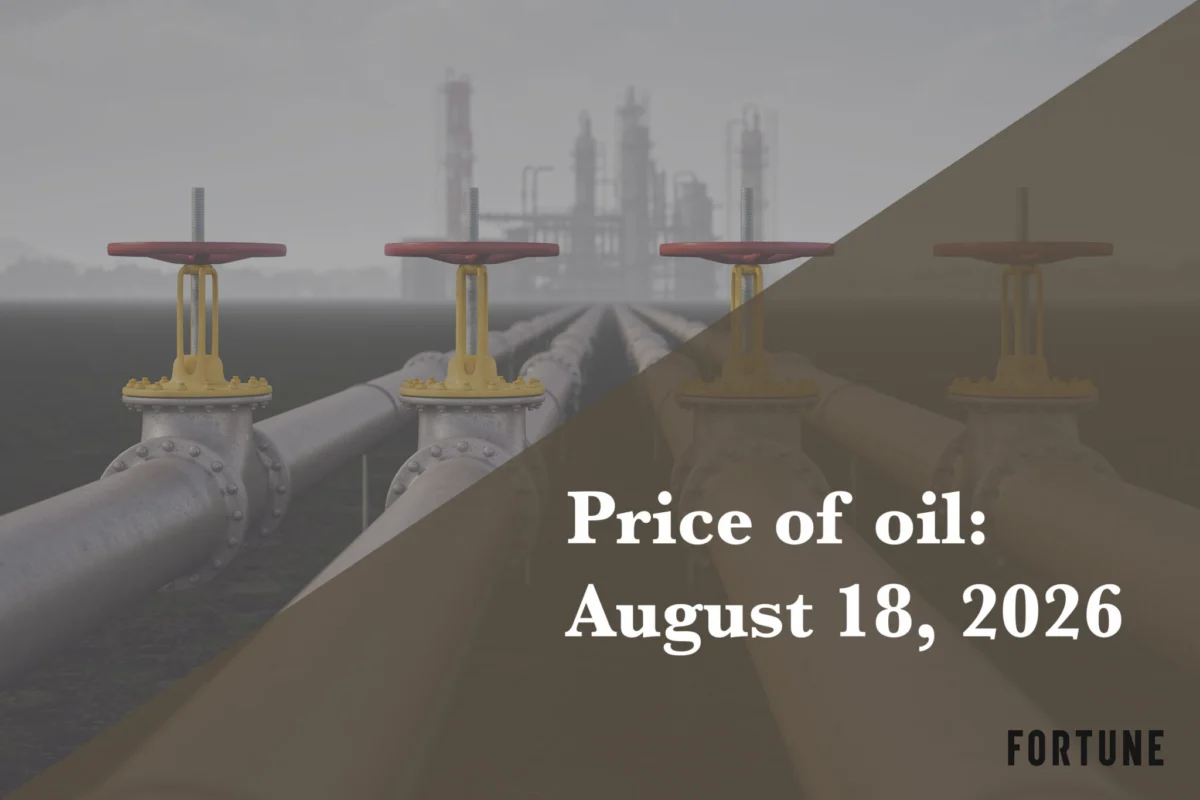
The global energy landscape is facing a period of renewed tension as crude oil prices continue their upward trajectory, signaling potential headwinds for the global economy. As of 6:45 a.m. Eastern Time, Brent crude—the international benchmark for oil—is trading at $92.42 per barrel. This represents an 89-cent increase from the previous session and, more significantly, a staggering $25.68 increase compared to the same period last year.
This price action is not merely a statistical fluctuation; it is a reflection of a complex tapestry of geopolitical instability, shifting domestic policies in the United States, and the delicate balance of global supply and demand. As the world watches the ticker, the implications for inflation, consumer spending, and international relations are becoming increasingly profound.
Main Facts: The Current State of the Oil Market
The current price of $92.42 per barrel for Brent crude places the market in a "bullish" posture that has not been seen with such consistency in recent months. While the West Texas Intermediate (WTI) remains the primary benchmark for U.S.-produced oil, Brent crude serves as the price floor for approximately two-thirds of the world’s internationally traded oil. Its current elevation suggests that the global appetite for energy is outpacing the immediate availability of supply.
Several core factors are driving this current price point:
- Supply Constraints: Ongoing production cuts from OPEC+ members have tightened the market, creating a floor for prices that prevents significant downward movement.
- Geopolitical Risk Premium: Tensions in Eastern Europe and the Middle East continue to add a "risk premium" to every barrel. Traders are pricing in the possibility of sudden supply disruptions.
- Economic Resilience: Despite fears of a global recession, demand in major economies—particularly in the U.S. and emerging markets in Asia—has remained surprisingly robust, preventing the "demand destruction" that high prices typically trigger.
Chronology: From Pandemic Lows to a $92 Reality
To understand the gravity of the current $92.42 price point, one must look at the trajectory of the market over the last several years. The oil market has moved from a state of unprecedented surplus to one of strategic scarcity.
The 2020 Collapse and Recovery
In early 2020, the COVID-19 pandemic caused a near-total halt in global travel and industrial activity. Oil prices famously dipped into negative territory for a brief period as storage capacity vanished. This led to a massive divestment in new drilling projects—a decision that is still haunting the market today, as supply cannot be "turned back on" instantly.
The 2022 Geopolitical Pivot
Following the invasion of Ukraine, oil prices spiked to over $120 per barrel. This period marked a fundamental shift in energy security. Western nations began a rapid decoupling from Russian energy, leading to a scramble for alternative sources and a reliance on the U.S. Strategic Petroleum Reserve (SPR) to stabilize domestic prices.
The 2023-2024 Stabilization and Recent Surge
Through much of late 2023, prices hovered in the $70 to $80 range. However, the last 12 months have seen a steady climb. The $25.68 year-over-year increase mentioned in today’s data represents a nearly 38% rise in the cost of the world’s most vital commodity. This steady escalation suggests that the market is no longer reacting to temporary shocks but is instead adjusting to a "new normal" of higher costs and lower spare capacity.
Supporting Data: The Mechanics of Pricing and the "Rockets and Feathers" Phenomenon
The relationship between the price of a barrel of oil and the price of a gallon of gasoline at the pump is a source of constant frustration for consumers. While crude oil is the primary driver of gasoline prices—often accounting for more than 50% of the cost—the translation is rarely 1:1.
The Components of a Gallon of Gas
When a consumer pays for fuel, they are financing a multi-stage industrial process:
- Crude Oil (50-60%): The raw material.
- Refining Costs (15-20%): The process of turning "sour" or "sweet" crude into usable gasoline, diesel, and jet fuel.
- Distribution and Marketing (10-15%): Transporting the fuel via pipeline, truck, and rail to local stations.
- Taxes (10-15%): Federal and state excise taxes that remain relatively static regardless of oil prices.
The "Rockets and Feathers" Theory
Economists often point to the "Rockets and Feathers" phenomenon to explain why gas prices seem unfair. When crude oil prices spike, retailers at the pump tend to raise prices immediately (like a rocket) to protect their margins and cover the replacement cost of their next shipment. Conversely, when oil prices drop, pump prices tend to drift down slowly (like a feather). This lag is often due to the fact that stations are still selling inventory purchased at the previous, higher price point.
Benchmark Comparison: Brent vs. WTI
While the U.S. produces record amounts of oil, the Brent benchmark is increasingly used as the primary reference for the U.S. Energy Information Administration (EIA).
- Brent Crude: Extracted from the North Sea, it is waterborne and easily shipped globally. It is the gold standard for international pricing.
- WTI (West Texas Intermediate): Sourced from U.S. landlocked wells, primarily in the Permian Basin. While high quality, it often trades at a discount to Brent due to the costs associated with transporting it to coastal ports for export.
Official Responses: Policy Shifts and the Strategic Reserve
Governments have two primary levers to combat rising oil prices: domestic production policy and the utilization of strategic reserves. Both are currently at the center of a heated political debate in the United States.
The Strategic Petroleum Reserve (SPR)
The U.S. Strategic Petroleum Reserve is a series of underground salt caverns in Louisiana and Texas designed to hold hundreds of millions of barrels of oil. Originally created after the 1973 oil embargo, its purpose is to protect national security during catastrophic events.
In recent years, the reserve has been used as an economic tool to cushion the blow of supply shocks. However, with the reserve currently at its lowest levels in decades following significant releases in 2022, the government’s ability to intervene in the current $92 market is limited. The focus has now shifted toward "refilling" the reserve, which ironically adds a layer of consistent demand to the market, keeping prices elevated.
The Shift in Arctic Drilling Policy
A significant development in official policy occurred with the transition of administrations. In 2025, the Trump administration moved to reopen more than 1.5 million acres in the Coastal Plain of the Arctic National Wildlife Refuge (ANWR) for oil and gas leasing. This was a direct reversal of the Biden administration’s policy, which had sought to limit drilling in the Arctic due to environmental concerns.
Proponents of the move argue that tapping into Arctic reserves—and the vast U.S. shale deposits—is essential for long-term price stability. They contend that increased domestic supply reduces reliance on volatile foreign regimes. Critics, however, point out that drilling in the Arctic is a long-term project that will take years, if not a decade, to produce actual barrels, offering little relief to the current $92 price tag.
Implications: Inflation, Logistics, and the Global Economy
The rise of Brent crude to $92.42 has ripple effects that extend far beyond the gas station. Oil is not just a fuel; it is a foundational input for almost every sector of the modern economy.
The "Hidden Tax" of Energy Inflation
High oil prices act as a regressive tax on consumers. When energy costs rise, disposable income shrinks. However, the more insidious effect is "cost-push" inflation.
- Agriculture: Farmers face higher costs for diesel to run tractors and petroleum-based fertilizers. This inevitably leads to higher grocery prices.
- Logistics: Shipping companies and airlines pass on fuel surcharges to customers. Whether it is a package delivered to a doorstep or a shipping container coming from overseas, the cost of "getting it there" is rising.
The Interconnectivity with Natural Gas
While oil and natural gas are different commodities, they are intrinsically linked. In industrial settings, some facilities have "dual-fuel" capabilities. When oil becomes prohibitively expensive, these industries may switch to natural gas for heating or power generation. This sudden shift in demand can cause natural gas prices to spike, leading to higher utility bills for residential consumers during the winter months.
The Shift Toward Renewables
Paradoxically, high oil prices often accelerate the transition to renewable energy. As the "pain at the pump" increases, the total cost of ownership for electric vehicles (EVs) becomes more attractive. Similarly, corporations looking to hedge against volatile energy markets are increasingly investing in their own solar and wind capabilities to ensure price certainty.
Conclusion
The current price of $92.42 per barrel represents a critical juncture for the global economy. It is a price point that tests the resilience of the post-pandemic recovery and challenges the energy policies of the world’s largest producers. Whether this is a temporary peak or a stepping stone to $100 per barrel remains to be seen, but the data suggests that for the foreseeable future, energy will remain a primary driver of economic and geopolitical strategy. For the average consumer, the message is clear: the era of cheap energy has, for now, been replaced by a period of costly volatility.