
In the landscape of modern blockbuster cinema, few stars possess the enduring gravity of Tom Cruise. Since the mid-1980s, Cruise has successfully transitioned from a teen idol in The Outsiders to a dramatic powerhouse in A Few Good Men, eventually evolving into the world’s most committed daredevil-action star. While his Mission: Impossible franchise continues to set the gold standard for practical stunt work—frequently pushing the boundaries of what is physically possible—there exists a unique entry in his filmography that demands re-evaluation.
2014’s Edge of Tomorrow (often marketed as Live Die Repeat) is a rare anomaly: a high-concept, intelligent, and fiercely kinetic science-fiction film that challenges the traditional "Cruise persona." Despite a lukewarm box office reception of $381 million, the film has undergone a massive cultural resurgence. As of August 2026, the film is surging to the top of the streaming charts on Netflix in the United Kingdom, proving that quality, eventually, finds its audience.
The Premise: A Hero Out of His Element
At the heart of Edge of Tomorrow is a subversive narrative hook. Directed by Doug Liman, the film centers on Major William Cage, a public relations officer with no combat experience. When he is unceremoniously stripped of his rank and dropped onto a beachhead during a chaotic, D-Day-style invasion of an alien-infested France, he is predictably slaughtered within minutes.
However, Cage is exposed to the blood of an "Alpha" Mimic—a specialized alien entity—which triggers a temporal anomaly. Cage becomes trapped in a time loop, forced to relive the same brutal day of combat every time he dies.
Unlike the Ethan Hunt character, who seems to exist in a state of invincibility, Major Cage is defined by his failures. The film’s brilliance lies in its structure; it acts as a video game level, with Cage "respawning" repeatedly, learning the patterns of the enemy, and refining his skills through painful, iterative trial and error. It is a masterclass in pacing, stripping away the hero-worship often associated with Cruise and replacing it with a relatable, albeit frantic, desperation.

Chronology: From Light Novel to Cult Phenomenon
The lineage of Edge of Tomorrow is as complex as its plot. To understand the film’s unique DNA, one must look at its origins:
- 2004: Hiroshi Sakurazaka publishes the Japanese light novel All You Need Is Kill, featuring illustrations by Yoshitoshi Abe. The novel introduces the core concept of a soldier trapped in a time loop while fighting extraterrestrial invaders.
- 2014: Warner Bros. releases the big-budget adaptation, Edge of Tomorrow. Despite critical acclaim (holding a 91% rating on Rotten Tomatoes), the film struggles to find a massive audience during its initial theatrical run, largely due to confusing marketing and a crowded summer slate.
- 2014: Simultaneously, a manga adaptation illustrated by Death Note artist Takeshi Obata is released, further cementing the story’s reputation in global pop culture.
- 2024: Tom Cruise enters into a significant development deal with Warner Bros. Discovery, reigniting public speculation regarding a potential sequel to the cult classic.
- 2026: The film experiences a massive streaming spike, dominating Netflix’s Top 10 lists and sparking fresh discourse on its status as one of the most underrated science-fiction films of the 21st century.
- 2026: A new, stylistically distinct anime adaptation of the original light novel is released, offering a fresh, visually vibrant interpretation of Sakurazaka’s source material, contrasting sharply with the gritty, monochromatic aesthetic of the 2014 film.
Supporting Data: The Mechanics of Success
The film’s endurance can be measured through more than just nostalgia. From a production standpoint, the film represents a high-water mark for CGI integration and editorial timing.
The "Mimics"—the alien adversaries—were designed to move with a fluid, liquid-like chaos that challenged visual effects houses at the time. Unlike the static or lumbering monsters of other sci-fi epics, the Mimics in Edge of Tomorrow are terrifying because they are unpredictable.
Furthermore, the editing of the film is a technical marvel. To convey the repetitive nature of the time loop without boring the audience, editor James Herbert utilized quick, sharp cuts that gradually evolve as Cage becomes more competent. By the second act, the film skips over the "death scenes" that once took minutes, showing Cage navigating the battlefield with a balletic precision that mirrors the audience’s own growing familiarity with the sequence.
Official Responses and The "Sequel" Question
For over a decade, fans, critics, and the talent involved have been vocal about their desire for a follow-up. Director Doug Liman has frequently expressed his enthusiasm for a return to the world of Edge of Tomorrow, and Emily Blunt—who played the indomitable Rita Vrataski—has consistently cited the film as a highlight of her career.

However, the "sequel" remains stuck in development limbo. The primary obstacle has always been the complexity of the script and the schedules of its leads. When Tom Cruise signed his production deal with Warner Bros. in 2024, reports surfaced that the studio was eager to leverage its existing IP. Sources indicated that a sequel was among the topics discussed, yet no official greenlight has been issued.
The reality of the industry suggests that while the film has a massive cult following, the box office return of the original remains the primary deterrent for studio executives. Nevertheless, the recent streaming performance on Netflix may provide the necessary leverage for a reconsideration.
Implications: The Legacy of ‘Edge of Tomorrow’
Why does this movie resonate so strongly today? The implications of Edge of Tomorrow on the genre are profound.
- The Anti-Hero Evolution: It proved that Tom Cruise could play a character who is initially cowardly and incompetent, and that audiences would embrace the journey of growth rather than demanding a pre-formed "superman."
- Narrative Innovation: It popularized the "video game logic" in film without feeling gimmicky. The film effectively teaches the audience the rules of the world alongside the protagonist, a narrative device that has since been emulated in films like Boss Level and Palm Springs.
- Genre Diversification: The success of the 2026 anime adaptation alongside the resurgence of the 2014 film shows that the intellectual property has legs across different mediums. It highlights a growing appetite for stories that prioritize conceptual depth over mindless spectacle.
A Comparative Look: The 2026 Anime Adaptation
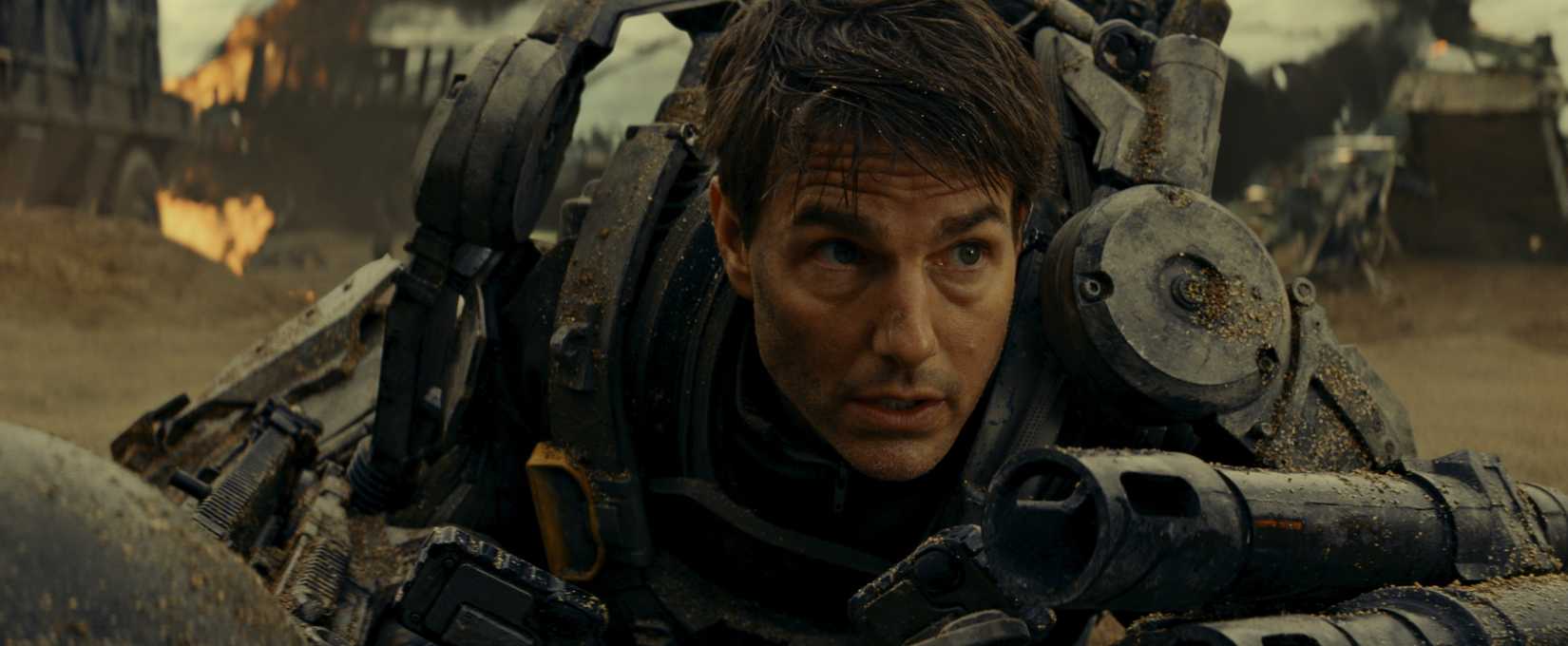
It is essential to acknowledge the 2026 anime adaptation of All You Need Is Kill, which provides a necessary contrast to the Hollywood version. While the 2014 film opted for a grounded, war-movie aesthetic—all grays, mud, and heavy metal armor—the anime leans into the vibrant, high-contrast visual language of its medium.
Where the Cruise film focuses on the psychological toll of the loop, the anime emphasizes the kinetic, stylized nature of the combat. For fans of the original light novel, the anime serves as a more faithful translation of the source material’s tone, while the Cruise film remains a highly successful reimagining that prioritized character development over strict adherence to the book’s plot.
Final Verdict: Why You Should Watch It Now
If you are an American viewer who has not yet revisited this film, or a newcomer curious about the hype, the barriers to entry are low. While the film is currently dominating streaming charts in the U.K., it remains widely available for rental and purchase on major platforms such as Amazon Prime and Apple TV.
Edge of Tomorrow is more than just a sci-fi action movie; it is a film about the nature of persistence. In an era where blockbusters are often criticized for their bloated runtimes and predictable beats, Edge of Tomorrow remains lean, mean, and intellectually stimulating. It is a testament to the fact that sometimes, even in a world of repetitive, formulaic cinema, you can keep hitting "reset" until you get it just right.