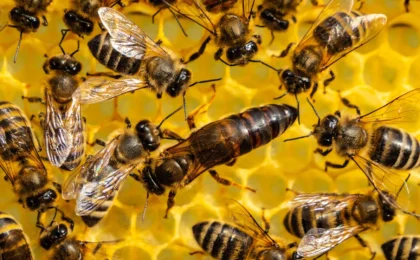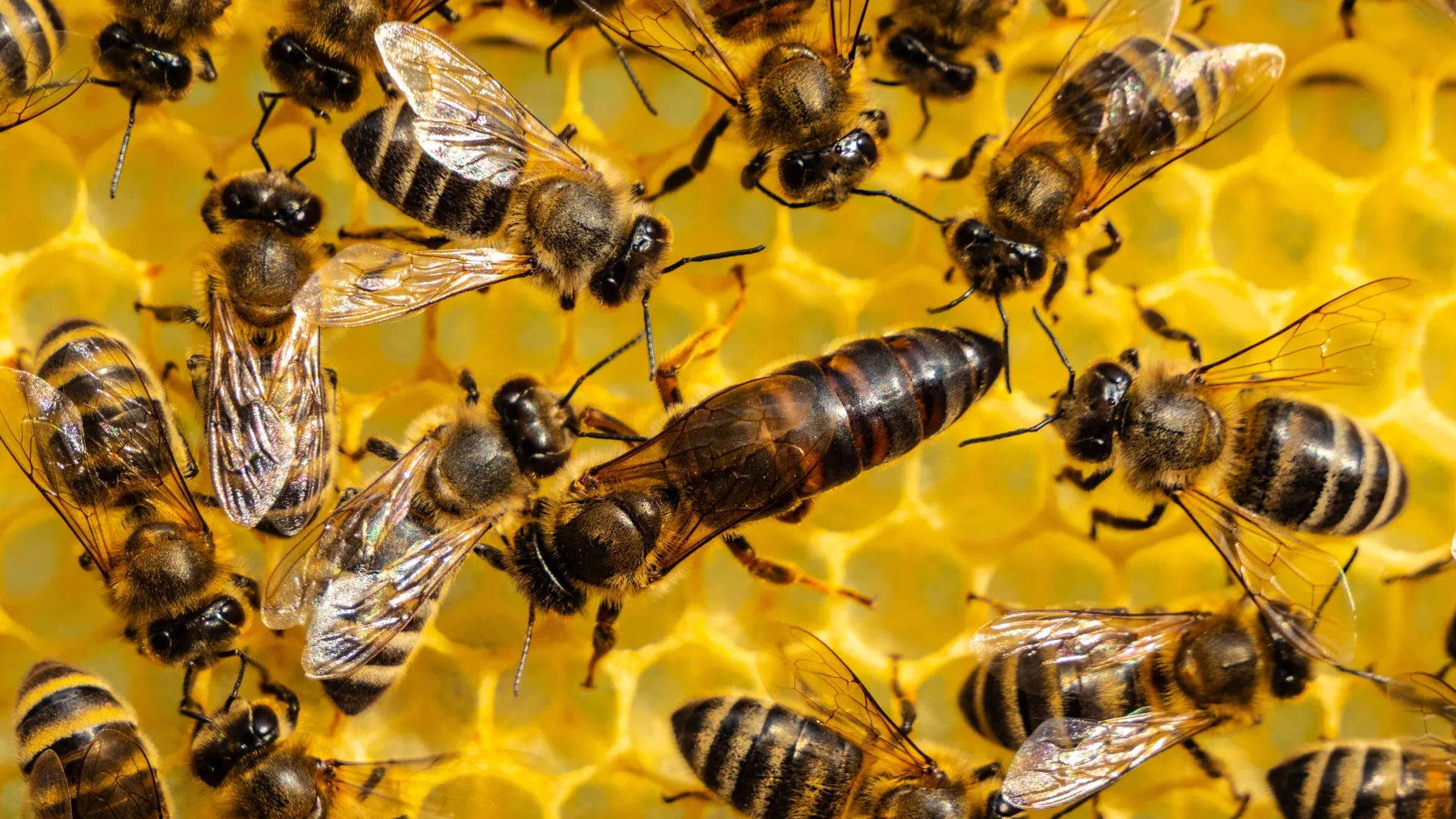
For over six decades, a single, elegant theory has dominated the study of social evolution. It is a concept so pervasive that it has become a staple of undergraduate biology textbooks: the idea that a peculiar genetic quirk—haplodiploidy—is the "smoking gun" behind the rise of the world’s most sophisticated animal societies. In these colonies, such as those of ants, bees, and wasps, reproduction is sacrificed by the masses to serve a queen, creating a super-organism defined by self-sacrifice and rigid labor divisions.
However, a landmark study from Arizona State University (ASU), published in the journal Current Biology, has pulled the thread on this long-standing hypothesis. By analyzing data from nearly 69,000 insect species, researchers have concluded that the link between genetics and social complexity is largely an evolutionary illusion, localized to a specific branch of the tree of life rather than a universal rule of nature.
The Foundations of the Haplodiploidy Hypothesis
To understand the magnitude of this discovery, one must first understand the "Haplodiploidy Hypothesis." In the mid-20th century, evolutionary biologists were puzzled by the origins of eusociality—the highest level of organization in animal society, characterized by overlapping generations, cooperative brood care, and a permanent division of labor between reproductive "queens" and non-reproductive "workers."
The primary suspects were the Hymenoptera: ants, bees, and wasps. These insects share a unique sex-determination system. Females are diploid (having two sets of chromosomes), while males are haploid (having only one set, developing from unfertilized eggs). This creates a strange genetic asymmetry: sisters are more closely related to each other (sharing 75% of their genes) than they would be to their own potential offspring (sharing only 50%).
The theoretical leap, proposed by pioneers in the field, was that this genetic relatedness incentivized "altruism." According to this logic, a female insect could pass on more of her genes by helping her mother raise sisters than by reproducing herself. It was a beautiful, mathematical explanation for the rise of the ant hill and the beehive. Yet, for 60 years, this idea remained largely theoretical—a popular textbook explanation that had never been subjected to a rigorous, large-scale empirical test across the diversity of the insect world.
A Chronology of Scientific Inquiry
The journey toward this current revelation has been a slow transition from theoretical modeling to big-data empiricism.
- The 1960s–1980s: The dominance of kin selection theory. During this era, the haplodiploidy hypothesis gained immense traction. It became the default explanation for why ants, bees, and wasps seemed to "go eusocial" so much more often than other insect groups.
- The 1990s–2000s: The rise of molecular phylogenetics. As genetic sequencing became more accessible, scientists began to map the actual relationships between species. Doubts began to emerge as researchers noted that eusociality also appeared in groups that did not use haplodiploidy, such as termites (which are diploid) and certain beetles.
- The 2010s: The "Big Data" revolution. Researchers began to synthesize massive databases of insect behavior and life history. It became clear that a formal, comparative test was needed to see if the statistical correlation between haplodiploidy and eusociality held up when viewed through the lens of evolutionary history.
- 2024: The ASU Study. Lead author Sachin Suresh and senior author Timothy Linksvayer leveraged two of the largest insect family trees ever constructed, encompassing nearly 69,000 species, to finally put the 60-year-old hypothesis to the ultimate test.
Supporting Data: The Collapse of the Correlation
The methodology employed by the ASU team was designed to avoid the pitfalls of previous, smaller-scale studies. Suresh and Linksvayer combined information on social behavior and reproductive systems across the breadth of insect diversity.
Initially, the researchers observed the same pattern that had fueled the hypothesis for decades: eusociality did indeed appear more frequently in haplodiploid insects. However, the study’s power lay in its ability to account for "phylogenetic signal"—the fact that species closely related to one another share traits simply because they share a common ancestor, not because of a specific evolutionary pressure.
When the researchers isolated the "aculeate Hymenoptera"—the group that includes stinging wasps, bees, and ants—they discovered that this single lineage was responsible for almost the entire statistical pattern. Once this group was accounted for, the correlation vanished. Outside of this specific branch, haplodiploid insects were no more likely to evolve eusociality than their diploid counterparts.
"When we formally tested it, we found there is no real association between the genetic determination system and eusociality," said Sachin Suresh. "It has more to do with environmental factors and the life-history traits of insects."
Official Perspectives: Shifting the Paradigm
The implications of this research are profound. By demonstrating that the "genetic shortcut" to altruism is not a universal driver, the study forces biologists to look elsewhere for the origins of complex societies.
Timothy Linksvayer, the senior author of the study, notes that the focus of the field must now shift toward the ecological and life-history conditions that facilitate cooperation. "We are seeing that the repeated emergence of complex societies is likely driven by traits specific to certain groups, rather than a single, sweeping genetic rule," the team noted in their report.
The scientific community has begun to react to these findings with a mix of surprise and relief. For decades, the field of social evolution has been somewhat stifled by the "haplodiploidy-as-cause" narrative. By clearing the path of this long-standing assumption, the ASU researchers have effectively opened the door for new, more nuanced theories.
Broader Implications: The "Stinger" Theory and Beyond
If genetics isn’t the primary engine of sociality, what is? The ASU study suggests that the answer lies in the specific biological toolkit of the aculeate Hymenoptera.
One of the most compelling alternatives currently under investigation is the "stinger" or "nesting" hypothesis. The researchers point out that features such as the evolution of a stinger, specialized nest-building behaviors, and long-term parental care provided the necessary "pre-adaptations" for eusociality. If an insect is already hardwired to protect a nest and defend it with a stinger, the transition to living in a cooperative, defended colony becomes a much shorter evolutionary step than it would be for a beetle or a butterfly.
This suggests that eusociality is not a "genetic accident" but a result of specific environmental pressures interacting with physical traits. It highlights the importance of life-history—the way an organism grows, reproduces, and interacts with its habitat.
Furthermore, this study stands as a testament to the power of modern comparative biology. By revisiting a 60-year-old hypothesis with a dataset of 69,000 species, the ASU team has demonstrated how large-scale data can challenge even the most entrenched scientific dogmas. It is a reminder that in evolutionary biology, as in any field, the most "beautiful" theories must always bow to the cold, hard data of the fossil and genetic record.
Conclusion
The debate over the origins of eusociality is far from over, but the parameters of the conversation have fundamentally shifted. We can no longer rely on the convenience of the haplodiploidy hypothesis to explain why the world’s most complex insect societies exist. Instead, we must look to the specific, complex histories of the lineages that achieved them.
As the scientific community moves forward, the work of Suresh and Linksvayer will likely serve as a foundational piece of evidence, pushing researchers to explore the roles of ecology, behavior, and structural evolution in the rise of the social insect. The "super-organism" remains one of nature’s greatest achievements, but we are now beginning to see that its construction was not the result of a single genetic master key, but the outcome of a much more intricate and varied evolutionary path.