Introduction: A Bold New Direction for a Best-Seller
The automotive industry is currently witnessing a significant shift in design philosophy, and Hyundai—a brand known for its daring aesthetic experiments—is at the forefront of this evolution. As the South Korean automaker prepares for the next iteration of its flagship compact crossover, the Tucson, recent spy footage has offered a rare, near-complete glimpse into its future.
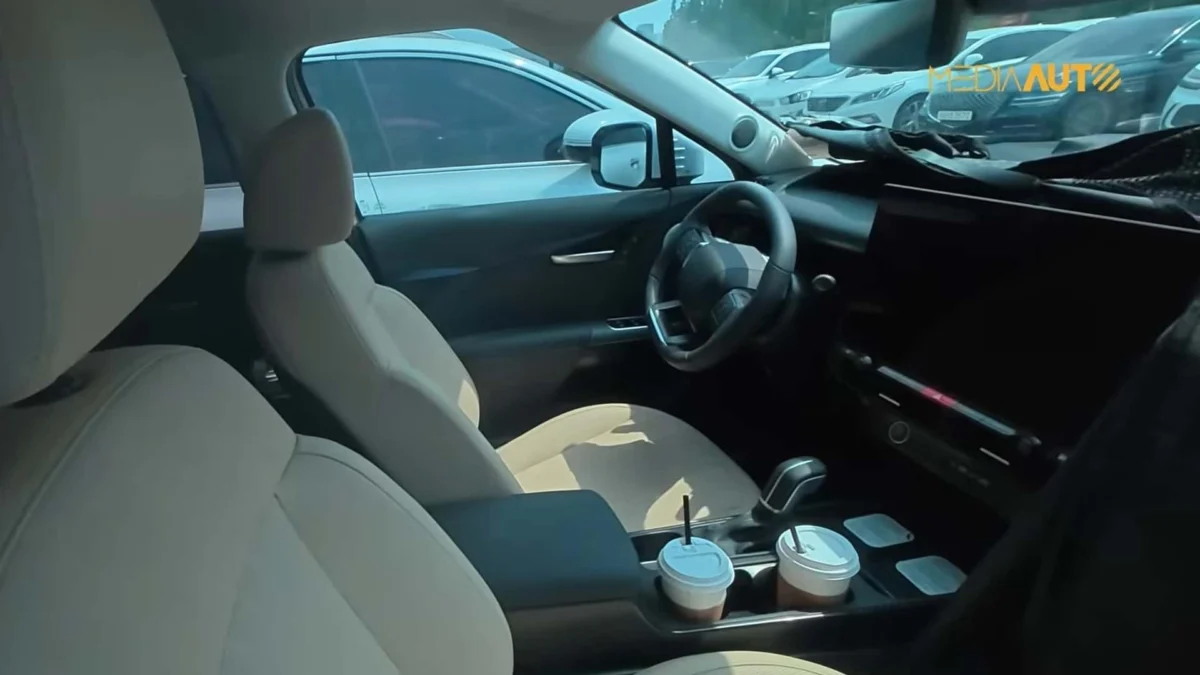
Captured by the YouTube channel mediaAUTO in what is believed to be the vicinity of Hyundai’s R&D headquarters in Namyang, South Korea, the camouflaged prototype reveals that the upcoming Tucson is not merely a refinement of its predecessor; it is a fundamental reimagining. While the exterior remains shrouded in protective vinyl, the interior has been left largely exposed, revealing a cabin that signals a dramatic leap in digital integration and physical ergonomics. With Hyundai officially confirming a Q4 2026 domestic launch during its Q2 earnings call, the stage is set for a vehicle that aims to challenge the boundaries of the compact SUV segment.
Chronology: From Concept to Production
The development of the new Tucson has been a carefully orchestrated process, reflecting Hyundai’s "Sensuous Sportiness" design language.
- Mid-2025: Initial prototypes begin testing on public roads in South Korea and Europe, heavily camouflaged to hide the evolution of the brand’s signature "Parametric Dynamics" lighting.
- Q2 2026 (Earnings Call): Hyundai executive leadership officially confirms that the next-generation Tucson will enter production and launch in the South Korean domestic market by the fourth quarter of 2026.
- Late 2026/Early 2027: The vehicle is expected to complete its domestic rollout, with global markets—including North America and Europe—anticipating a wider commercial release throughout the 2027 calendar year.
- Future Outlook: The lifecycle of this new model is expected to run through the end of the decade, with a mid-cycle refresh likely scheduled for 2029 or 2030.
Design and Architecture: The "Bloat" Phenomenon
One of the most striking elements observed in the recent spy footage is the undeniable increase in the vehicle’s footprint. When parked adjacent to a previous-generation Kia Sorento, the new Tucson appears to be encroaching upon mid-size territory.
The Growth Spurt
The current Tucson measures approximately 177 inches (4.5 meters) in length. Industry analysts have long noted that each generation of the Tucson has grown to accommodate more advanced safety systems and structural reinforcements. This latest model appears to be pushing that trend further, potentially closing the gap with the older Sorento models, which measured roughly 187 inches (4.8 meters). While some of this visual presence may be attributed to clever camouflage techniques designed to distort body lines, the elongated wheelbase and extended rear overhang suggest a clear intent to provide best-in-class interior volume.
Lighting and Exterior Aesthetics
Hyundai has become famous—and occasionally polarizing—for its bold lighting signatures. The prototype suggests that the new Tucson will continue this trend. Under the camouflage, we can discern unconventional cutouts that hint at a radical departure from the current "hidden" LED daytime running lights. Expect the production model to feature intricate, geometric light arrays that blend seamlessly into a re-sculpted grille, maintaining the brand’s identity as a disruptor in automotive aesthetics.
Inside the Cockpit: A Digital-First Experience
While the exterior is a game of hide-and-seek, the interior of the prototype was left almost entirely exposed, providing a masterclass in modern cabin design.
The Pleos Infotainment System
The centerpiece of the new interior is the massive "Pleos" infotainment display. It dominates the dashboard, appearing significantly larger than the 14.6-inch screens found in current iterations of the Elantra. By moving toward a tablet-style, landscape-oriented orientation, Hyundai is prioritizing screen real estate, likely to facilitate better integration with next-generation over-the-air (OTA) updates and advanced vehicle connectivity.
The "Old-School" Contrast
Perhaps the most surprising aspect of the interior is the retention of a traditional, chunky gear shifter on the center console. In an era where many manufacturers are shifting toward rotary dials, button-based selectors, or stalk-mounted shifters, Hyundai’s decision to keep a physical lever is a nod to traditional driver preference. This choice suggests a desire to provide a tactile, grounded driving experience, even as the digital environment becomes increasingly futuristic.
Comfort and Utility
Beyond the tech, the interior is designed for pragmatism. The prototype features:
- Dual Wireless Charging Pads: Recognizing the ubiquity of mobile devices, Hyundai has doubled down on connectivity.
- Enhanced Rear Legroom: The extended wheelbase translates directly into increased rear-seat space, a critical metric for the compact SUV demographic.
- Physical Controls: While the screen is massive, there is a clear reliance on physical switches beneath the display for climate and primary vehicle settings—a welcome move for those who find touch-only interfaces distracting while driving.
Official Responses and Strategic Implications
Hyundai’s strategy of aggressive redesigns has been highly successful. Despite facing stiff competition from a wave of high-tech, budget-friendly vehicles emerging from the Chinese market, Hyundai has managed to maintain, and in some cases grow, its market share.
Staying Ahead of the Competition
The decision to overhaul the Tucson so thoroughly—rather than settling for a mild evolutionary update—is a calculated risk. By pushing the Tucson toward the larger end of its segment, Hyundai is creating space below it for smaller crossovers (like the Kona or upcoming entry-level EVs) while positioning the Tucson as a legitimate, premium-feeling alternative to more expensive mid-size SUVs.
A Unified Front
The upcoming release of the next-generation Kia Sportage, slated for 2027, will mirror the Tucson’s growth trajectory. By leveraging the same modular platform and powertrain technologies, the Hyundai Motor Group is effectively saturating the market with two distinct but technically superior options that appeal to different buyer demographics.
Conclusion: Setting the Pace
As we look toward the 2027 global launch, it is clear that Hyundai is not resting on its laurels. The new Tucson represents a convergence of high-end technology, increased physical size, and a refusal to abandon the tactile feel of traditional controls. Whether this "bloat" in size will be received positively by consumers in dense urban environments remains to be seen, but the trend toward larger, more spacious, and more tech-heavy SUVs shows no signs of slowing down.
For now, the automotive world waits for the official unveiling in South Korea. If the leaked prototype is any indication, Hyundai is once again preparing to redefine the expectations of the compact crossover segment, proving that even as the industry shifts toward electrification and software-defined vehicles, the fundamentals of space, style, and utility remain paramount.
What are your thoughts on the new direction of the Hyundai Tucson? Does the increased size and massive infotainment screen appeal to you, or do you prefer the more compact, button-heavy layouts of the past? Share your thoughts with us in our community survey.