By Global News Desk
Updated: July 20, 2026
In a landmark address that has sent ripples of cautious optimism through the corridors of Westminster and the financial districts of the City of London, the British Prime Minister has unveiled a comprehensive, forward-looking agenda aimed at redefining the United Kingdom’s trajectory for the latter half of the decade. The speech, delivered amidst a backdrop of shifting geopolitical alliances and persistent domestic economic challenges, signaled a definitive pivot from the "crisis management" era that has characterized much of the early 2020s.
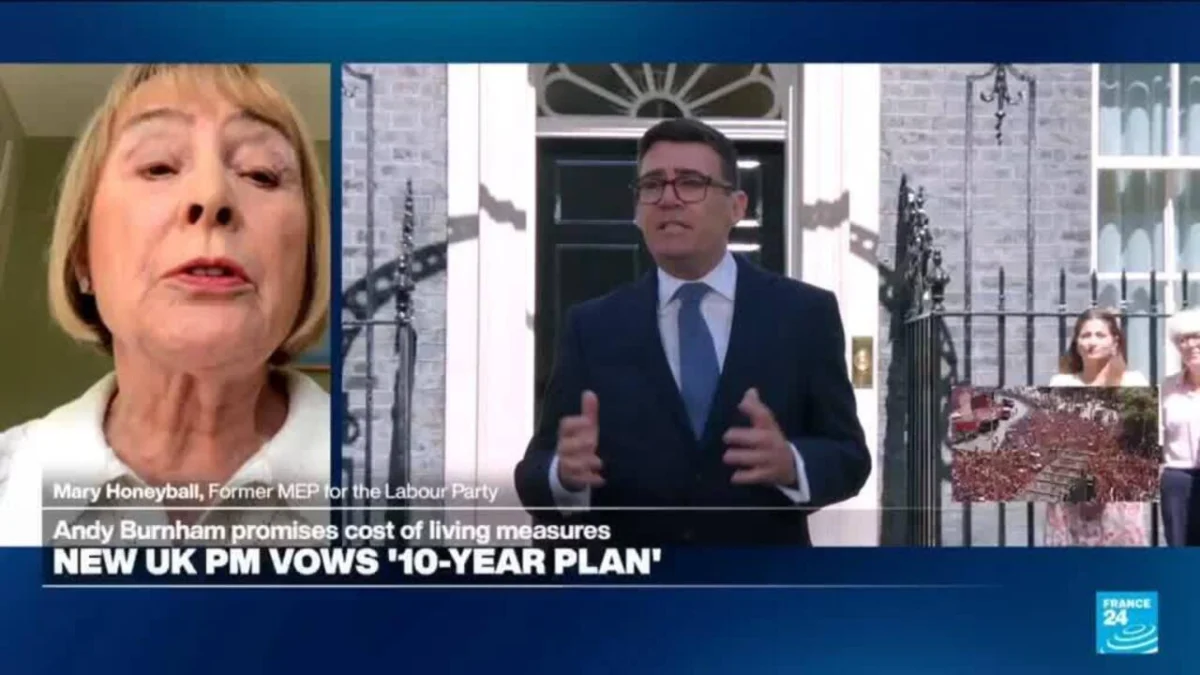
The Prime Minister, lauded by political analysts and observers—including figures such as Mary Honeyball—for a willingness to "inject some much-needed optimism" into the national discourse, has laid out a blueprint that prioritizes industrial modernization, green energy independence, and a renewed social contract designed to bridge the widening inequality gap.
Main Facts: The Pillars of the New Agenda
The Prime Minister’s vision, often described by insiders as the "Prosperity 2030" framework, rests on three primary pillars intended to stabilize the economy and foster long-term growth.
- The Industrial Renaissance Initiative: Central to the government’s plan is a massive injection of capital into advanced manufacturing and artificial intelligence. The government aims to position the UK as a global hub for the next generation of industrial technology, moving away from a reliance on service-sector growth to a more balanced, production-oriented model.
- Net-Zero Sovereignty: In response to volatile global energy prices, the Prime Minister announced an accelerated timeline for achieving energy autonomy. This involves not only offshore wind and solar expansion but a significant investment in Small Modular Reactors (SMRs) to ensure base-load power security.
- The "Social Lift" Program: Addressing the cost-of-living crisis remains a priority. The government has pledged to overhaul the national vocational training system, ensuring that the labor force is equipped for the digital economy, while simultaneously expanding affordable housing projects in the North and Midlands to rebalance regional wealth.
Chronology: The Road to the July 2026 Announcement
The path to this week’s announcement was paved by months of quiet deliberation and behind-the-scenes policy development.
- January 2026: Following a sluggish Q4, the Prime Minister initiates a "National Reset Commission," bringing together economists, labor union leaders, and industry titans to identify the primary inhibitors to growth.
- March 2026: The Commission publishes its interim report, highlighting the need for structural reform in the energy sector and a radical overhaul of apprenticeship programs.
- May 2026: Geopolitical tensions lead to a sharp spike in energy costs, reinforcing the urgency of the "Net-Zero Sovereignty" plan.
- June 2026: The Prime Minister tours key industrial sites, signaling a shift in government rhetoric toward direct support for domestic production.
- July 20, 2026: The Prime Minister delivers the keynote address, formally launching the multi-year strategy and signaling a departure from the austerity-tinged policies of previous administrations.
Supporting Data: Why the Shift?
The rationale behind this pivot is rooted in cold, hard data. According to the Office for National Statistics (ONS) and independent fiscal watchdogs, the UK has faced a "productivity plateau" for the past five years.
- Productivity Gap: UK labor productivity currently lags behind G7 peers by approximately 15%. The new industrial initiatives aim to close this gap by 2030 through AI integration and automation.
- Energy Exposure: Prior to the new policy, the UK relied on international markets for 40% of its heating and electricity needs. The government’s new target aims to reduce this reliance to under 15% by 2028.
- Regional Inequality: Data suggests that the London-centric economy has contributed to a 22% variance in median household income between the South East and the North. The "Social Lift" program aims to reduce this variance by 5% over the next four years through targeted infrastructure investment.
Official Responses: A Divided Reception
The reception to the Prime Minister’s address has been as diverse as the British political landscape itself.
The Government’s Perspective
Government ministers have characterized the plan as "a bold, necessary step toward a confident, sovereign Britain." Speaking on behalf of the administration, a senior spokesperson noted, "We are not just reacting to events; we are shaping them. The Prime Minister’s vision is about giving people the tools they need to thrive in a globalized, yet highly competitive, environment."
Political Opposition
The Opposition has been quick to criticize the financial viability of the plan. A shadow cabinet spokesperson remarked, "While the Prime Minister speaks of optimism, the public is living with the reality of inflation and debt. This is an expensive set of promises that lacks a credible funding mechanism. It is a vision built on credit cards rather than fiscal responsibility."

Public and Civil Society
Mary Honeyball and various social policy analysts have praised the Prime Minister’s change in tone. "For years, the UK has been trapped in a cycle of managing decline," Honeyball noted. "By introducing an optimistic, forward-looking narrative, the Prime Minister is inviting the country to participate in its own renewal, rather than merely enduring its difficulties."
Implications: What This Means for the Future
The implications of this policy shift are significant, affecting everything from international trade to the domestic political climate.
Economic Impact
If successful, the strategy could catalyze a period of sustained GDP growth. However, the risk remains that heavy government spending could exacerbate inflationary pressures in the short term. The Bank of England has signaled it will watch the rollout of these programs closely, maintaining a "neutral but vigilant" stance on interest rates.
Geopolitical Standing
By prioritizing energy autonomy and high-tech manufacturing, the UK is attempting to decouple its economic health from global supply chain shocks. This moves the UK toward a more "protectionist-lite" posture, which may cause friction with traditional trade partners but is designed to appeal to a domestic electorate concerned with stability and sovereignty.
The Social Contract
The success of the "Social Lift" program will ultimately define the Prime Minister’s legacy. If the government can demonstrate tangible improvements in living standards and regional prosperity, it could signal a long-term realignment of British politics. Conversely, if the initiatives fail to produce measurable results before the next general election, the government faces the prospect of losing the public’s hard-won confidence.
Conclusion: A Delicate Balance
The Prime Minister has clearly recognized that the mood of the nation has shifted. After years of post-pandemic uncertainty and the lingering effects of global inflation, the public is hungry for a coherent, positive vision. By betting on technology, energy independence, and regional development, the administration has set the stage for a high-stakes experiment in national renewal.
The coming months will be critical. As the legislative details of these proposals are debated in Parliament, the government will need to navigate not only the skepticism of its political rivals but also the complexities of a global economy that remains, in many ways, beyond its control. Whether this "optimism" translates into real-world change remains to be seen, but for now, the UK is embarking on a path that seeks to trade defensive stagnation for proactive, long-term growth.
As the political summer gives way to the autumn session, all eyes will be on Downing Street to see if this vision can be transformed into the tangible, day-to-day improvements that the British public so clearly demands.