The landscape of Silicon Valley was rocked late last week as Apple officially launched a high-profile trade secrets lawsuit against OpenAI. The litigation, which alleges a systematic effort by the AI powerhouse to poach talent and misappropriate proprietary information, marks a significant escalation in the rivalry between the two tech giants. As OpenAI prepares for a highly anticipated initial public offering (IPO), this legal entanglement threatens to disrupt not only its operational trajectory but its future as a player in the consumer hardware market.
The Core Allegations: A Pattern of Misconduct
At the heart of Apple’s complaint is the assertion that OpenAI has engaged in a calculated campaign to extract confidential information by targeting Apple’s current and former workforce. The lawsuit is not merely a dispute over talent acquisition; it is a direct challenge to the integrity of OpenAI’s expansion into hardware.
Most notably, Apple has specifically named Tang Tan, the former Apple executive who now serves as OpenAI’s chief hardware officer, in the filing. Apple alleges that the recruitment of high-level personnel like Tan was part of a broader strategy to bridge the gap between OpenAI’s software expertise and the specialized requirements of hardware development.
Apple’s legal team contends that this talent drain—now reportedly numbering more than 400 former Apple employees—has facilitated the unauthorized transfer of internal trade secrets. While both companies boast massive workforces, making this figure a small percentage of their total headcount, the quality and specialization of these individuals, particularly in hardware engineering, form the backbone of Apple’s accusation.
Chronology of the Conflict
The tension between the two firms has been simmering for months, punctuated by public statements and strategic shifts:
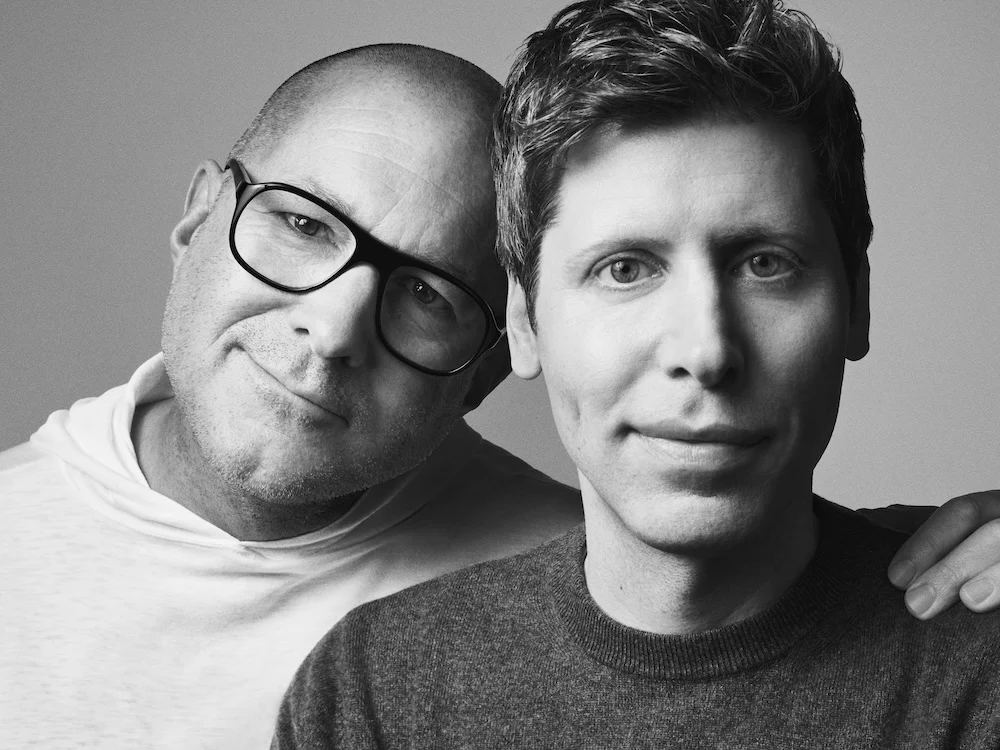
- Mid-2025: OpenAI begins signaling a move toward hardware, releasing cryptic videos featuring collaborations with legendary designer Jony Ive. The industry begins to speculate on a "post-smartphone" device.
- Early 2026: Reports surface that OpenAI has filed confidentially for an IPO, seeking to capitalize on the massive valuation of its LLM software.
- May 2026: OpenAI secures a significant courtroom victory against Elon Musk, successfully defending against claims regarding the company’s founding mission and governance.
- July 10, 2026: Apple files its trade secret lawsuit against OpenAI, alleging intellectual property theft and systematic poaching.
- July 14, 2026: OpenAI issues a formal response, categorically denying the merits of the allegations and signaling a willingness to defend itself in court.
The Hardware Ambition: A New Frontier
OpenAI’s pivot toward hardware is, by all accounts, an ambitious attempt to commoditize its AI models through proprietary devices. The company is reportedly working on a mobile smart speaker—a screenless, AI-powered device capable of ambient computing.
However, the hardware sector is notoriously unforgiving. Industry analysts note that for a company like OpenAI, which has thrived on the agility of software development, the supply chain, thermal management, and manufacturing rigors of hardware represent a massive "unknown." The involvement of Jony Ive’s team suggests a design-first philosophy, but Apple’s lawsuit threatens to turn that design process into a legal minefield.
During a recent discussion on TechCrunch’s Equity podcast, industry experts noted that the "always-listening" nature of these proposed devices raises significant privacy and social concerns. As Anthony Ha pointed out, if these devices become widespread, they could potentially record conversations in public spaces, necessitating a major renegotiation of social norms and consent in public life.
Official Responses and Legal Strategy
OpenAI’s response to the lawsuit has been one of defiance. In a brief statement following the filing, the company noted that it is "not aware of any evidence that this complaint has merit."
This posture suggests that OpenAI is prepared to leverage the confidence it gained during its successful litigation against Elon Musk. By securing a victory in that case, despite the public airing of "dirty laundry," OpenAI proved that it could weather the reputational storm of a trial. Whether this specific lawsuit against Apple carries the same weight, however, remains to be seen. Apple, known for its litigious protection of its ecosystem, rarely initiates such actions without substantial evidence and a clear strategic objective.
Implications for the Upcoming IPO
The most immediate casualty of this lawsuit could be the timeline and valuation of OpenAI’s IPO. With the company expected to go public as early as the end of this year or early 2027, the lawsuit introduces a significant "risk premium" for potential investors.
The Valuation Calculus
Investors typically value software companies based on recurring revenue and scalability. OpenAI’s current valuation is heavily tied to its software lead. By bringing hardware into the mix, OpenAI is attempting to increase its Total Addressable Market (TAM). However, if the hardware division is crippled by legal delays, injunctions, or the loss of key personnel due to the lawsuit, the projected growth story for the IPO becomes far less compelling.
Operational Delays
As noted by Equity host Sean O’Kane, even if the court does not issue a total restraining order, the process of discovery alone can grind a company’s product roadmap to a halt. "It’s going to cause some delays in what OpenAI is working on," O’Kane noted. "Which I’m sure was probably part of the reasoning behind Apple doing this. They don’t do this stuff willy nilly."
If OpenAI is forced to divert its executive attention away from product development and toward document preservation and depositions, the "first-mover advantage" in the AI-hardware space could evaporate.
The Broader Industry Context: Privacy and Ethics
Beyond the corporate theater, this lawsuit forces a conversation about the ethics of artificial intelligence in consumer devices. If OpenAI’s goal is to embed its models into the physical world, the burden of trust increases exponentially.
Apple’s brand is built on privacy and ecosystem control. By positioning itself as the victim of "misconduct," Apple is effectively signaling to consumers that its competitors may not prioritize user data security with the same rigor. For OpenAI, this creates a secondary PR challenge: they must prove not only that their hardware is innovative but that it is secure and ethically manufactured, free from the shadow of stolen trade secrets.
Conclusion: A Turning Point
The battle between Apple and OpenAI is a microcosm of the current tech era—a struggle between incumbents defending their walls and agile innovators attempting to scale the ramparts. Whether Apple is using the courts as a tool to stifle competition or as a legitimate guardian of its IP, the result is the same: the race to define the next generation of computing has become increasingly adversarial.
For now, all eyes remain on the courtroom. If OpenAI chooses to fight, it risks a long, expensive, and public battle that could rattle the nerves of institutional investors ahead of their public offering. If it settles, it may have to abandon its hardware ambitions, effectively admitting that the talent and technology it sought were too closely tied to the "Apple way."
Regardless of the outcome, the lawsuit has already achieved one of its likely goals: it has cast a long, dark shadow over the future of the AI-powered device, reminding the industry that in Silicon Valley, innovation is rarely just about the code—it’s about who owns the blueprints.