In a move that has sparked intense debate regarding digital sovereignty, proportionality, and the resilience of the open internet, the Indian government recently imposed a week-long block on the encrypted messaging platform Telegram. Ostensibly implemented to curb the proliferation of fraudulent exam papers ahead of the National Eligibility cum Entrance Test (NEET-UG)—the nation’s largest entrance examination—the restriction has inadvertently triggered a massive surge in the adoption of circumvention tools.
As millions of users found themselves locked out of their preferred communication hub, the country witnessed an unprecedented scramble for Virtual Private Networks (VPNs) and alternative messaging platforms. Data from app intelligence firms indicates that the restriction, while intended to secure the integrity of a high-stakes exam, has served as a catalyst for a widespread digital migration, raising critical questions about the efficacy of platform-wide bans in an era of ubiquitous connectivity.
A Chronology of the Restriction
The friction between the Indian government and Telegram reached a boiling point in mid-June 2026. Authorities, citing an urgent need to prevent the leaking of examination papers and protect the sanctity of the NEET-UG, moved to temporarily restrict access to the messaging app until June 22.
Tuesday, June 16: The Sudden Shutdown
The restriction took effect on Tuesday, immediately sending shockwaves through the country’s digital landscape. Almost instantly, users across India began experiencing connection failures. According to telemetry from major service providers, the impact was immediate. As Telegram’s servers became unreachable through standard ISPs, the volume of internet traffic shifted toward bypass tools.
Wednesday, June 17: The Adaptive Response
By Wednesday, the initial confusion had transitioned into a concerted effort by the user base to circumvent the blockade. VPN registration spikes began to appear in the metrics of major providers. The surge was not merely a temporary blip; it represented a structural shift in how Indian users were navigating their internet access.
Friday, June 19: The Judicial Verdict
Telegram, which claims a massive user base of over 150 million in India, challenged the government’s directive in the Delhi High Court. The company’s legal counsel argued that a blanket ban was an overreach, suggesting that authorities should instead target specific, illicit content rather than penalizing the entire platform. Despite these arguments, the High Court upheld the government’s order, ruling that the administration had followed the prescribed legal procedures, particularly given the "emergency nature" of the situation regarding the integrity of the national exam.

Supporting Data: A Digital Exodus
The scale of the reaction to the Telegram block is best illustrated by the data provided by app intelligence firms such as Appfigures, Sensor Tower, and Cloudflare.
The VPN Boom
Appfigures reported that Tuesday, June 16, marked the single largest day for VPN app downloads in India since the beginning of 2025. Daily downloads for major VPN services surged by 49%, rising from an average of 139,000 to over 208,000 in just 24 hours.
The market share shifts were dramatic:
- Proton VPN: On the Apple App Store, downloads for Proton VPN spiked by 113%. On the Google Play Store, the climb was a robust 64%. By June 18, the service had vaulted from 18th to 5th place in the "Utilities" category on iOS, and from 8th to 2nd on the Play Store’s "Tools" rankings.
- Turbo VPN: This provider saw an 85% increase in Apple App Store downloads and a 35% increase on Google Play.
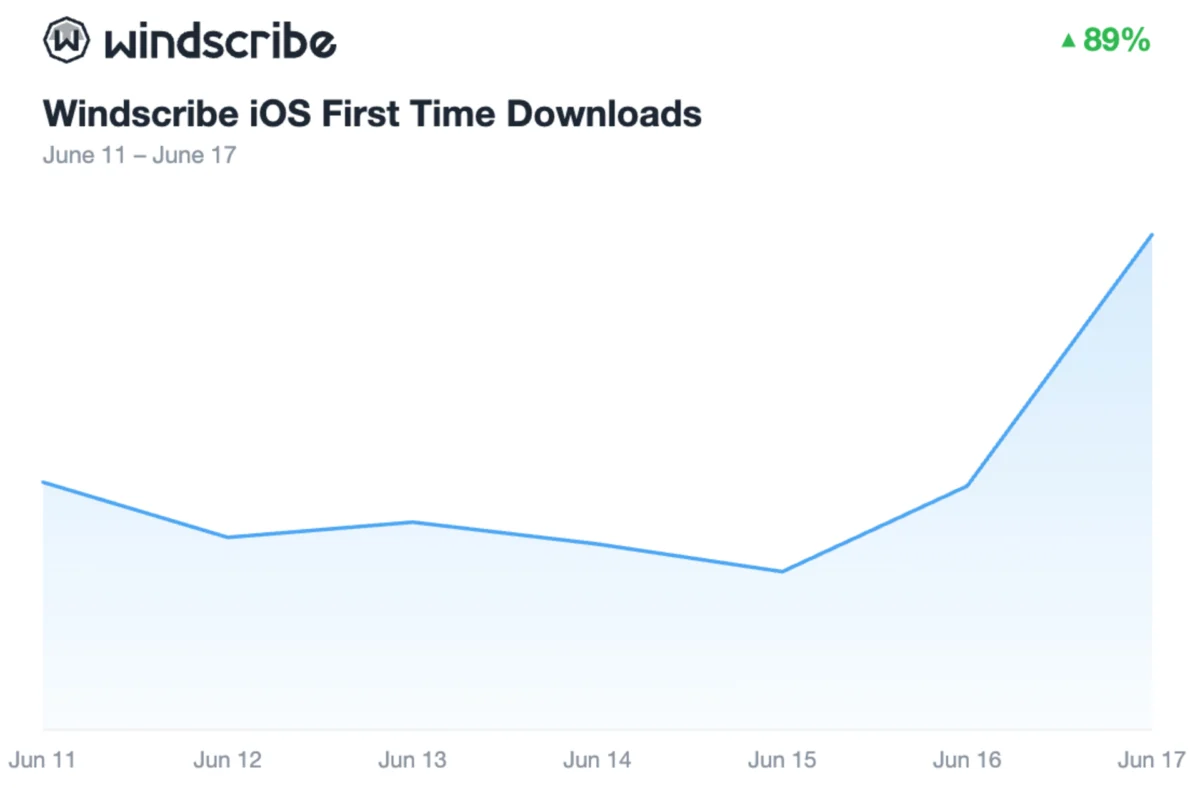
- Industry-wide impact: NordVPN recorded a 41% increase on iOS, while ExpressVPN saw a 31% rise on Android. Windscribe, a Canadian provider, noted that signups in India peaked at 100% above baseline levels, with a concurrent 89% increase in first-time iOS downloads.
The Rise of Alternative Messaging
The restriction also accelerated the adoption of alternative messaging platforms. Signal experienced a 72% jump in iOS downloads and a staggering 322% increase on the Google Play Store. Viber also saw a 216% surge on the Apple App Store. Perhaps most tellingly, iMe—a messaging client built on the Telegram API—saw its Google Play downloads skyrocket from a daily average of roughly 827 to over 50,900 on the day the ban was announced.
Persistent Connectivity Attempts
Perhaps the most counterintuitive data point comes from Cloudflare. Despite the ban, daily active users on Telegram actually rose by 17% on the day of the announcement, according to Sensor Tower. Furthermore, DNS requests for Telegram domains surged, suggesting that even as the government blocked the platform, users were persistently attempting to reach the service, likely utilizing various workarounds or simply checking for the restoration of service.
Official Responses and Legal Arguments
The government’s position, articulated by Solicitor General Tushar Mehta in the Delhi High Court, focused on the concept of a "logical nexus" between the restriction and the protection of the NEET-UG examination. The government maintained that given the severity of the threat posed by criminal syndicates leaking exam papers, a temporary, platform-wide restriction was a necessary evil.

Telegram’s defense was centered on the principles of proportionality. The company argued that it had already been cooperating with Indian law enforcement by removing specific channels and content flagged by authorities. By moving to block the entire platform, the government was essentially applying a "sledgehammer to crack a nut," affecting millions of legitimate users who rely on the platform for business, education, and personal communication.
The Global Context and Long-term Implications
This incident is not an isolated event but rather part of a broader global trend where governments increasingly treat digital platforms as levers of control.
The "TikTok" Precedent
The situation in India mirrors the volatility seen in the United States in 2025, when the brief removal of TikTok from app stores led to a 40% week-over-week increase in VPN downloads. Similar patterns have been documented by providers like Windscribe in jurisdictions such as Iran and Russia, where internet access is frequently restricted.
The Normalization of Circumvention
The primary implication of this event is the "normalization" of circumvention tools among the general Indian public. Once a user base learns to utilize a VPN to bypass a specific block, that knowledge does not disappear. The mass adoption of these tools creates a more sophisticated digital citizenry, one that is increasingly capable of bypassing state-imposed firewalls.
The Effectiveness of "Temporary" Bans
Finally, the data suggests that in a modern, hyper-connected economy, "temporary" blocks are of questionable effectiveness. When the cost of bypass tools (like free VPNs) is essentially zero and their availability is ubiquitous, a platform-wide ban may only serve to drive users toward more secure, decentralized, or harder-to-monitor communication channels.
As the dust settles on the Telegram restriction, policymakers in India and abroad are left to grapple with a sobering reality: in the digital age, control is an illusion. The swift and decisive reaction of Indian users demonstrates that for every attempt to restrict the flow of information, the digital ecosystem will, almost reflexively, find a way around it. Whether this leads to more heavy-handed regulation or a move toward more nuanced, content-specific moderation remains the defining challenge of internet governance in the years to come.