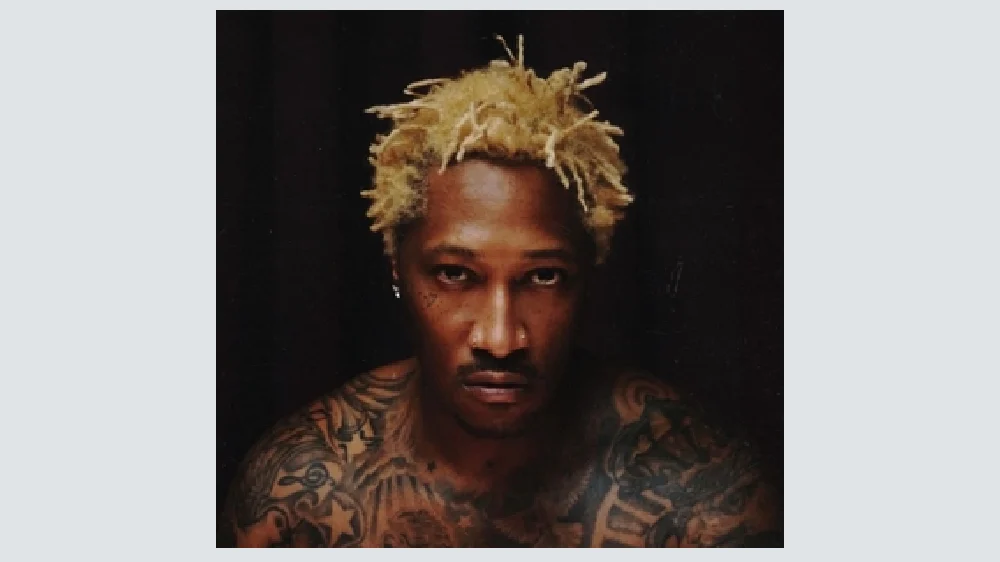
In an industry defined by fleeting trends and the relentless churn of digital consumption, few artists have managed to maintain the sustained, chart-topping dominance of Future. This week, the hip-hop titan solidified his legacy, debuting his latest studio album, The Real Me, at the summit of the Billboard 200. With this achievement, Future has not only asserted his ongoing cultural relevance but has also officially bypassed rap legend Eminem to claim sole possession of fifth place on the list of artists with the most No. 1 albums in chart history.
The milestone marks a pivotal moment for the Atlanta-based rapper, whose career trajectory has been a masterclass in prolific output and streaming-era strategy. As he continues to climb the ladder of all-time greats, the music industry is taking note of how he manages to balance high-volume output with the kind of commercial success that consistently moves the needle in an increasingly fragmented market.
The Milestone: A New Hierarchy of Chart Dominance
The Real Me arrived with a formidable 131,000 equivalent album units, comfortably securing the top spot. This performance was strong enough to hold off stiff competition, most notably Olivia Rodrigo’s You Look Pretty Sad for a Girl So in Love. Now in its fifth week, the Rodrigo project remains a formidable force, moving another 96,000 units to maintain its stronghold at No. 2.
Prior to this week, Future and Eminem were deadlocked at 11 No. 1 albums each. By vaulting to 12, Future has effectively entered an elite tier of musical history. He now finds himself chasing only four acts in the record books: The Beatles, who maintain a record-setting 19 No. 1 albums; Drake and Taylor Swift, who are currently tied for second place with 15 entries apiece; and the legendary Jay-Z, who sits in the fourth position with 14.
This hierarchy is more than just a list of names; it represents the shifting guard of the music business. While The Beatles’ record may remain untouchable for the immediate future, the proximity of current heavyweights like Swift, Drake, and now Future suggests that the "most No. 1s" list is as fluid as the tastes of the global listening public.
Chronology of Success: From Mixtape King to Chart Icon
Future’s rise to the fifth spot on the all-time list was not an overnight phenomenon. His career has been characterized by a relentless work ethic, often blurring the lines between mixtape drops and formal studio album releases.
In the early 2010s, Future established a signature sound that would eventually define the modern "trap" aesthetic. However, it was his consistency in the latter half of the decade—and throughout the 2020s—that truly accelerated his chart performance. By leveraging the streaming model, Future transformed his discography into a constant presence on the Billboard 200.
The last few years have been particularly lucrative for the rapper. His ability to mobilize his core fanbase to engage with his projects on release day has allowed him to accumulate No. 1s at a rate that has outpaced many of his contemporaries. The jump from his 11th to 12th No. 1 is a testament to the maturation of his brand; he is no longer just a trendsetter, but a legacy artist whose releases are treated as major cultural events by both critics and casual listeners alike.
Supporting Data: Streaming vs. Traditional Sales
The mechanics behind the chart performance of The Real Me offer a fascinating look at the contemporary music economy. Future’s numbers are a textbook example of the "streaming-first" model that currently dominates hip-hop.
Of the 131,000 units earned by The Real Me, only 13,000 were derived from traditional album sales. The vast majority of his success—amounting to 118,000 units—came from on-demand streaming equivalent albums (SEA). With over 120 million on-demand streams in its debut week, the project demonstrates that Future’s audience has fully migrated to digital platforms, favoring the convenience of the playlist and the album-track listening experience over the ownership of physical media.
In stark contrast, the week’s other notable debut, The Rolling Stones’ Foreign Tongues, highlights the enduring power of the "legacy" fanbase. The band bowed at No. 7 with 53,000 units, but their breakdown tells a different story: 48,500 of those units came from physical and digital sales. Their streaming numbers, by comparison, contributed only 4,000 units. This illustrates the bifurcation of the industry: while artists like Future own the streaming ecosystem, heritage acts continue to rely on a dedicated, older demographic that still values the purchase of an album.
A similar anomaly appeared with the Heated Rivalry television soundtrack. Entering the top 10 at No. 9 with 41,000 units, the album’s performance was entirely driven by sales. The project had been available digitally since January, but because it had failed to gain enough traction on streaming platforms to crack the top 10 previously, its total units were effectively "reset" by a robust physical release campaign.
The Television Soundtrack Renaissance?
The entry of the Heated Rivalry soundtrack into the top 10 is, in itself, a minor historical event. According to Billboard, it is the first television soundtrack to debut in the top 10 in over a decade, a feat not seen since the Empire soundtrack in 2015.
While the animated series Hazbin Hotel did see its companion album enter the top 10 last year, it did so via a slow burn, climbing to the chart’s upper echelons well after its initial release. The success of Heated Rivalry suggests that when a television show captures the zeitgeist with enough intensity, the accompanying music can still command the same level of attention as a major pop star’s release, provided the physical sales strategy is executed correctly.
Implications: The Shifting Landscape of the Billboard 200
The current state of the Billboard 200 serves as a snapshot of a market in flux. With Madonna’s Confessions II dropping out of the top 10 after its surprise debut last week, and perennial chart-toppers like Morgan Wallen (appearing twice in the top 10 with I’m the Problem and One Thing at a Time) continuing to maintain their grip on the public consciousness, the volatility of the charts has never been higher.
What does Future’s 12th No. 1 mean for the future of the industry?
First, it validates the strategy of high-frequency releases. In an age of algorithm-driven discovery, staying in the conversation is half the battle. By keeping his name in the cycle, Future ensures that he is always a candidate for the No. 1 spot.
Second, it underscores the widening gap between streaming-dominant genres like rap and pop, and sales-dominant genres like rock. As the industry continues to refine how "equivalent units" are calculated, the debate over the "value" of a stream versus a sale will likely intensify. However, for an artist like Future, the numbers are clear: he has mastered the modern metric.
Finally, the chart landscape remains a testament to the "long tail" of success. With classic albums like Michael Jackson’s Thriller still appearing in the top 10, the modern chart is not just a measure of what is new; it is a measure of what endures. Future has positioned himself as an artist who, like the icons currently ahead of him, is building a catalog that will likely remain on these charts for years to come.
As the industry looks toward next week, the question remains whether the newcomers can sustain their momentum or if the established titans will continue to reclaim their territory. For now, however, the spotlight belongs to Future, a man who has not only seen the future of the charts—he has become the very thing that defines it.