The story of Australia’s marsupials—a group encompassing everything from the iconic kangaroo to the elusive, sightless desert mole—has long been told as a singular evolutionary narrative. The textbook version of this history suggests that a lone, pioneering lineage arrived on the continent some 55 million years ago, eventually radiating outward to fill every available ecological niche. However, a groundbreaking discovery published in the Journal of Paleontology is now shattering that tidy, linear consensus.
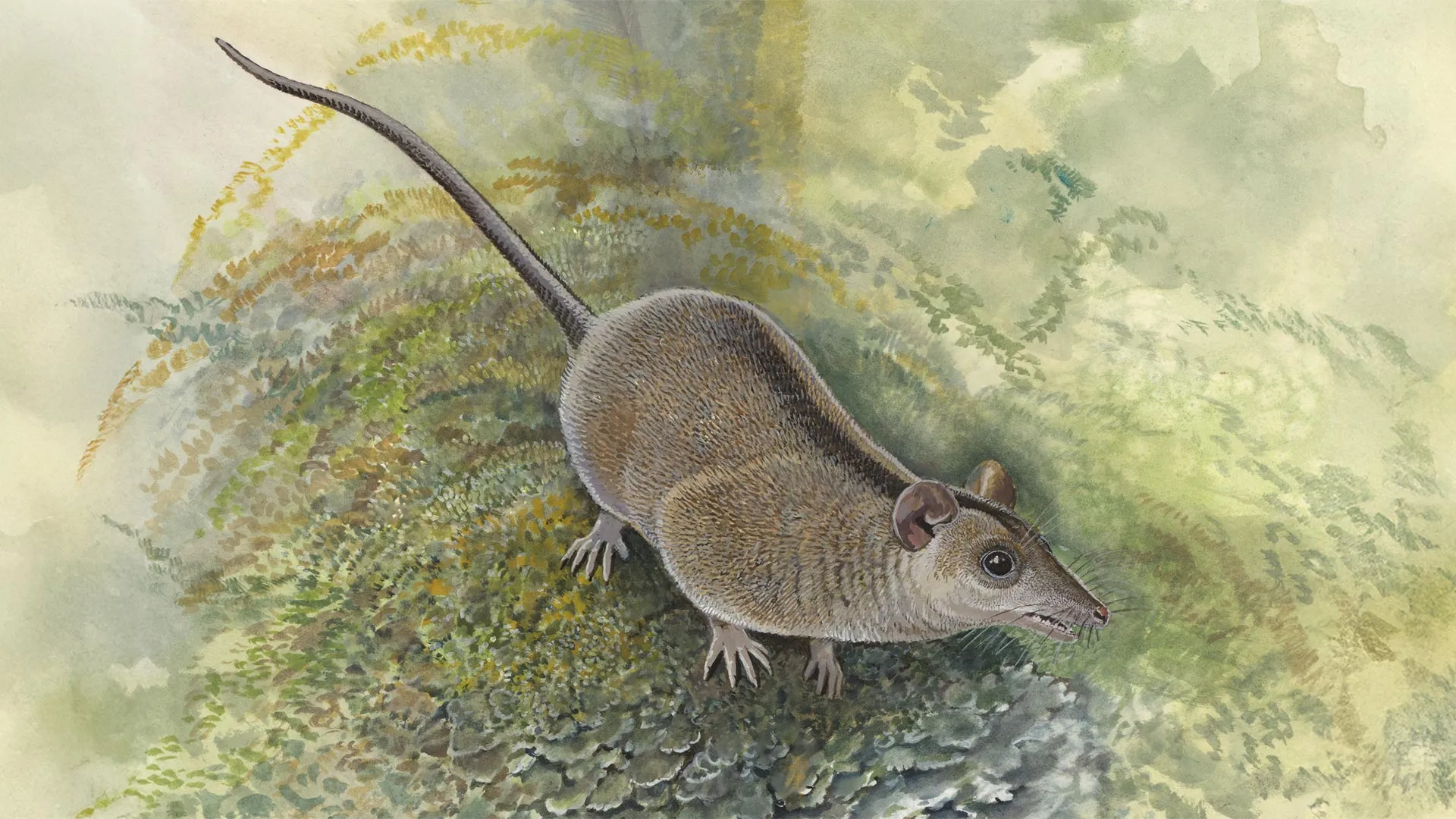
Researchers from the University of New South Wales (UNSW) have identified three previously unknown species that represent a distinct, ancient order of marsupials. This finding, which suggests the existence of a sixth order dubbed Keeunamorphia, indicates that the evolution of Australia’s fauna was far more crowded, complex, and mysterious than previously envisioned.
The Chronology of an Evolutionary Enigma
To understand the magnitude of this discovery, one must look at the timeline of the Australian continent’s isolation. Roughly 55 million years ago, the ancient supercontinent Gondwana was beginning its final fragmentation. Marsupials, having migrated from South America through the Antarctic bridge, reached the Australian landmass during this period of geological upheaval.
For decades, the prevailing scientific hypothesis held that this arrival was a singular event, with one ancestral group serving as the progenitor for all modern Australidelphia—the superorder that includes all living Australian marsupials.
The Keeunamorphia discovery challenges this timeline. According to Dr. Tim Churchill, the lead paleontologist on the project, these creatures did not merely represent a branch on a tree; they may have been one of the earliest lineages to split from the main trunk, persisting as a "ghost lineage" for nearly 35 million years.
- 55 Million Years Ago: Marsupials arrive in Australia from the Antarctic land bridge.
- 35 Million Years Ago: The Keeunamorphia lineage likely branches off, maintaining primitive traits while other groups begin their rapid diversification.
- 18 Million Years Ago: The newly identified species are active in the lush, rainforest-covered landscapes of northern Queensland.
- 15 Million Years Ago: The Keeunamorphia order goes extinct as the climate shifts from dense, humid forests to open woodlands and grasslands.
Riversleigh: The Archive of Prehistory
The evidence for this new order comes from the Riversleigh World Heritage Area, a site of unparalleled importance for global paleontology. Located in Queensland, Riversleigh is famous for its "fossilized pools"—ancient cave systems where mineral-rich waters encased the remains of prehistoric creatures, preserving them with extraordinary detail.
Because complete skeletons are exceedingly rare in the fossil record, Dr. Churchill and his team were forced to rely on the most resilient parts of the anatomy: teeth and jaw fragments. While a tooth may seem like a modest piece of evidence, it is a goldmine of information for evolutionary biologists. The cusps, ridges, and wear patterns on a tooth provide a diagnostic "fingerprint" of an animal’s diet, evolutionary lineage, and biological function.
By utilizing high-resolution imaging and comparing these fossilized fragments with genetic data from living marsupials, the team constructed a robust phylogenetic tree. This model, which maps the relationships between species and estimates divergence dates, clearly indicated that these three species did not fit into any of the five known marsupial orders. Their dental morphology was starkly different from their contemporaries, bearing a closer resemblance to Djarthia murgonensis—an extinct species from 35 million years ago often cited as the archetype for Australian marsupials.
Challenging the "Single-Origin" Narrative
The primary implication of the Keeunamorphia discovery is the debunking of the "one-lineage-to-rule-them-all" theory. If Keeunamorphia branched off shortly after the initial colonization of Australia, it implies that the continent was not settled by a lone group of travelers, but rather by a diverse, "swarming" array of primitive marsupials, all vying for survival.
"Evolutionary history is a lot more complex than just one group leading to all of Australia’s marsupials after being left behind when the continent broke off from Antarctica," says Dr. Churchill. "It’s more likely that when Australia was part of Gondwana, it was swarming with all sorts of bizarre, primitive marsupial-like things, and that several of them survived and led to our modern lineages."
This shift in perspective suggests that many of the marsupial groups we recognize today may have been forced to compete with, or exist alongside, older, more "primitive" lineages for millions of years. The survival of Keeunamorphia in the dense rainforests of Queensland until about 15 million years ago proves that these archaic forms were not necessarily evolutionary failures; rather, they were specialized insect-eaters that thrived in a stable, humid environment that eventually vanished.
The Environmental Shift: From Rainforest to Outback
The extinction of Keeunamorphia is directly linked to the massive environmental transformation of the Australian landscape. Eighteen million years ago, the region where the fossils were found was not the arid, sun-scorched "Red Center" of today. It was a lush, dense, and humid rainforest, teeming with biodiversity.
As the climate began to cool around 14 million years ago, the dense canopies retreated, giving way to open woodlands, ephemeral lakes, and expanding grasslands. This drastic change in habitat proved fatal for the Keeunamorphia. Weighing between 25 and 200 grams, these small insectivores were likely highly specialized to the rainforest floor. When their environment changed, they lacked the plasticity to adapt to the new, more open conditions, leading to their eventual disappearance from the fossil record.
Future Implications: Filling the 20-Million-Year Gap
Despite the excitement surrounding the discovery, Dr. Churchill is quick to acknowledge that the record is far from complete. There remains a daunting 20-million-year gap in the early history of Australian marsupials—a "black hole" in the fossil record that obscures the transition from the arrival of the first marsupials to the diversification of the species we see today.
The discovery of the Keeunamorphia order is a beacon of hope for paleontologists attempting to bridge this gap. It serves as a reminder that the history of life on Earth is rarely a straight line; it is a tangled web of experimentation, survival, and sudden extinction.
As the team continues to analyze the Riversleigh deposits, the focus will shift to finding further evidence of these "primitive" lineages. Each new fragment—a jawbone, a molar, or even a bone shard—serves as a piece of a massive, prehistoric puzzle. If the story of Australian marsupials is truly as complex as Dr. Churchill suggests, then the Keeunamorphia are likely just the first of many "lost" lineages waiting to be rediscovered.
Ultimately, this research reinforces a fundamental tenet of evolutionary biology: the history of life is characterized by hidden diversity. We may never fully reconstruct the exact routes taken by the ancestors of the kangaroo or the Tasmanian devil, but with each new discovery, the narrative becomes richer, deeper, and infinitely more fascinating. The Australian outback, it seems, still holds many secrets beneath its ancient, weathered soil.