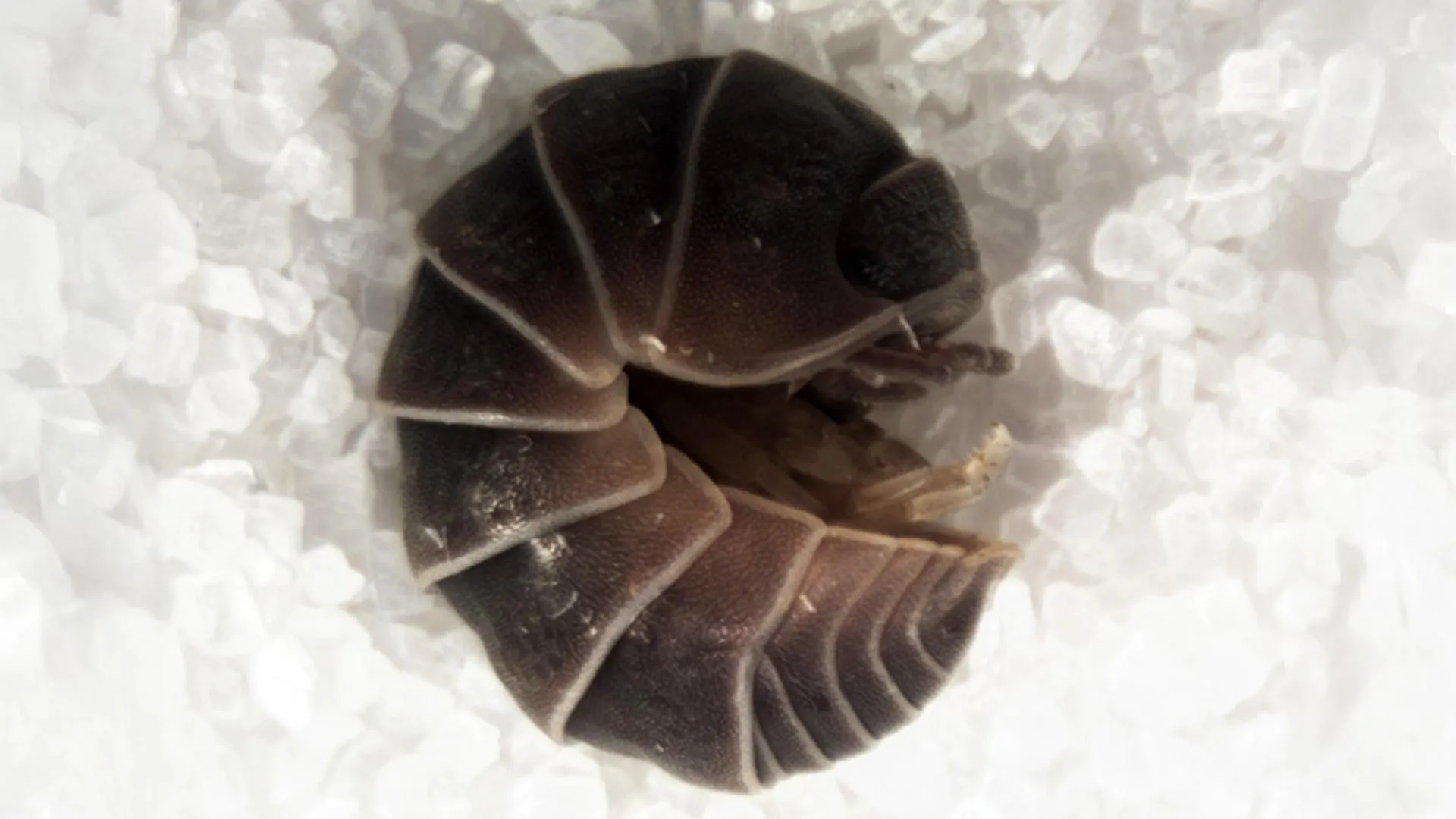
In the quiet corners of the Golan Heights, beneath the hum of modern infrastructure, a bizarre and unsettling phenomenon has been unfolding. Thousands of tiny, land-dwelling crustaceans—isopods colloquially known as woodlice or pill bugs—have been observed abandoning their solitary, moisture-seeking lives to participate in massive, synchronized circular marches. These "death spirals," triggered by the unforgiving glare of artificial streetlights, represent a startling example of how human technology can hijack the ancient, hardwired instincts of the natural world.
A groundbreaking study led by researchers at The Hebrew University of Jerusalem has shed light on this behavior, revealing that the geometric patterns cast by human lighting are creating ecological traps for species that have remained largely under the radar of modern science.
The Genesis of a Discovery
The phenomenon was not first uncovered in a laboratory, but in the field, through the keen observation of amateur naturalist Eviatar Itzkovich. During summer nights in the Golan Heights, Itzkovich noticed something inexplicable: thousands of isopods, usually reclusive creatures that dwell under damp leaf litter and rocks, were congregating in vast, swirling formations.
These gatherings were not merely accidental clusters; they were deliberate, self-sustaining circular processions. Intrigued by the scale of the movement, a research team led by PhD student Idan Sheizaf, under the supervision of Professor Ariel Chipman, launched a formal investigation. Their findings, recently published in the journal Ecology and Evolution, provide the first scientific documentation of this phenomenon, marking a significant milestone in our understanding of how artificial light at night (ALAN) affects ground-dwelling invertebrates.
Chronology of an Investigation: Unraveling the Mystery
The research team approached the mystery with a rigorous scientific framework, aiming to isolate the environmental variables responsible for these circular marches.
Phase I: Field Observations and Baseline Data
The team focused their study on Armadillo sordidus, an understudied isopod species. Prior to this research, the known range of A. sordidus was limited to southern Syria and the Golan Heights. However, through the course of their field work, the researchers expanded the known geographic footprint of the species, documenting its presence in the Jezreel Valley for the first time. The team established that the isopods were not gathering for social or reproductive reasons; the vast majority of participants were female, many carrying eggs, and the behavior showed no signs of being a mating display.
Phase II: The Elimination Process
To identify the catalyst for the circling, the team conducted a series of controlled experiments:
- Magnetic Interference: Given the unique geological properties of the Golan Heights, some speculated that magnetic fields might be guiding the isopods. Researchers placed strong magnets near the circling groups, but the isopods remained entirely unaffected, continuing their march without hesitation.
- UV Light Testing: The team experimented with ultraviolet light, a spectrum known to attract many insects. However, UV flashlights only lured a negligible number of individuals and failed to trigger the complex, synchronized swirling behavior.
- The White Light Catalyst: When researchers introduced a vertical beam of white light, the response was immediate and consistent. The isopods were drawn to the perimeter of the light pool, and as their numbers increased, the individual movement coalesced into a self-sustaining "death spiral."
Supporting Data: The Geometry of Destruction
The core of the study suggests that the behavior is not driven by the light itself, but by the geometry of the light. When a streetlight casts a circular beam onto the ground, it creates a sharp boundary of contrast.
The isopods, which possess innate navigational instincts based on light orientation, become trapped by this boundary. Upon reaching the edge of the illuminated circle, they begin to move along the perimeter. As more individuals join the flow, the movement reaches a critical mass, creating a feedback loop. The isopods follow the individual in front of them, trapped in a cycle of perpetual motion that serves no biological purpose and offers no exit strategy.
This "emergent phenomenon" demonstrates a dangerous interplay between ancient biology and modern urban planning. The animals, which normally conserve energy by staying in dark, humid environments to prevent desiccation, are essentially "fooled" by the unnatural architecture of the light pool.
Official Responses and Expert Reflection
The study has sent ripples through the entomological community, prompting a re-evaluation of how we categorize "light pollution." Idan Sheizaf, lead author of the study, noted the gravity of the findings: "While collective movement is common in the animal kingdom, seeing it in this form in isopods was entirely unexpected. It appears that the geometry of our modern world—specifically the circular pools of light created by streetlights—is interacting with the natural instincts of these creatures to create a mesmerizing, yet potentially harmful, emergent phenomenon."
Professor Ariel Chipman emphasized that while these formations appear orderly, they are fundamentally maladaptive. "We are looking at an unintended trap," Chipman stated. "The isopods are not behaving in a way that benefits their survival; they are responding to a sensory stimulus that their evolutionary history never prepared them for."
The Ecological Implications: Why the "Death Spirals" Matter
The term "death spiral" is not used lightly by the research team. The consequences for these populations are severe and multifaceted:
Increased Predation
During one observation, researchers witnessed a centipede preying upon the distracted isopods. By drawing the isopods out of their sheltered habitats—where they are usually protected by rocks and debris—the streetlights effectively move them into a "killing zone." The synchronized movement acts as a beacon for predators, who can easily pick off members of the swirling mass.
Metabolic Cost
Isopods are energy-sensitive organisms. Their survival depends on conserving moisture and avoiding unnecessary physical exertion. By keeping them trapped in a perpetual, high-intensity march, the streetlights force the animals to exhaust their energy reserves, potentially impacting their longevity and reproductive success.
The Disruption of Natural Instincts
The most profound implication of this study is what it reveals about the "unseen" impact of human development. We often think of light pollution in terms of disrupted bird migration or confused sea turtles, but this research highlights that even the smallest, most overlooked creatures are being fundamentally altered by the urban environment.
The study of A. sordidus serves as a microcosm for a broader ecological crisis. When we install lighting, we are not just illuminating a path for humans; we are creating a permanent, artificial feature that can reshape the behavioral patterns of local wildlife. If a simple streetlight can compel thousands of crustaceans to engage in a potentially lethal, non-stop march, one must wonder what other subtle, yet devastating, impacts our "modern" lighting is having on the biodiversity of our ecosystems.
Conclusion: A Call for Conscious Illumination
The discovery of the isopod death spirals in the Golan Heights is a sobering reminder that our impact on the planet is often invisible until it is too late. The researchers suggest that future urban planning should take into account the "geometry of light." By utilizing motion sensors, directional shielding, or warmer-colored lighting that does not trigger the same navigational responses in invertebrates, we could mitigate the damage being done to these fragile populations.
As we continue to expand our urban reach, the lesson from these small, swirling creatures is clear: our technology is moving faster than the instincts of the natural world can adapt. Protecting the future of these species requires more than just conservation of land; it requires a conscious, measured approach to how we light the night. The death spirals of the Golan Heights are a warning—a quiet, circular tragedy happening in the dark, waiting for us to notice and change our ways.