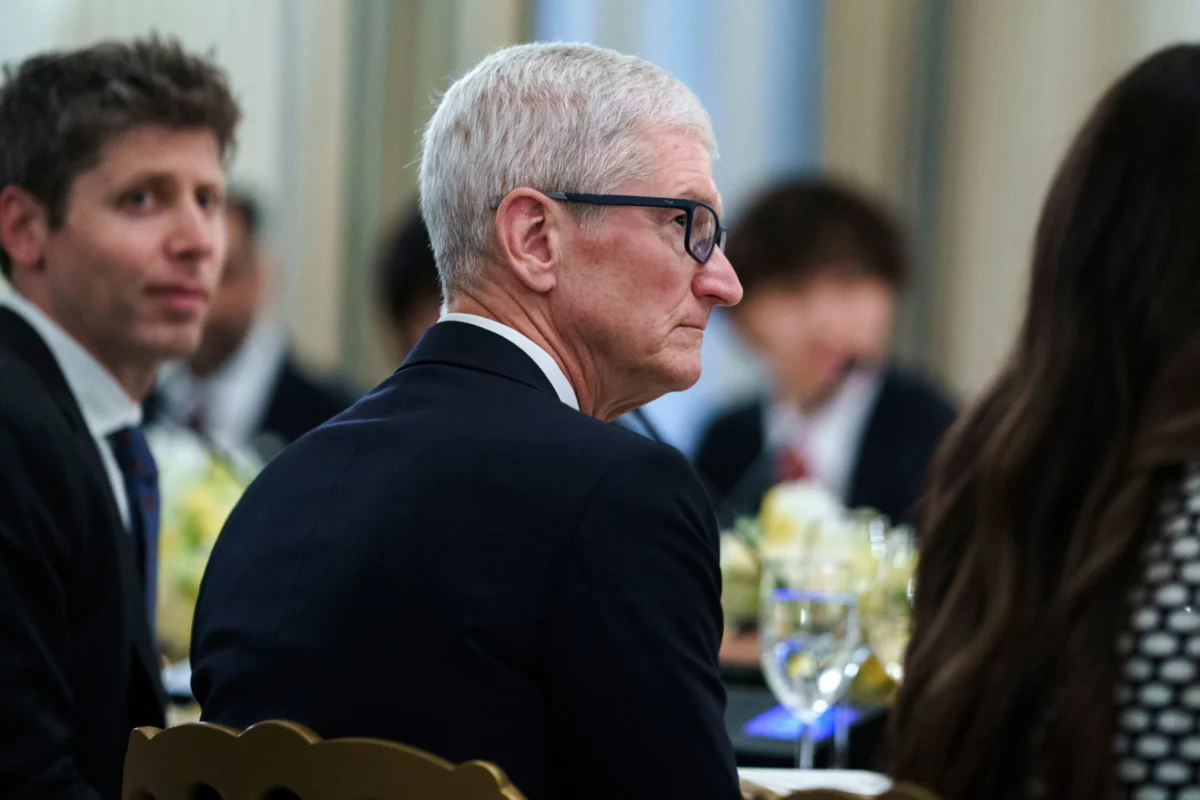
In a legal maneuver that has sent shockwaves through the technology industry, Apple Inc. has filed a sweeping lawsuit against OpenAI, alleging a coordinated and systematic effort to steal trade secrets to bolster the startup’s nascent hardware division. The lawsuit, filed on Friday in the U.S. District Court for the Northern District of California, pits the $4.6 trillion consumer electronics giant against the world’s most prominent artificial intelligence firm at a time when both companies are vying to define the next generation of personal computing.
The 41-page complaint paints a picture of a calculated corporate espionage campaign designed to strip Apple of its most sensitive hardware innovations. Apple alleges that OpenAI, along with its recently acquired hardware subsidiary io Products, recruited high-level Apple executives and engineers who then funneled confidential data—including unreleased product specifications, supply chain details, and proprietary engineering designs—into OpenAI’s development pipeline.
Main Facts: A "Rotten" Foundation for AI Hardware
The core of Apple’s argument is that OpenAI’s move into physical devices is not the result of independent innovation, but rather the "misappropriation" of decades of Apple’s research and development. The lawsuit specifically names two former Apple employees: Tang Tan, OpenAI’s current Chief Hardware Officer, and Chang Liu, a member of OpenAI’s technical staff.
Apple’s legal team did not mince words in the filing, stating, "At every level, from members of its Technical Staff to its Chief Hardware Officer, and in coordination with business partners, OpenAI has been stealing Apple’s trade secrets and confidential information. OpenAI’s nascent hardware business now rests on the shakiest of foundations, rotten to its core by its illegal reliance on misappropriated trade secrets."
The lawsuit targets three primary entities:
- OpenAI: The parent company led by Sam Altman.
- io Products: A hardware design firm co-founded by former Apple design chief Jony Ive, which OpenAI acquired in May 2025 for a reported $6.4 billion.
- Individual Defendants: Tang Tan and Chang Liu, accused of being the primary conduits for the stolen data.
While Jony Ive—the legendary designer behind the iMac, iPhone, and MacBook—is the co-founder of io Products, he is notably not named as an individual defendant in the lawsuit. However, the acquisition of his firm is central to Apple’s claim that OpenAI sought an "instant" hardware infrastructure built on Apple’s intellectual property.
Chronology: From Partnership to Courtroom
The relationship between Apple and OpenAI has soured with remarkable speed. Just over a year ago, the two companies appeared to be entering a symbiotic era.
- Early 2024: Apple and OpenAI engage in high-level talks to integrate ChatGPT into iOS and the Siri digital assistant. This partnership was initially seen as a way for Apple to bridge its AI gap while OpenAI gained access to billions of devices.
- Late 2024: Internal friction begins as OpenAI aggressively recruits from Apple’s hardware engineering teams. Tang Tan, a 24-year Apple veteran and VP of iPhone and Apple Watch design, departs to join io Products.
- January 2025: In a stunning pivot, Apple announces it is abandoning its primary AI partnership with OpenAI in favor of Google’s Gemini for its "Apple Intelligence" suite, signaling a breakdown in trust.
- May 2025: OpenAI officially acquires io Products for $6.4 billion. This move confirms Sam Altman’s intentions to build a "ChatGPT-native" hardware device, potentially a smartphone replacement.
- June 2025: Apple’s internal security teams allegedly uncover evidence of massive data exfiltration by former employees now at OpenAI.
- Friday: Apple files its formal complaint in the Northern District of California, seeking damages and an injunction to halt OpenAI’s hardware development.
Supporting Data: The Specifics of the Allegations
Apple’s complaint provides granular detail regarding the alleged theft, categorizing the misconduct into recruitment fraud, data theft, and supply chain interference.
The Tang Tan Allegations
Tang Tan is accused of using his intimate knowledge of Apple’s internal structure to facilitate a "talent raid." According to the complaint, Tan used confidential Apple codenames for unreleased projects during OpenAI’s recruiting process to signal to potential hires that they would be working on similar, competing technologies.
Furthermore, Apple alleges that Tan encouraged interviewees to share trade secrets and, in some instances, directed them to physically bring Apple hardware components—prototypes or proprietary parts—into OpenAI interviews to demonstrate their technical expertise and the progress of Apple’s internal projects.
The Chang Liu Allegations
Chang Liu, a former member of Apple’s engineering team, is accused of more direct digital theft. The lawsuit claims Liu downloaded dozens of confidential files shortly before his departure. These files reportedly included:
- Technical Specifications: Detailed blueprints for unreleased hardware.
- Engineering Presentations: Internal roadmaps for future product cycles.
- Security Bypassing: Apple alleges Liu provided instructions to other employees on how to bypass Apple’s internal security protocols when copying large volumes of data to external drives.
Supply Chain and Vendor Data
Beyond hardware designs, Apple claims OpenAI misappropriated its "playbook" for global logistics. By obtaining confidential lists of vendors, contractors, and the specific terms of Apple’s supply chain agreements, OpenAI was allegedly able to "jump the line" and secure manufacturing capacity that would otherwise take years of relationship-building to establish.
Official Responses: Defiance vs. Protection
The public statements from both companies reflect the high stakes of the litigation.
OpenAI’s Defense:
A spokesperson for OpenAI dismissed the allegations as baseless, emphasizing the company’s commitment to independent innovation. "We have no interest in other companies’ trade secrets," the statement read. "We remain focused on building innovative technology that empowers people everywhere. Our hardware efforts are the result of the creative vision of our world-class team and our commitment to providing the best AI experiences."
Apple’s Stance:
Apple has framed the lawsuit as a necessary defense of its corporate culture and R&D investment. An Apple spokeswoman stated, "Our teams are constantly developing breakthrough technologies to create the best products and services in the world, and protecting their work and intellectual property is something we take very seriously. We will not allow the systematic theft of our innovations to fuel a competitor’s business model."
Strategic Implications: A War for the Future of Computing
This lawsuit is more than a legal dispute; it is a battle for the "post-smartphone" era.
1. The Threat of the AI Gadget
Sam Altman has frequently voiced his belief that AI requires a new form factor—a device that doesn’t rely on the app-based ecosystem of the iPhone. By acquiring io Products and hiring the architects of the iPhone, OpenAI is attempting to build the "iPhone of AI." For Apple, this represents an existential threat. If OpenAI succeeds in creating a device that makes the smartphone obsolete, Apple’s $3 trillion hardware empire could be at risk.
2. Leadership Transitions at Apple
The timing of the lawsuit is critical. Apple CEO Tim Cook is scheduled to step down in September, handing the reins to John Ternus, the current head of hardware engineering. This lawsuit serves as a "parting shot" from the Cook era, signaling to the market and to Apple’s 160,000+ employees that the company will remain litigious and protective of its IP under new leadership.
3. OpenAI’s IPO Ambitions
OpenAI is currently preparing for a highly anticipated initial public offering (IPO). A protracted legal battle with the world’s most valuable company could complicate its valuation and spook potential investors. If Apple successfully obtains an injunction, it could effectively freeze OpenAI’s hardware development for years, neutering a key pillar of its growth strategy.
4. The Broader Legal Precedent
OpenAI is already embroiled in several high-profile legal battles, including a copyright suit from the New York Times regarding AI training data. However, the Apple suit is different; it focuses on "Trade Secrets" rather than "Copyright." Trade secret law is often more punitive and easier to litigate if physical or digital evidence of theft exists. This case could set a precedent for how "talent poaching" is handled in the AI age, where the line between a worker’s skills and a company’s proprietary knowledge is increasingly blurred.
Conclusion
As the legal proceedings begin, the tech world watches to see if Apple can prove its "rotten to the core" claims. If the evidence supports Apple’s allegations of physical hardware theft and systematic data exfiltration, OpenAI may face not only massive financial penalties but a court-ordered halt to its hardware ambitions.
For now, the battle lines are drawn: Apple is fighting to protect the hardware legacy that made it a global powerhouse, while OpenAI is fighting for the right to build the physical future of artificial intelligence. In the Northern District of California, the trial of the decade is just beginning.