Executive Summary: A Marriage of Convenience Under Pressure
The tech industry is currently witnessing a high-stakes recalibration between two of the most significant entities in the artificial intelligence landscape: Microsoft and OpenAI. As of July 9, 2026, the long-standing "partnership" between the two giants has entered a complex new phase. Following reports that Microsoft has begun integrating its proprietary "MAI" (Microsoft AI) models into core productivity tools like Word and Excel to mitigate the astronomical costs of inference, speculation regarding a potential rift between the companies reached a fever pitch.
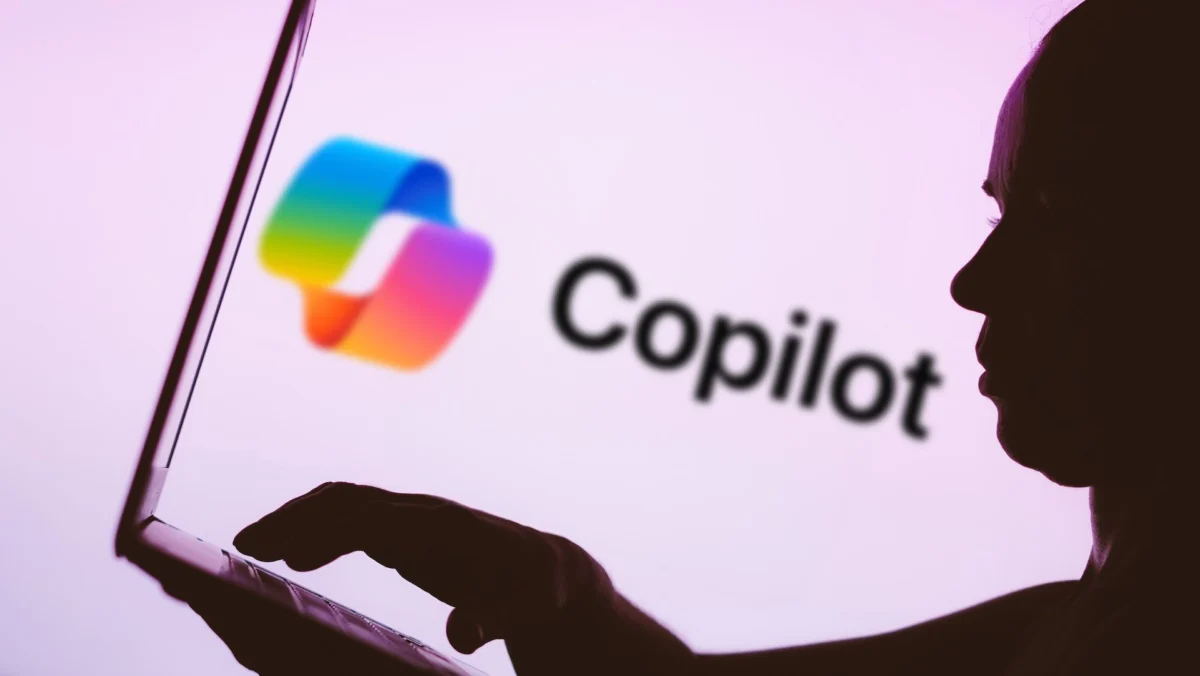
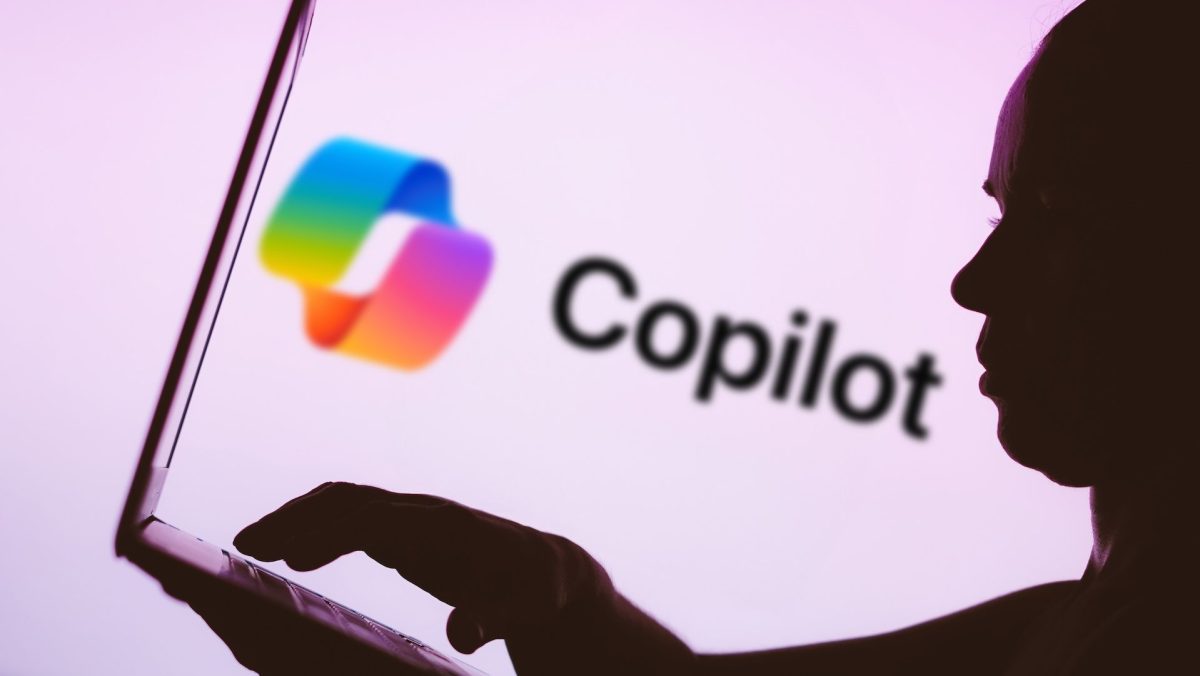
However, in a calculated move to stabilize market sentiment, OpenAI announced during the launch of its latest iteration, GPT-5.6, that it would remain the "preferred model" for Microsoft 365 Copilot. This declaration, while rhetorically powerful, masks a nuanced reality: Microsoft is no longer exclusively tethered to OpenAI’s stack. Instead, the landscape is shifting toward a hybrid architecture where efficiency, cost-control, and sovereign tech stacks take precedence over monolithic reliance.
Chronology of a "Situationship"
The partnership, which began with a modest investment in 2019, has evolved into a multi-billion-dollar symbiotic ecosystem that essentially jump-started the current generative AI boom.
- 2019–2022: The Foundation: Microsoft invested $1 billion in OpenAI, providing the cloud infrastructure (Azure) necessary for OpenAI to train its foundational models.
- Early 2023: The Integration: Following the viral success of ChatGPT, Microsoft rapidly integrated OpenAI’s GPT-4 architecture into its Bing search engine and Office suite, rebranding the integration as "Copilot."
- Late 2024 – 2025: The Scaling Crisis: As the user base for Copilot exploded, the cost of running inference on massive models became a significant drag on Microsoft’s margins. Simultaneously, Microsoft began aggressively poaching AI talent, including the hiring of Mustafa Suleyman to lead its consumer AI division.
- July 7, 2026: Bloomberg reports that Microsoft is actively replacing OpenAI software with in-house MAI models for specific tasks, signaling a shift toward internal autonomy.
- July 9, 2026: OpenAI launches GPT-5.6 and publicly reinforces its status as the "preferred model" for Microsoft 365, attempting to quell rumors of a breakup.
The Economic Drivers: Why Microsoft is Seeking Independence
The primary catalyst for this shift is economic. Running Large Language Models (LLMs) at the scale required for Microsoft 365—which serves hundreds of millions of enterprise users—is prohibitively expensive. Every query processed through an OpenAI-hosted model incurs compute costs that, when multiplied by billions of monthly interactions, create a massive "cost of goods sold" (COGS) problem for Microsoft.
The Rise of MAI
Microsoft’s "MAI" models represent the company’s internal effort to achieve "model sovereignty." By developing smaller, specialized models that are fine-tuned for specific tasks—such as summarizing an email or drafting a spreadsheet formula—Microsoft can achieve similar performance to GPT-5.6 while significantly reducing latency and compute overhead.
For Microsoft, the goal is simple: reduce dependence on external API costs while maintaining the feature-parity that makes Copilot a premium product. If Microsoft can perform 70% of routine tasks using a cheaper, in-house model and reserve the "heavy lifting" for OpenAI’s most advanced engines, it drastically improves the profitability of its AI offerings.
Official Responses and the "Preferred Model" Narrative
In the wake of the news regarding Microsoft’s internal shifts, OpenAI’s official communications have been a masterclass in corporate diplomacy. The blog post announcing GPT-5.6’s integration into the Microsoft suite was framed as a renewal of vows rather than a damage-control exercise.
"Our partnership with Microsoft has always been about bringing the benefits of advanced AI to more individuals and organizations, and we’re excited to continue building on that shared commitment," the statement read.
However, analysts note that the term "preferred model" is conspicuously vague. In the enterprise software world, "preferred" does not necessarily mean "exclusive." By positioning GPT-5.6 as the preferred solution, OpenAI ensures that it remains the default "intelligence engine" for the most demanding tasks within the Microsoft ecosystem, effectively protecting its revenue stream while acknowledging that the ecosystem is no longer a closed-loop.
Implications for the AI Ecosystem
The shift in the Microsoft-OpenAI dynamic has profound implications for the broader tech sector, developers, and investors.
1. The Era of Hybrid AI
We are entering a period where "model-agnostic" software architectures will become the industry standard. Large enterprises are unlikely to hitch their entire technical infrastructure to a single provider. Instead, we are seeing the emergence of "routing" systems—where an application intelligently directs a user query to the most cost-effective and capable model available for that specific task. Microsoft’s internal shift suggests that they are building exactly this kind of routing infrastructure.
2. The Commoditization of Intelligence
As more companies (including Meta with Llama, Google with Gemini, and Microsoft with MAI) develop high-performing proprietary models, the "intelligence" provided by these models is rapidly commoditizing. The competitive advantage is shifting away from the raw model itself and toward the integration layer—the UI/UX, the data privacy controls, and the workflow integration that Microsoft offers through its dominance in the enterprise software market.
3. OpenAI’s Need for Diversification
For OpenAI, the risks of being overly reliant on a single customer—even one as large as Microsoft—are now clear. If Microsoft continues to bring more AI functionality in-house, OpenAI must look to other distribution channels. This may explain the company’s aggressive expansion into consumer-facing tools, developer APIs, and enterprise partnerships outside the Microsoft umbrella.
The Future of Copilot: A Multimodal Experience
The launch of GPT-5.6 brings with it a suite of enhancements that extend beyond text generation. With improved reasoning, better data handling for Excel, and more nuanced creative capabilities for PowerPoint and "Cowork," the model is clearly designed to be the "premium" tier of the Copilot experience.
Microsoft’s strategy appears to be a tiered approach:
- The "Lite" Tier: Powered by proprietary MAI models, handling 80% of routine, high-volume tasks at a fraction of the cost.
- The "Pro" Tier: Powered by OpenAI’s GPT-5.6, reserved for high-complexity tasks, data analysis, and advanced creative work.
This bifurcated model allows Microsoft to maintain high margins on its enterprise subscriptions while offering users a "best-in-class" experience when they need it most.
Conclusion: A Maturing Partnership
The "breakup" narrative surrounding Microsoft and OpenAI is likely overstated, but the "marriage" is certainly evolving. It has moved from a honeymoon phase of mutual discovery to a mature, complex business partnership.
Microsoft is no longer just a financier; it is a competitor, a customer, and a collaborator all at once. For OpenAI, this means the pressure is on to ensure their models provide sufficient value to justify the premium price tag. For Microsoft, the challenge is to prove that its in-house MAI models can keep pace with the rapid innovation cycle set by OpenAI.
As we look toward the remainder of 2026, the success of this dynamic will be measured not by public blog posts, but by the bottom-line performance of Microsoft’s cloud division and the adoption rates of the Copilot suite. The "situationship" is not over; it has simply matured into a high-stakes, multi-billion-dollar business strategy where the only constant is change.
The tech world will be watching closely as these two titans navigate the tension between their shared goals and their diverging economic interests. For now, the integration of GPT-5.6 into the Microsoft ecosystem provides a temporary stability, but the underlying trend toward model sovereignty is likely irreversible.